
A drafter is building the load summary for a solar canopy at a transit center, where steel posts sit on concrete piers, tool totes are staged on the beams during the install, and backfill is compacted around each pier. Buses roll across a joint in the pavement beside the posts all day. Which line item should the drafter flag as the dynamic load on this structure?
Select an answer to reveal the explanation.
Short Explanation
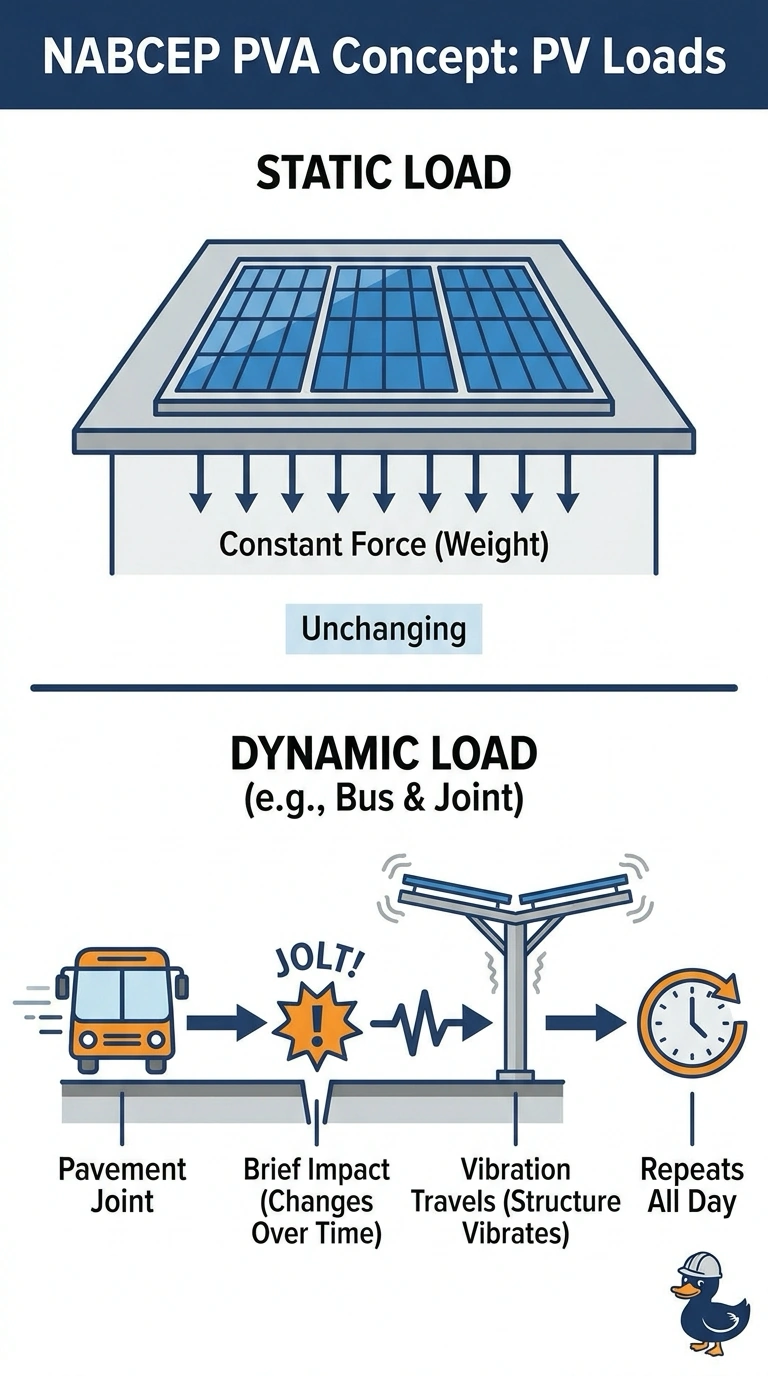
You should flag each bus jolt as a dynamic load—it’s like a quick shove repeated over and over. The staged totes are more like a bag resting on a shelf: they add weight while they’re there, but don’t create that repeated impact.
Full Explanation
Dynamic loads vary with time or involve motion, and they can make a structure vibrate or experience impact effects. The repeated jolt each time a heavy bus crosses the pavement joint is the dynamic load to flag, provided that impact is transmitted to the canopy posts. The tool totes stored on the beams are a construction live load; while they remain in place, their weight is treated as static, although setting them down abruptly could create a separate impact. The constant pull of the frame and modules through the anchor bolts into the concrete piers is dead load, because it comes from the structure’s own weight. The gradual sideways force of compacted backfill against each buried pier is lateral earth pressure, generally treated as static once the backfill is in place. A useful exam caveat is that classification depends on how a force acts: a load usually treated as static can still produce a dynamic effect if applied suddenly. In practice, check whether the bus-induced vibration or impact is actually transmitted through the pavement and foundation to the posts; proximity alone does not establish the load path.