
You are wiring a 12-kW home roof array where DC homeruns drop down an exterior wall to a garage inverter, exposed to sun, rain, and lawn tools. The foreman wants neat work that will pass inspection and last. Which wiring best practice for drip loops, bend radius, support, and damage protection should the installer use?
Select an answer to reveal the explanation.
Short Explanation
You get lasting work when water drips off, bends stay easy, and supports hold firm. Think of a raincoat hood with slack that sheds water while support keeps the fabric from snagging.
Full Explanation
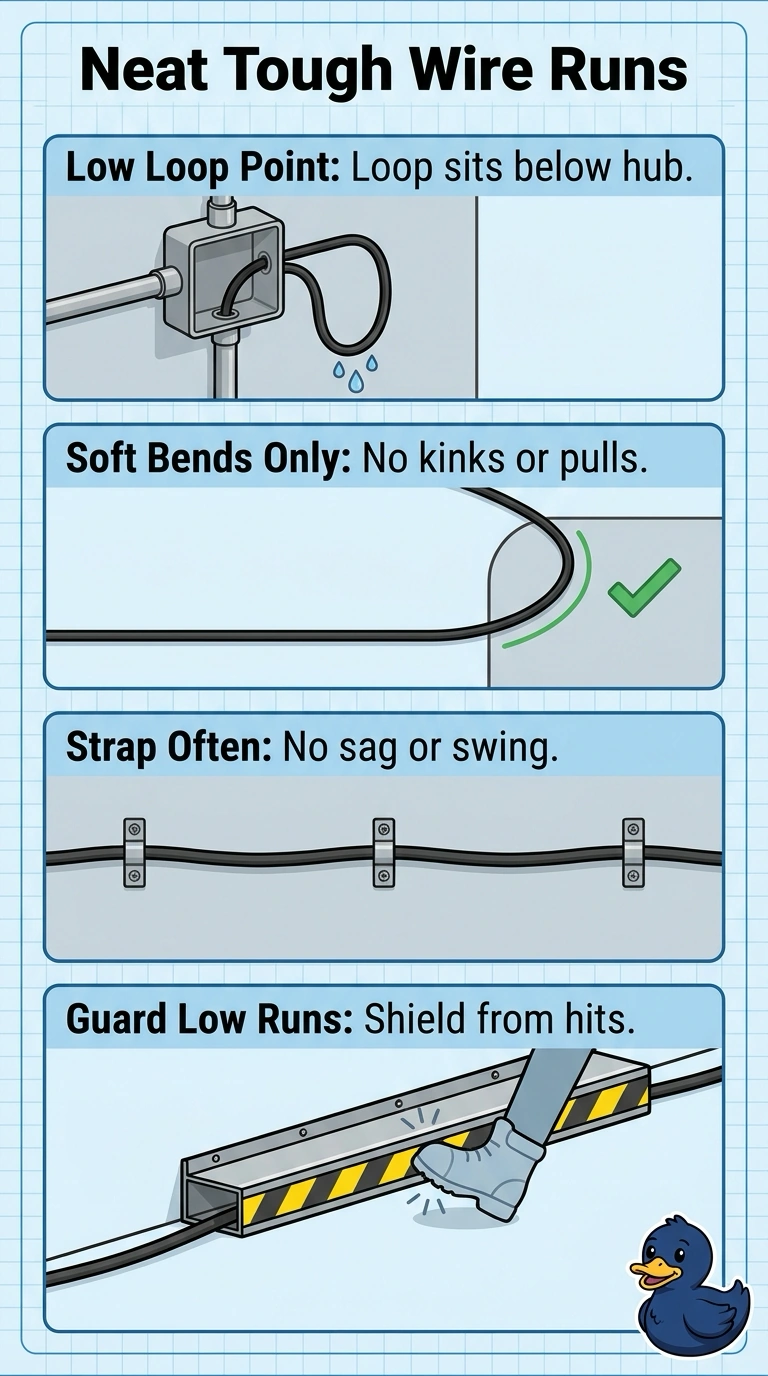
Correct wiring best practice combines a drip loop below each enclosure entry so water falls away rather than tracking inside, a generous bend radius that avoids stressing insulation and conductors, secure support at required intervals to prevent sag, abrasion, and wind movement, and physical protection such as conduit, guards, or rerouting where subject to damage. Pulling cables tight around sharp corners meets drainage, support, and protection but violates bend radius, which cracks insulation and raises resistance at the kink over thermal cycles. Hanging cables loose between far points keeps loops and bends but violates support, allowing wind whip, UV wear, and snag loads that fatigue terminations. Routing straight into entries without a low loop keeps bends, support, and guards but violates water management, since capillary action and rain will follow the jacket into lugs and cause corrosion; an exam caveat is that neat does not mean tight, and a practical check is to tug lightly, sight the low point below the hub, and confirm no cable rests on sharp edges.