
A small contractor is writing a safety plan for a two-story home retrofit with roof work near a service drop and inverter terminations in a garage panel. The crew will use ladders, harnesses, and insulated tools with lockout steps. The supervisor wants each hazard tied to the right authority. Which safety regulation assignment correctly links OSHA and NFPA roles for fall and electrical hazards?
Select an answer to reveal the explanation.
Short Explanation
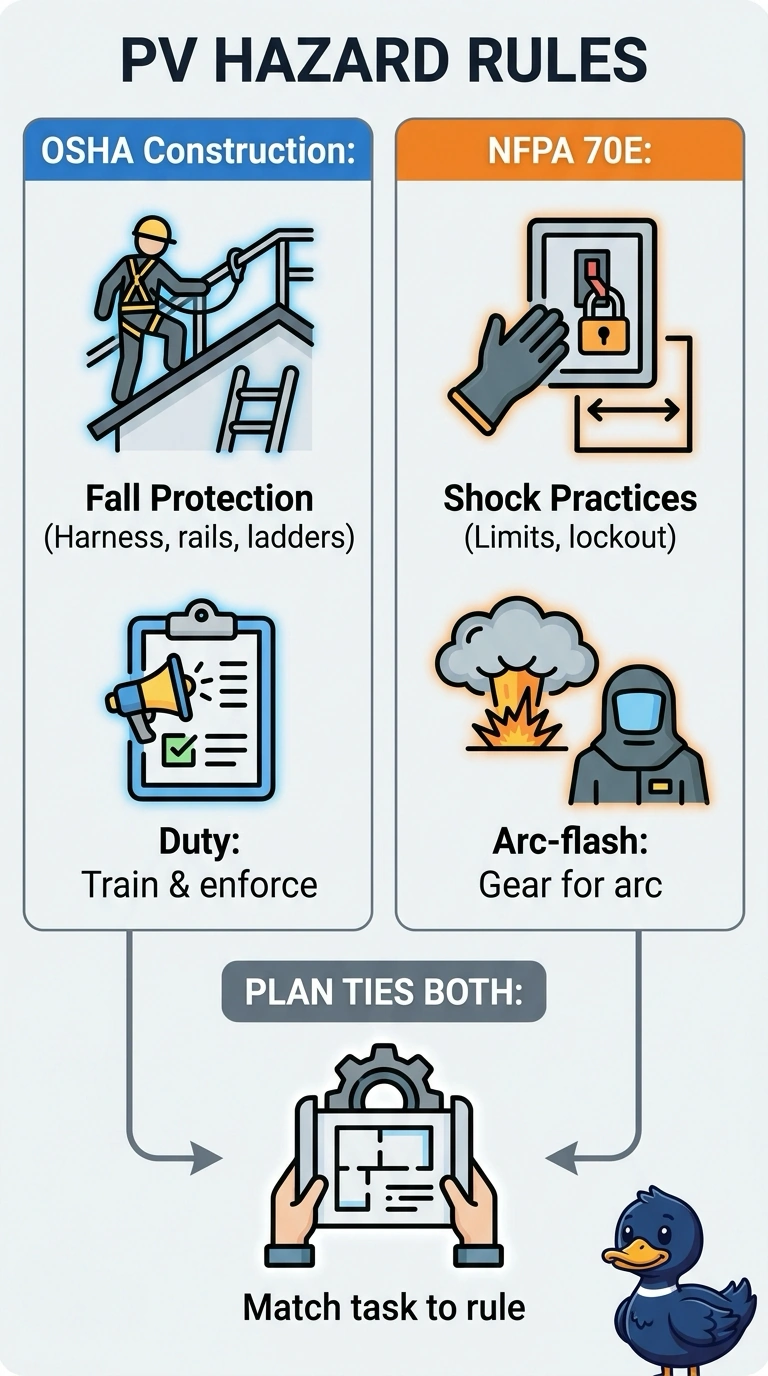
You’re matching each hazard to the right authority: OSHA covers falls and ladders, while NFPA 70E covers electrical safe-work practices. Keep that distinction in mind as you plan the retrofit.
Full Explanation
The correct assignment separates the authorities by their roles: OSHA construction requirements address jobsite fall protection and ladder safety, while NFPA 70E provides electrical safe-work practices, including protection from shock and arc-flash hazards. That distinction fits this retrofit, where roof access creates fall risks and work near the service drop and garage panel creates electrical risks. The claim that OSHA rules pair with NFPA 70 for shock and arc-flash work confuses NFPA 70, the electrical installation code, with NFPA 70E, the workplace electrical safety standard. The claim that NFPA 70E guides wiring design and panel installation also assigns installation requirements to the wrong standard; those are principally addressed by NFPA 70. The claim that NFPA 70E covers arc-flash hazards but not shock protection is incomplete, because shock protection is also within its scope. Exam caveat: OSHA and NFPA standards are not interchangeable; NFPA 70E may inform safe practices, but it does not replace applicable OSHA requirements. Before work, verify current adopted rules and site procedures, and have a qualified person assess fall-protection arrangements and electrical hazards, including shock and arc-flash risks.