
A two-person crew installs a wall-mounted lithium battery with a hybrid inverter in a garage, the manual requires a specific startup order, torque values, and closed-loop communication settings, and the lead wants to finish before the inspection window closes. Which practice for following manufacturer programming and safety instructions best ensures a safe startup?
Select an answer to reveal the explanation.
Short Explanation
You’re right to slow down and follow the manual’s startup order; sequence helps keep the crew safe. Think of it like following a recipe instead of guessing when to turn on the oven.
Full Explanation
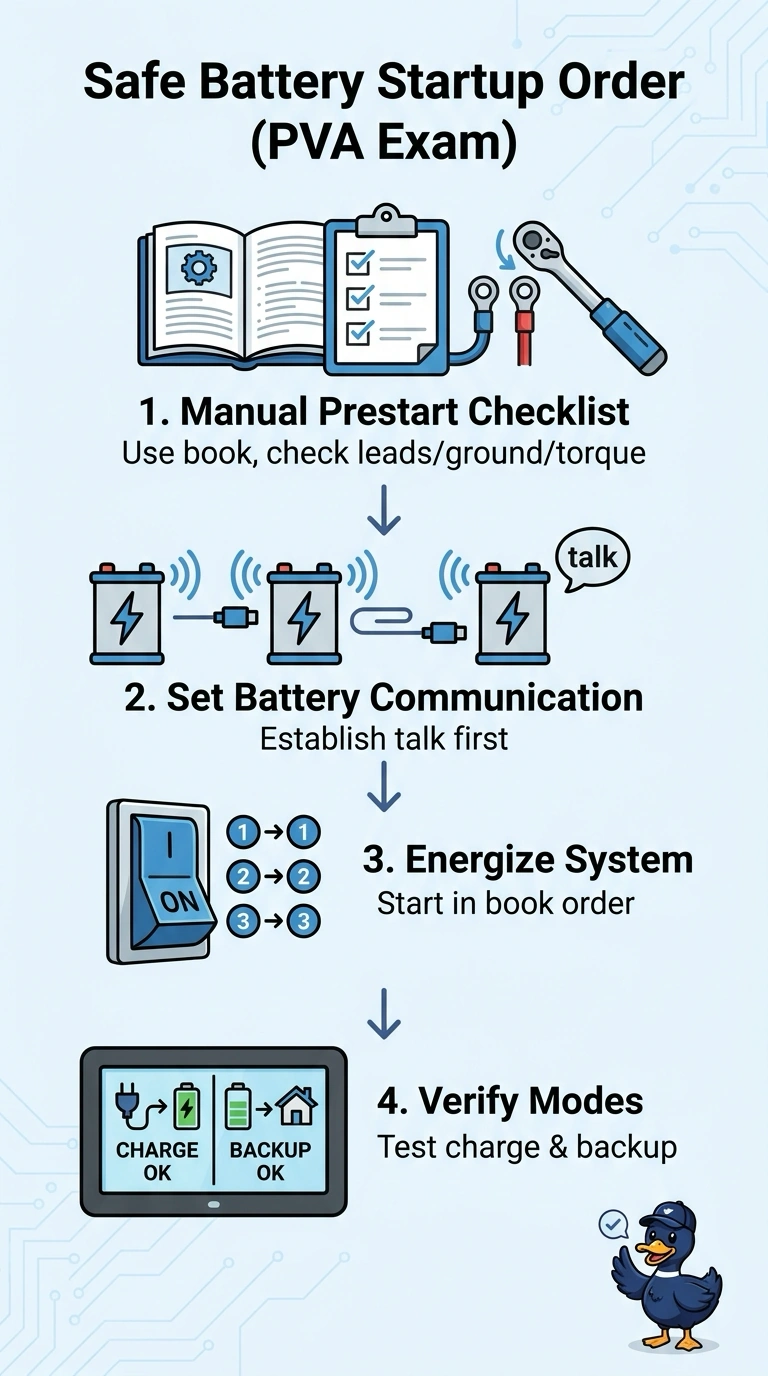
The practice that best ensures a safe startup is to complete the manual’s prestart checklist in order, set battery communication, then energize and verify the operating modes. These steps work together: the prescribed order helps prevent unsafe energization, communication supports battery-inverter coordination, and verification confirms the system entered the intended state. Using the crew’s standard startup sequence instead of the manual’s sequence does not establish that the familiar order is safe for this equipment. Substituting a published industry torque table for the manual’s specified torque values is also unreliable, because terminal hardware and product design can require specific values. Selecting open-loop settings fails to establish the required closed-loop communication, even if the checklist, startup order, and torque values are followed. Exam caveat: do not assume that a familiar crew procedure or a general industry table overrides product-specific instructions. Practical check: before energizing, confirm the manual revision, record the specified terminal torque values, verify the battery communication settings and cabling, and check off the startup steps in order.