
A homeowner with a 7 kW rooftop system reports low credits for two weeks, the installer sees normal status on the fleet web portal, and the homeowner wants daily checks without a site visit. The inverter display on-site shows no fault code. Which monitoring method best fits ongoing homeowner daily checks and remote troubleshooting support?
Select an answer to reveal the explanation.
Short Explanation
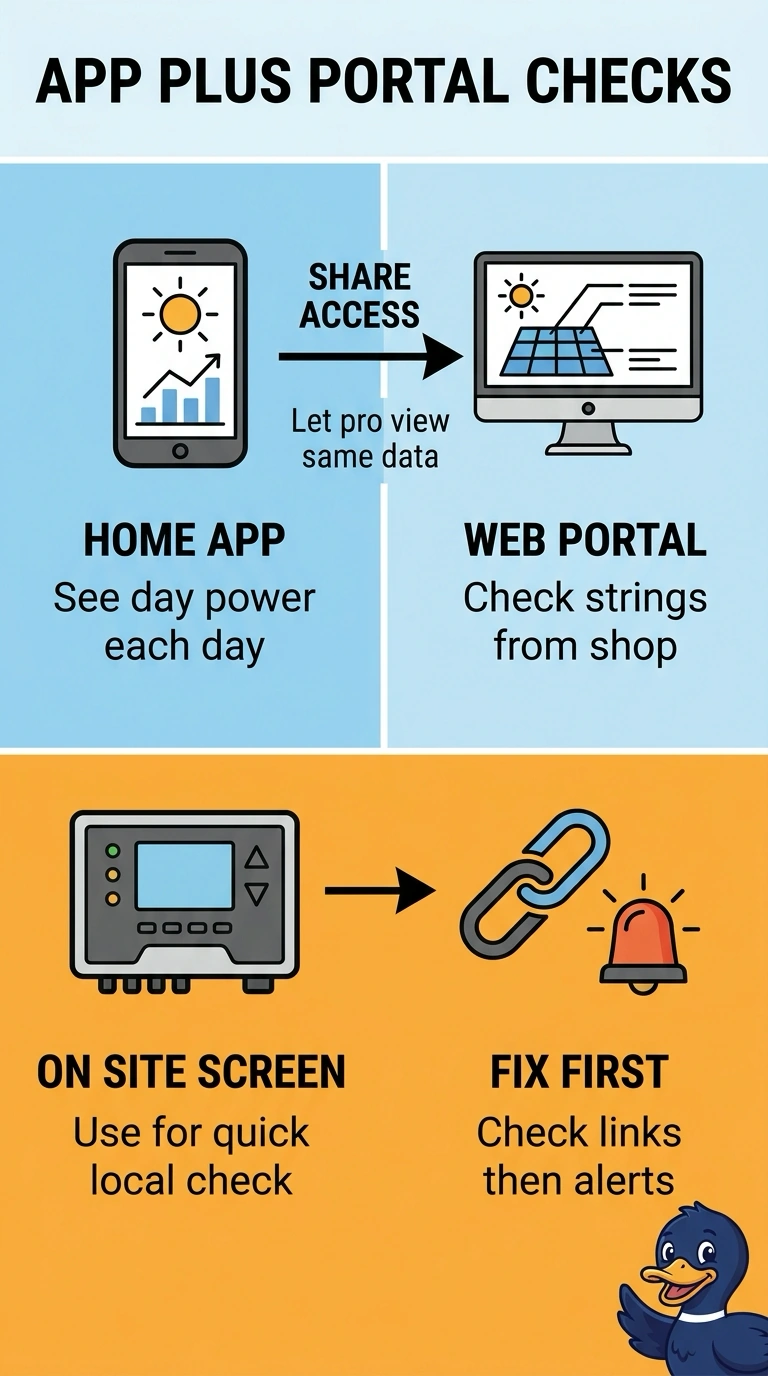
You get the best of both worlds here, and access is the key term. The app gives daily eyes at home while the portal lets the pro peek in from afar, like a shared fridge list.
Full Explanation
The homeowner app is the best fit because it provides accessible, frequent yield information for daily review, and sharing access lets the installer examine the same system data remotely when investigating the low credits. The utility portal can show daily net export and the installer can use live telemetry, but net export is not the same as total PV production: it is affected by household consumption and may not establish whether the array’s yield is low. Weekly inverter summaries are a reasonable way to review production trends, and live telemetry can support diagnosis, but a weekly reporting interval does not meet the homeowner’s stated need for daily checks. Daily production emails give frequent yield information, but waiting for scheduled site visits gives the installer no remote access to operating data; with no fault code displayed, nothing would flag the cause of the low credits until someone visits. Exam caveat: a normal fleet-portal status or lack of a fault code does not confirm that energy production or utility crediting is normal. Practical check: compare the app’s daily production with the utility’s interval export and household-use records, accounting for self-consumption and the utility’s billing or credit rules.