
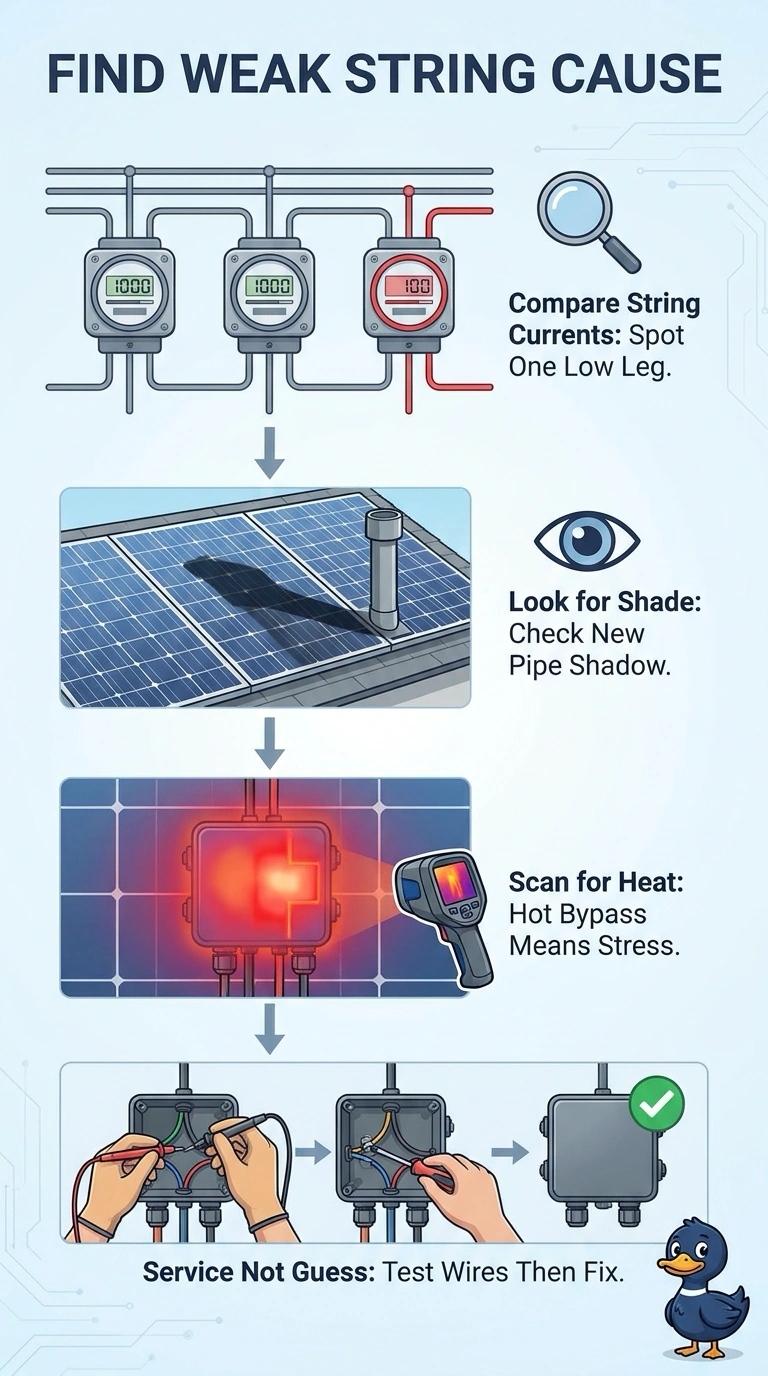
A six-month-old 8-kW rooftop string system shows one string 18% low at solar noon with no inverter fault, clean sky, and matching tilt. Thermal scan shows one hot bypass area and a shaded lower corner from a new vent pipe. Which installation deficiency diagnosis is correct?
Select an answer to reveal the explanation.
Short Explanation
You’re right to look beyond the biggest clue: one weak string and a hot area tell a connected story. Localized shading plus bypass-circuit stress best explains the pattern you see.
Full Explanation
The diagnosis accounts for both clues: the new vent shades the lower corner and reduces the affected string’s noon output, while the hot bypass area indicates a stressed circuit that needs assessment and service. Relocating the vent or its shadow footprint and retesting would address the shade, but leaving the hot bypass area unserviced would leave the observed heating unresolved. Replacing the affected module or bypass diode after testing could address a faulty component, but leaving the new vent shadow in place would preserve the known loss of irradiance. Moving the shaded module to a separately tracked string could reduce the effect of uneven shading, but leaving the thermally stressed bypass circuit in service would not address a potentially defective or overheating component. A caveat is that a thermal hot spot signals abnormal heating but does not, by itself, prove that a particular diode has failed; diagnose before replacing parts. In practice, confirm the vent’s shadow path, compare string current under stable irradiance, and inspect the affected module and bypass path with safe, manufacturer-approved tests.