
A ground-mount client worries about wind uplift, module cracking, and future swaps, asking how panels and racks share loads and allow service. Which description of PV modules and mounting structures answers best?
Select an answer to reveal the explanation.
Short Explanation
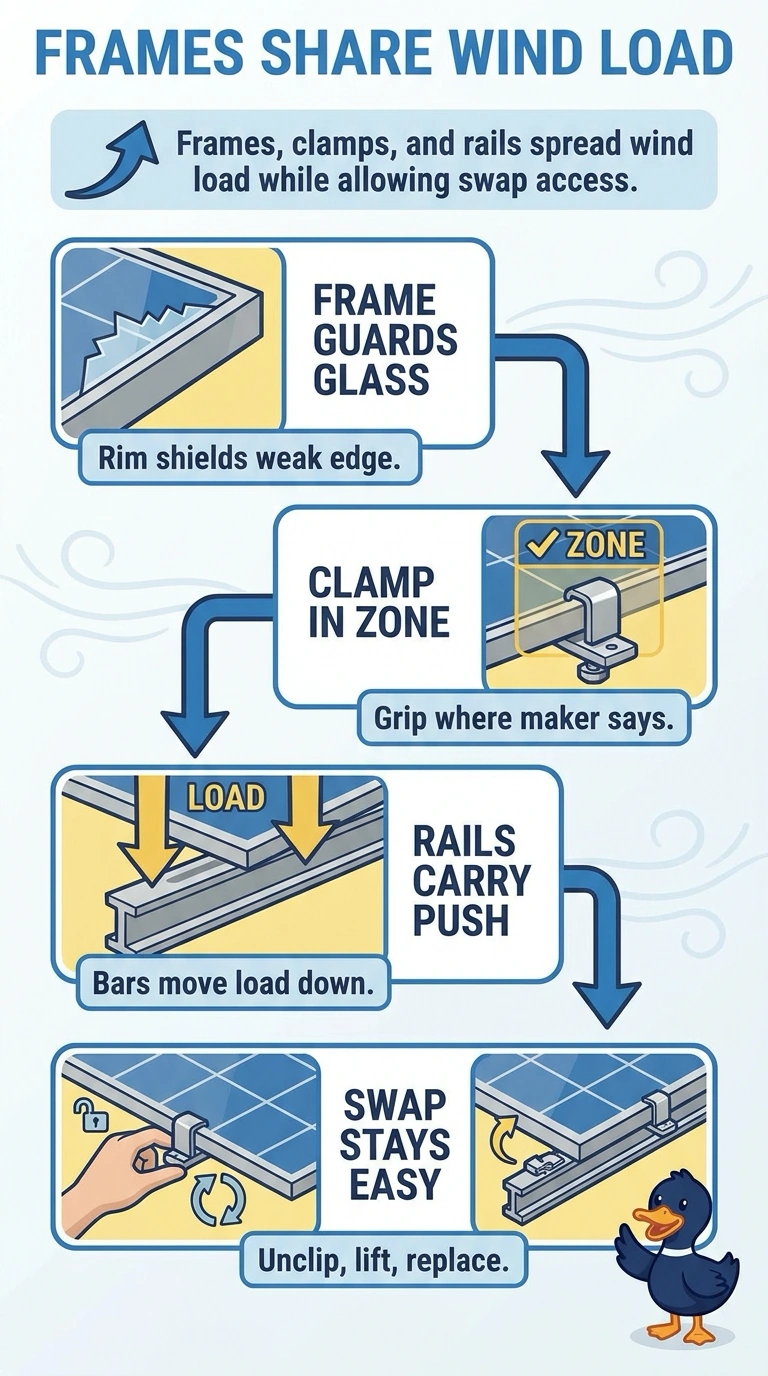
Your panels and racks work together to spread wind forces through the frames, clamps, and rails, helping protect the modules through load sharing. You can also access individual modules for service and replacement.
Full Explanation
Frames, clamps, and rails create a load path from each module into the rack and its foundations, spreading wind forces rather than relying on the glass or cells as structural supports. When designed and installed correctly, this arrangement also leaves access for removing and replacing individual modules. Rails and end clamps can transfer uplift, but shared clamp locations may hinder individual swaps, so that description does not meet the serviceability concern. Pile-driven racks can resist uplift and permit replacement, but rigid clamps may concentrate stress at module edges and increase cracking risk; clamp compatibility, position, and torque matter. Ballasted racks can support modules gently and allow swaps, but ballast may not provide enough resistance to wind uplift at a particular site. Exam caveat: no mounting approach is inherently suitable without site-specific structural design; wind exposure, soil, module instructions, and applicable codes affect the result. Practical check: review the engineered load path and uplift calculations, then confirm clamp zones, specified torque, and module-removal clearances in the installation drawings.