
A sales designer must explain to a client why two same-wattage quotes differ when one uses glass-backsheet modules on rail mounts and the other uses glass-glass modules on shared-rail low-slope mounts. Which description of PV modules and mounting structures is correct?
Select an answer to reveal the explanation.
Short Explanation
You can turn alphabet soup into plain choices for the buyer. Modules and racks work as a team like shoes and socks, and construction-plus-support explains cost and strength gaps.
Full Explanation
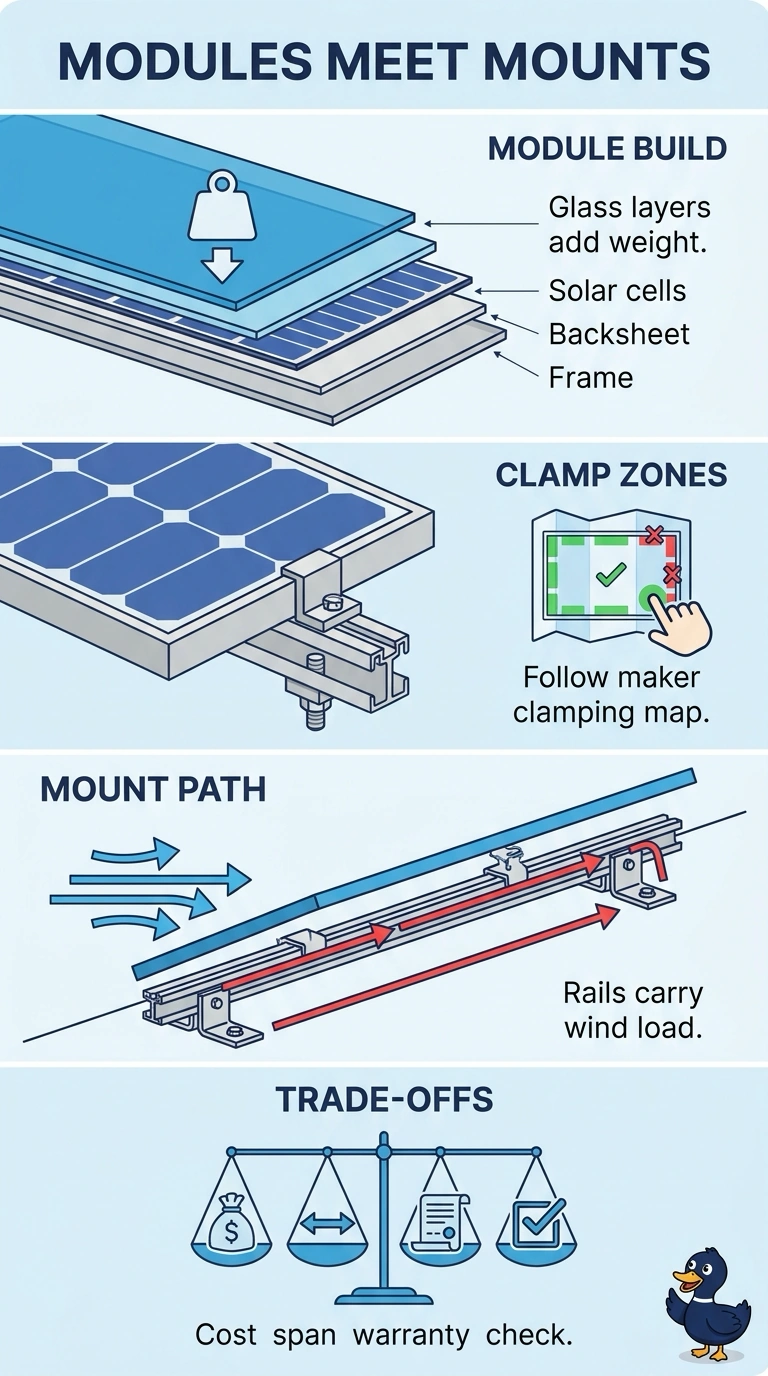
The correct description compares both module designs and how each mounting system transfers loads to the roof. Glass-glass and glass-backsheet products can differ in mass, mechanical behavior, approved support points, and warranty conditions; rail mounts and shared-rail layouts can also distribute loads differently and permit different spans. Those differences help explain why same-wattage quotes may have different hardware, structural demands, and warranty trade-offs. Comparing construction, weight, load paths, and span without product-specific warranty terms leaves out a requested part of the comparison. Comparing construction, weight, and warranty terms while treating shared-rail and rail-mount load paths as equivalent overlooks how rail arrangement and attachment spacing affect load transfer and roof loading. Comparing construction, loading, and warranties but applying one span assumption to both layouts can be inappropriate because allowable spans depend on the particular module, support configuration, and applicable design limits. Exam caveat: module type alone does not establish a permitted span or warranty outcome; manufacturer documentation and project design criteria govern. Practical check: verify each module’s installation manual and warranty, then compare mounting drawings, attachment locations, design loads, and approved spans for the quoted systems.