
A contractor is building a 40 kW ground-mount array on a vacant lot next to a school playground with foot traffic, curious teens, and evening trespass. The owner wants low upkeep and safe operation. Which site access control with fencing or screening best fits the safety plan?
Select an answer to reveal the explanation.
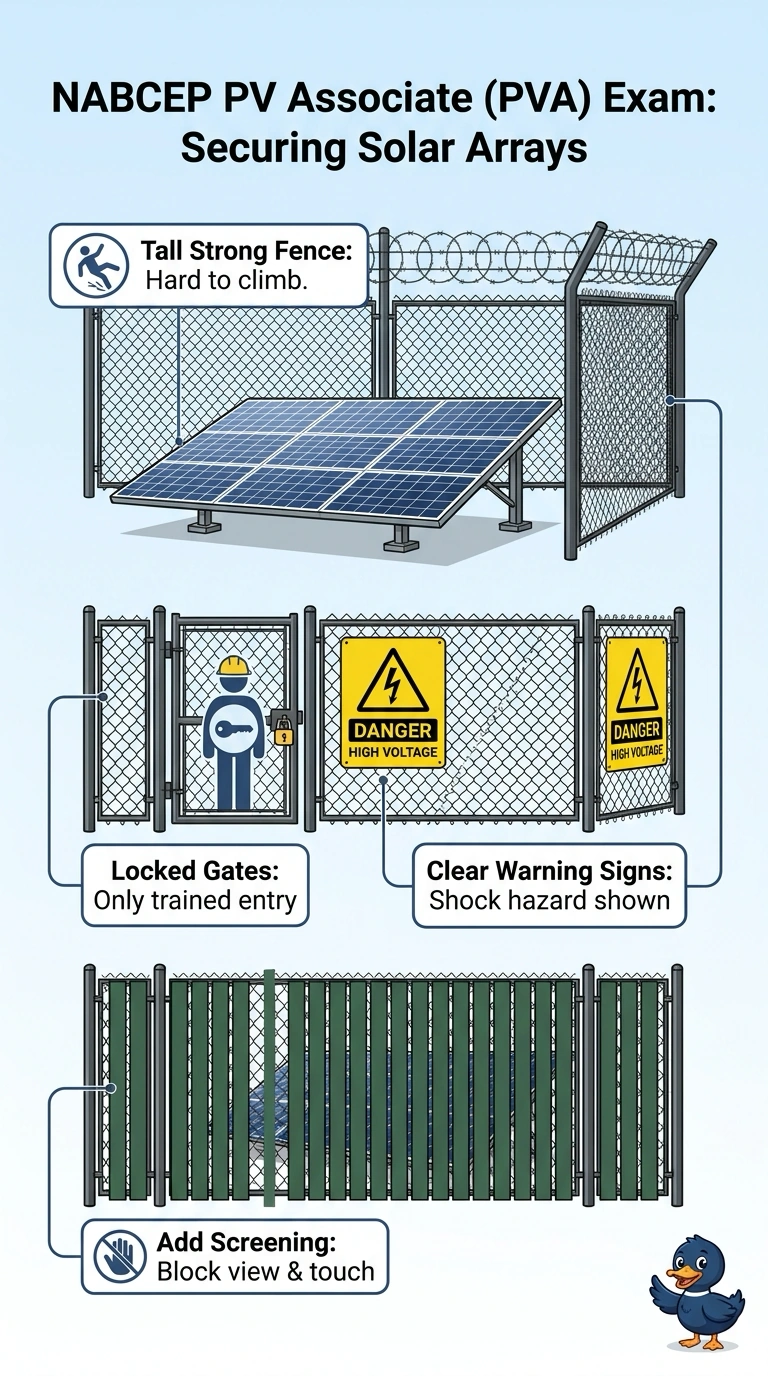
Short Explanation
Kids and live gear should never mix, so you need a real barrier. A locked fence with clear signs keeps hands off and liability down.
Full Explanation
The best plan combines a climb-resistant barrier, warning signs, secured gates, and screening. The site borders a school playground and has foot traffic, curious teens, and evening trespass, so the design should deter climbing, control entry, alert people to the electrical hazard, and reduce opportunities for visual or physical contact with the array. A conventional chain-link fence with signs, locked gates, and opaque screening provides several useful controls, but ordinary chain link can be readily climbed; the omitted climb resistance is significant at this location. A climb-resistant fence with signs and secured gates is also a familiar perimeter approach, but open mesh leaves the equipment visible and accessible to contact through the fence, missing the requested screening function. A climb-resistant, screened fence with secured gates provides strong physical separation, but without warning signs it does not communicate the hazard to people approaching the boundary or reinforce the restricted-access message. Exam caveat: screening is a supplementary layer, not a substitute for a properly designed and maintained fence, locked access points, or required electrical and hazard signage. Practical check: inspect the perimeter from the playground and public approaches, verify the fence cannot be climbed or reached through, confirm gates latch and lock, and ensure signs are legible and screening remains intact.