
After a 10-kW battery-ready install, the owners are unsure how to read the app, when to call service, and how to shut down safely in a storm or fire. The lead has 20 minutes for handoff. Which owner orientation on operation, monitoring and emergency response fits best?
Select an answer to reveal the explanation.
Short Explanation
You’ll feel more confident when you practice the key moves before a stressful moment. A hands-on walkthrough builds system literacy, like practicing a fire drill before you smell smoke.
Full Explanation
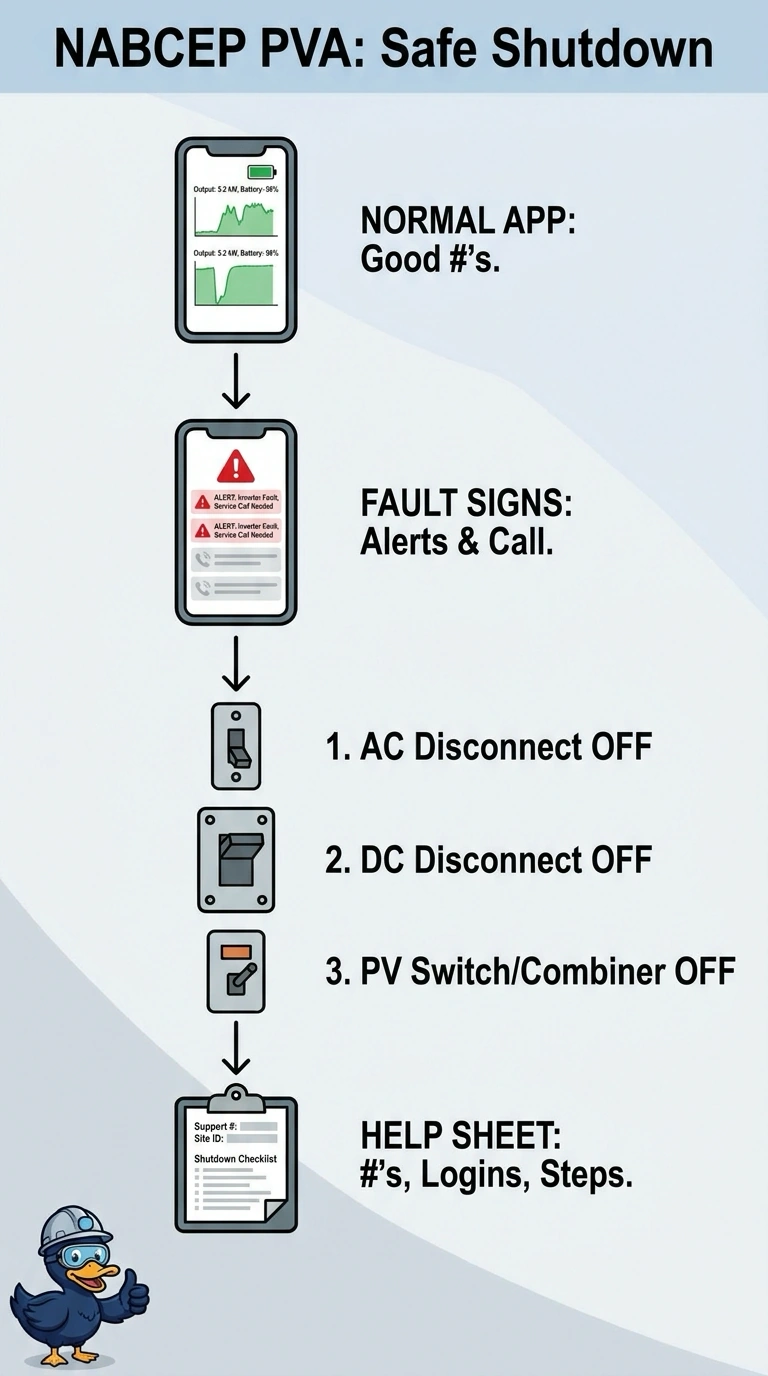
The best use of the limited handoff time is to demonstrate how to interpret normal app readings, which service alerts warrant a call, and the labeled shutdown sequence in order. Seeing each in context is more useful than expecting owners to infer thresholds or reconstruct emergency steps from written material. Demonstrating app readings and service-call thresholds but only referring owners to the manual for shutdown leaves the safety-critical sequence unpracticed and harder to follow under stress. Demonstrating app readings and shutdown steps while sending service-call thresholds later leaves owners unsure when an alert calls for professional help. Reviewing service alerts and shutdown steps while assigning a normal-reading guide for later leaves owners less prepared to distinguish expected status from a problem. Exam caveat: a short orientation does not replace the manufacturer’s procedures, site-specific labeling, or emergency-service guidance; shutdown actions can vary by system and hazard. Practical check: ask each owner to identify a normal reading, explain when they would call service, and point to the correct shutdown steps without prompting.