
A two-person crew is sent to a rural ground-mount site on a January morning: minus 8 °C with a stiff wind, hoar frost on the steel rails they must climb that re-forms minutes after it is wiped, and a raccoon denning under the inverter pad they need to open. The supervisor has to brief the day's controls. Which control set covers the cold exposure, the frosted rails and the denning raccoon?
Select an answer to reveal the explanation.
Short Explanation
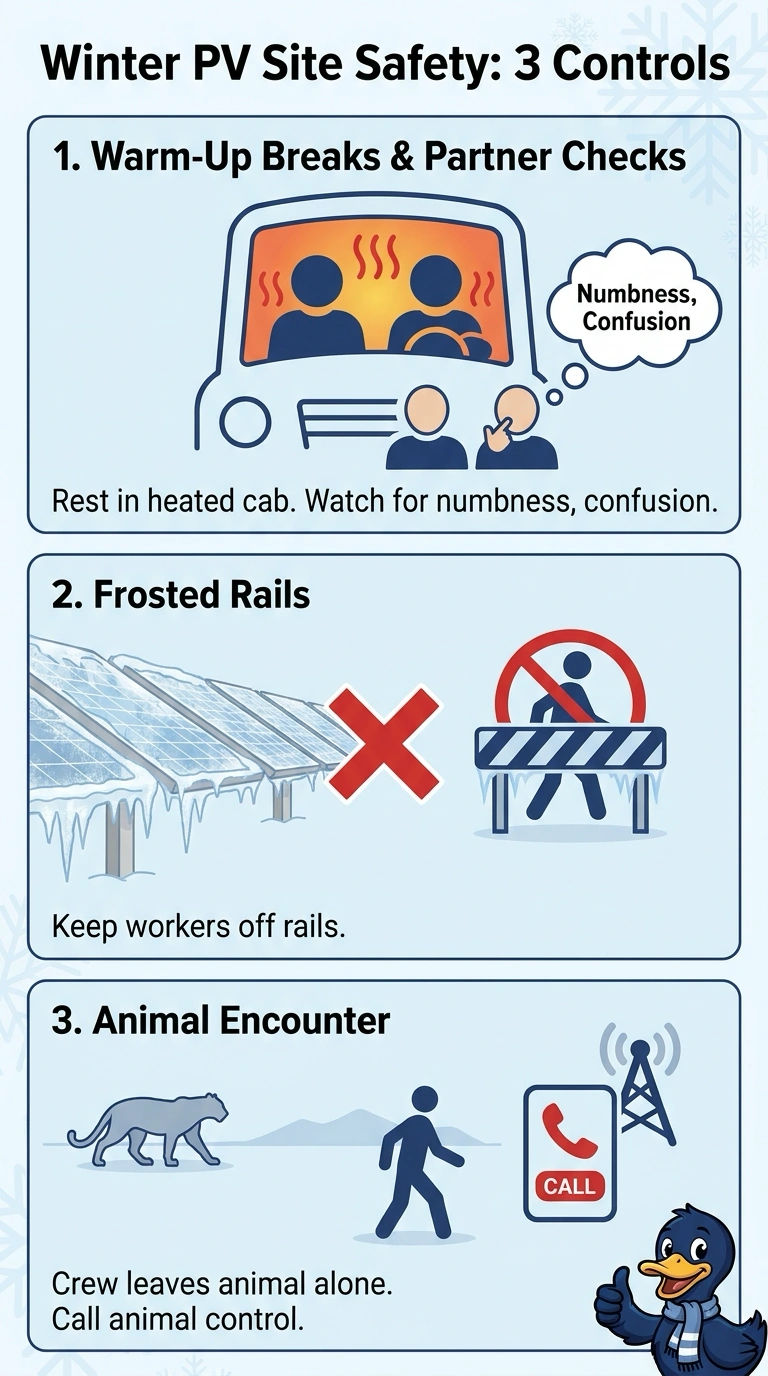
You need a control for each hazard: take warm-up breaks in a heated cab, stay off rails that keep refrosting, and call animal control before work starts about the denning raccoon. Skip any one, and you’d still face cold exposure, a fall, or an animal encounter.
Full Explanation
The control set that uses heated-cab warm-up breaks, keeps workers off the frosted rails, and calls animal control before work starts addresses all three hazards. Heated-cab breaks reduce cold stress in sub-zero temperatures with wind; avoiding the rails prevents exposure to a slip hazard that returns minutes after wiping; and contacting animal control ensures the denning raccoon is assessed before the pad is opened. Warm-up breaks in a wind-sheltered site shelter reduce wind exposure, but do not provide the heated recovery specified for this severe cold exposure. Wiping the rails immediately before each ascent and wearing slip-resistant boots are familiar traction measures, but they do not reliably control frost that reforms within minutes and may make the surface slippery during the ascent; heated-cab breaks and animal-control contact do not fix that gap. Deferring pad work until the raccoon leaves avoids disturbing it, but is not a dependable control for a denning animal and omits advance assessment by animal control; the crew cannot assume it will leave promptly or safely. Exam caveat: a generally useful measure, such as wiping ice or using grippy footwear, may be inadequate when the hazard rapidly returns. Practical check: before starting, confirm the warm-up location is heated, identify an access route that avoids the rails, and verify animal control has been contacted and the pad-opening plan is cleared.