
A technician visits a 5-year-old 12 kW rooftop array after a hailstorm and high winds for a scheduled O&M check with no monitoring alerts. Production looks normal on the app. Which visual inspection routine best fulfills maintenance of PV systems?
Select an answer to reveal the explanation.
Short Explanation
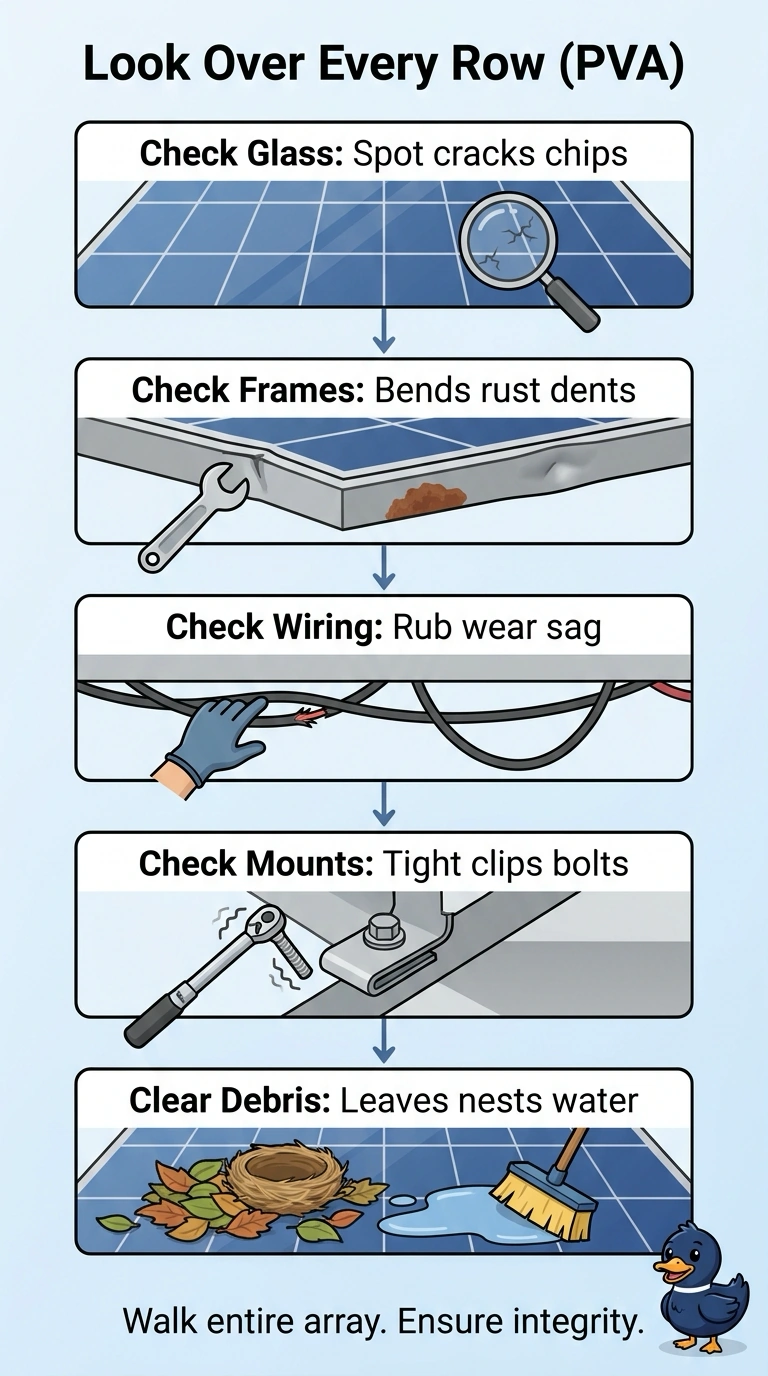
Your eyes can catch small damage before it becomes a bigger outage. A steady row-by-row scan for cracks, corrosion, loose parts, drainage problems, and debris beats quick resets.
Full Explanation
The scheduled visual O&M check follows hail and high winds, so normal app production does not rule out physical damage. Walk every row and inspect module glass, frames, wiring, mounts, and drainage for cracks, corrosion, looseness, and debris buildup. This systematic check covers storm damage as well as conditions that can worsen over time, such as blocked drainage or accumulated material. Inspecting glass and frames from the roof perimeter can document visible damage, but it does not reliably assess wiring, mounts, or drainage. Walking each row while deferring drainage and debris checks leaves out important parts of the inspection; waiting for production to decline is not dependable because these conditions may not yet affect output. Using inverter logs to decide whether debris needs attention also does not directly assess debris buildup, and electrical performance data cannot establish the array’s physical condition. Exam caveat: a visual walk-through does not replace electrical testing, structural assessment, or site-specific access and safety procedures when a defect is suspected. Practical check: record the location and condition of damage or obstructions, and escalate concerns for qualified follow-up rather than disturbing potentially damaged components.