
Your two-person team must move palletized modules, a 90-kg inverter, and conduit across a muddy 15-kW farm site using a flatbed truck and hand cart where the path slopes gently and winds gust in the afternoon. Which method for transporting and moving heavy equipment and vehicles best protects people and gear?
Select an answer to reveal the explanation.
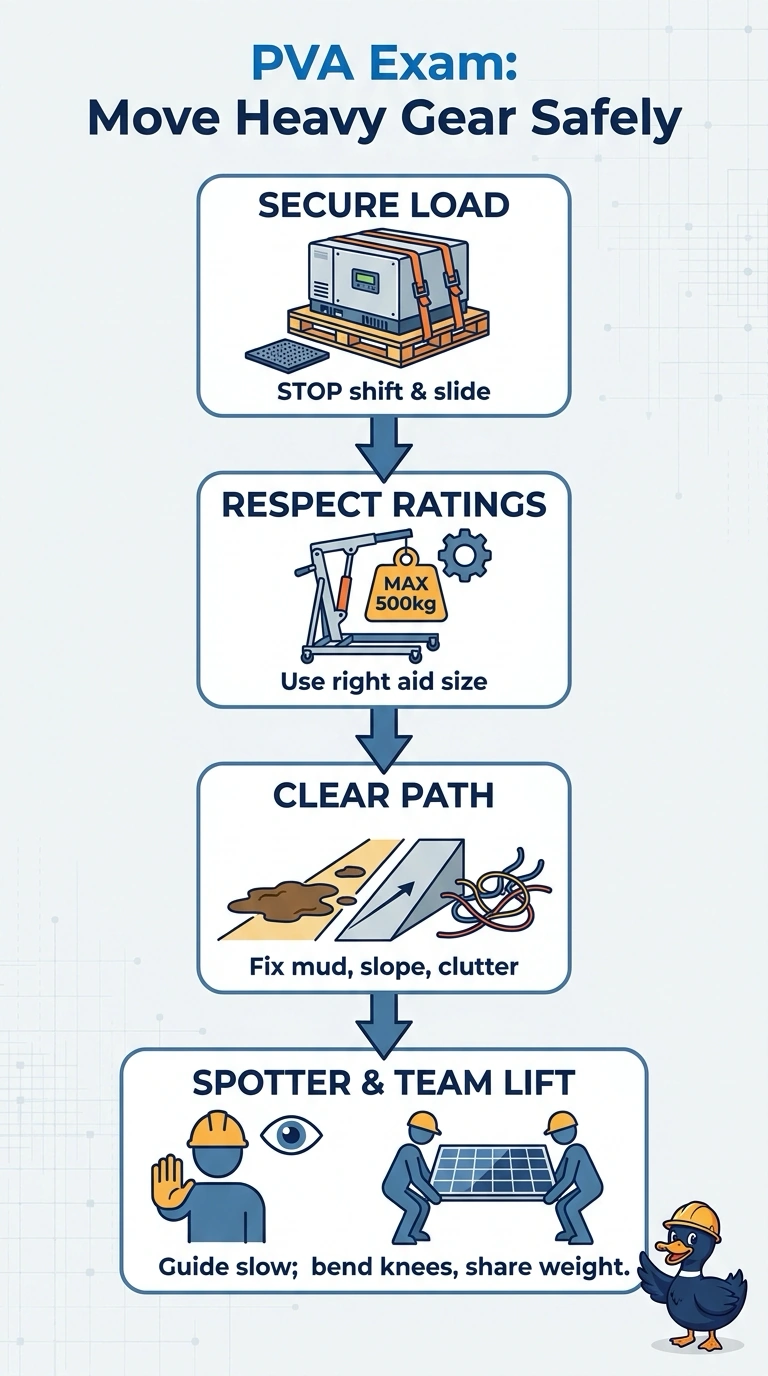
Short Explanation
You may take a little longer, but you’ll protect your team and equipment by planning the move. A secure haul uses rated gear, a clear route, and a spotter instead of rushing.
Full Explanation
The safe method combines the controls needed for this move: secured loading prevents modules and equipment from shifting on the flatbed or cart; rated lifting equipment is essential for handling the 90-kg inverter; a clear route reduces slips and snags on muddy ground; and a spotter helps your two-person team manage visibility, vehicle movement, and the slope. Securing loads, using rated gear, and clearing the route still leaves the move without a spotter. On a sloping, gust-prone route, the person handling the load may not be able to monitor the cart, truck, and surroundings at once. Securing loads, using rated gear and a spotter, but leaving the muddy route uncleared, leaves hazards that can cause trips, loss of control, or equipment damage despite proper restraints. Securing loads, clearing the route, and using a spotter, but moving the inverter on a general-purpose cart, fails to establish that the cart has verified capacity or suitability for the load and terrain. Exam caveat: weight alone does not determine the right lifting method; equipment ratings, load shape, ground conditions, and manufacturer instructions matter. Practical check: before moving, confirm each load and device is within its rated capacity, inspect tie-downs and cart condition, walk the route for mud and obstructions, and agree on roles and signals.