
An off-grid cabin owner must choose batteries for a small solar shed that is unheated in winter, visited monthly, and needs low upkeep with safe indoor placement. Which lithium versus lead-acid comparison should guide this energy storage choice?
Select an answer to reveal the explanation.
Short Explanation
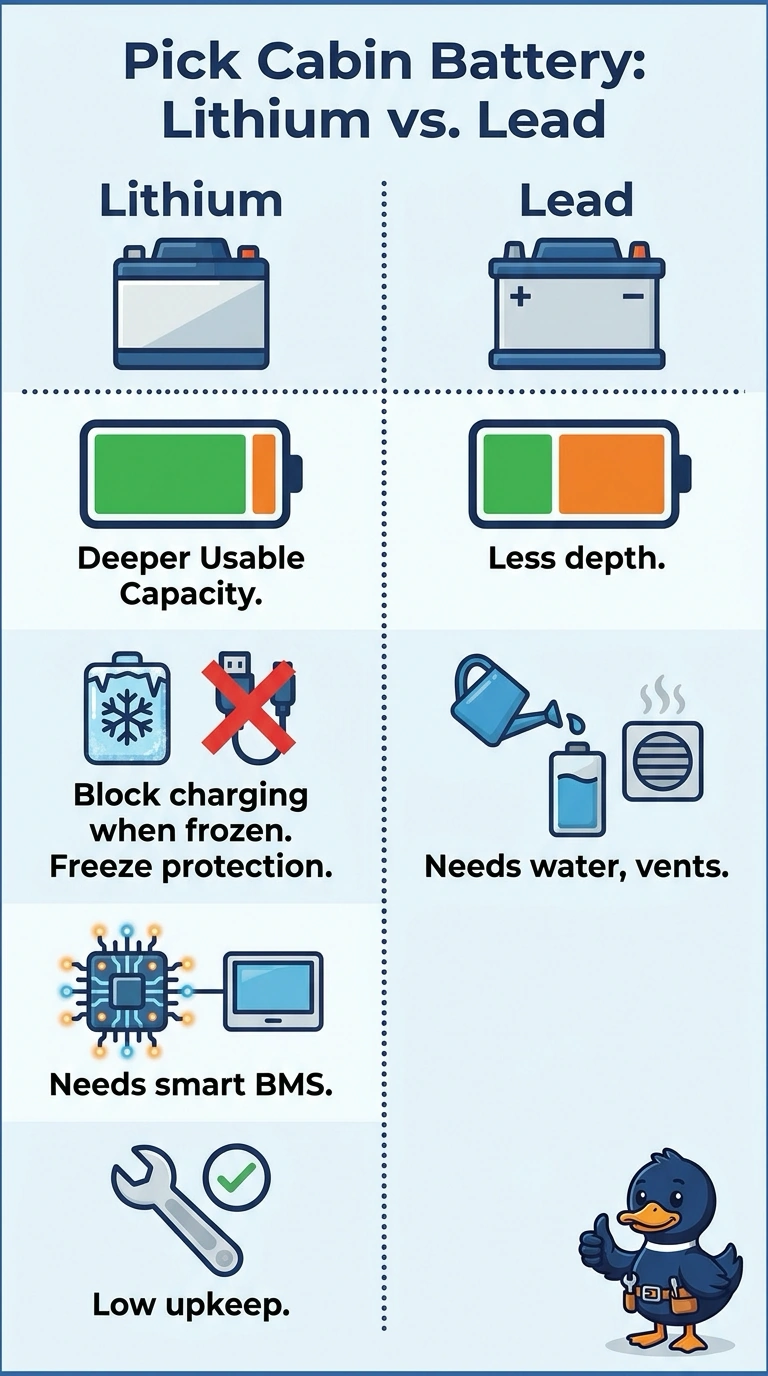
You are picking between a thirsty workhorse and a smart low-touch pack for a cold cabin. Weigh upkeep plus usable energy: lithium gives more cyclable power if you protect its brain and temperature.
Full Explanation
The correct comparison captures the main trade-off: lithium batteries generally provide more usable energy from a given rated capacity and require little routine maintenance, but cold charging must be managed and the battery needs suitable freeze protection in an unheated shed. The sealed AGM comparison gets the indoor-safety and low-maintenance points largely right, but overstates usable capacity per rated amp-hour; AGM generally requires more nominal capacity to deliver the same usable energy. Flooded lead-acid is a familiar, serviceable choice in a properly ventilated location, but regular electrolyte checks and watering are not a modest burden for an owner who visits only monthly, so it misses the low-upkeep requirement. A BMS low-temperature cutoff can prevent charging below the battery maker’s permitted temperature, but it does not keep the battery warm or prevent the battery itself from freezing; cutoff alone is not freeze protection. Exam caveat: usable capacity, charge-temperature limits, and maintenance intervals vary by model, so compare manufacturer specifications rather than relying only on chemistry labels. Practical check: confirm the battery’s minimum charging temperature and verify that the installed temperature sensor, cutoff or heater, and enclosure can maintain the required conditions during winter.