
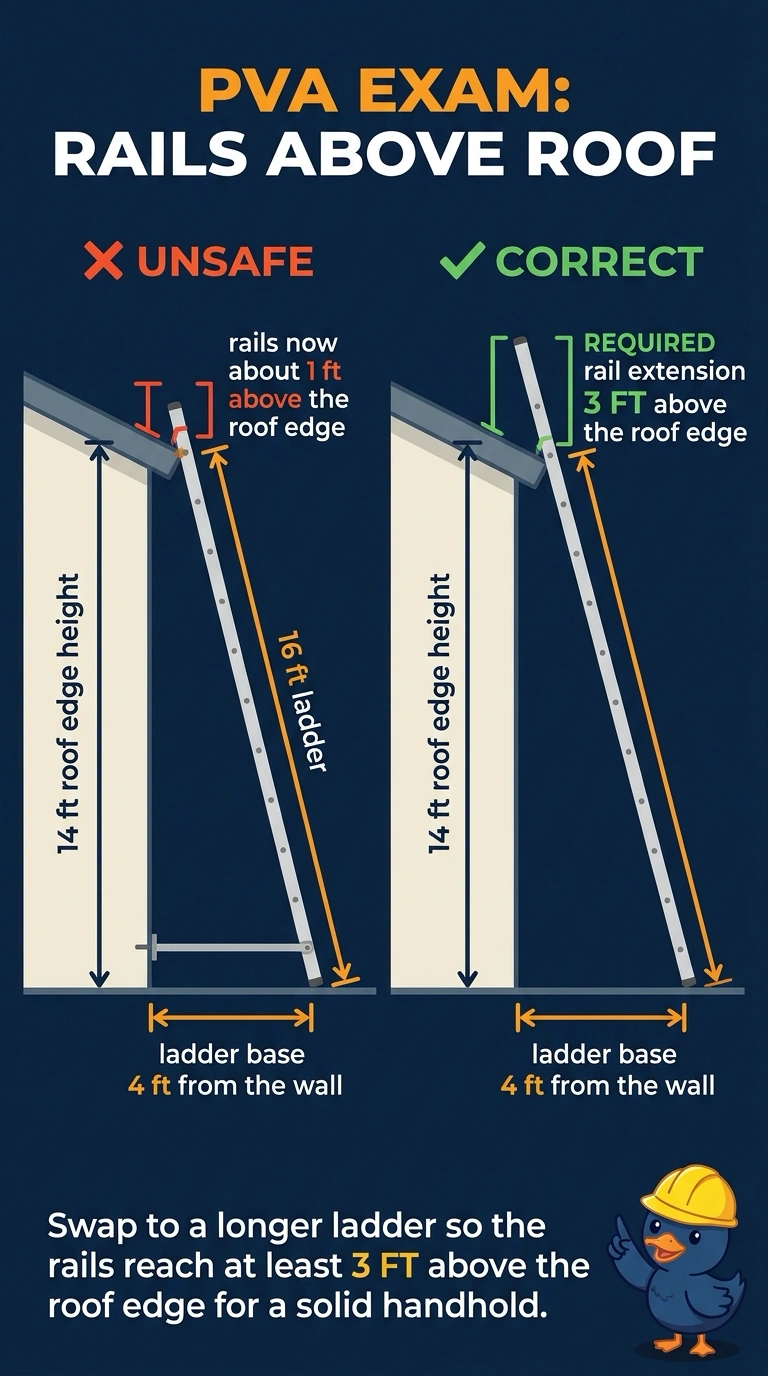
A helper sets a 16-ft fiberglass extension ladder on compacted gravel to reach a 14-ft garage roof. The base sits 4 ft from the wall for a proper climbing angle, but the rails extend only about 1 ft above the roof edge. Which ladder setup makes stepping from the ladder onto the roof safe for the helper?
Select an answer to reveal the explanation.
Short Explanation
With only a foot of rail above the eave, your hands run out of ladder just as you step onto the roof. Swap for a longer ladder so at least three feet of rail extends above the edge before anyone climbs. Tying the top rails, footing the base, or adding a stabilizer may steady the ladder, but none gives your hands the needed reach.
Full Explanation
Stepping from a ladder onto a roof is one of the riskiest moves on the job, and you need your hands free to grip the rails as you transfer your weight. The rails should extend at least three feet above the roof landing to provide that handhold. With only about a foot of rail above the edge, your hands run out of ladder when you need them most; no amount of base preparation fixes that geometry. Tying the top rails to a roof anchor can help prevent shifting, but it adds neither rail height nor a handhold above the edge. Having a second worker foot the base controls movement at the bottom, but does not provide a secure grip at the roof or reliably arrest a fall at the top. Bolting a stabilizer at the top can keep the ladder off the wall and add lateral steadiness, but it does not add rail projection above the roof edge. Exam caveat: a stable ladder is not necessarily a safe ladder for stepping onto a roof; adequate rail extension is still essential. Practical check: from the ground, sight the rails against the roof edge before anyone climbs, and use a longer ladder if they do not extend at least three feet above it.