
A two-person crew is setting rail-based flush mount on tile hooks where the site plan lists specific spans, lag size, and torque values tied to the engineering stamp. The lead wants to speed up by widening spans and guessing torque. Which mounting practice follows manufacturer manuals and site-engineered plans?
Select an answer to reveal the explanation.
Short Explanation
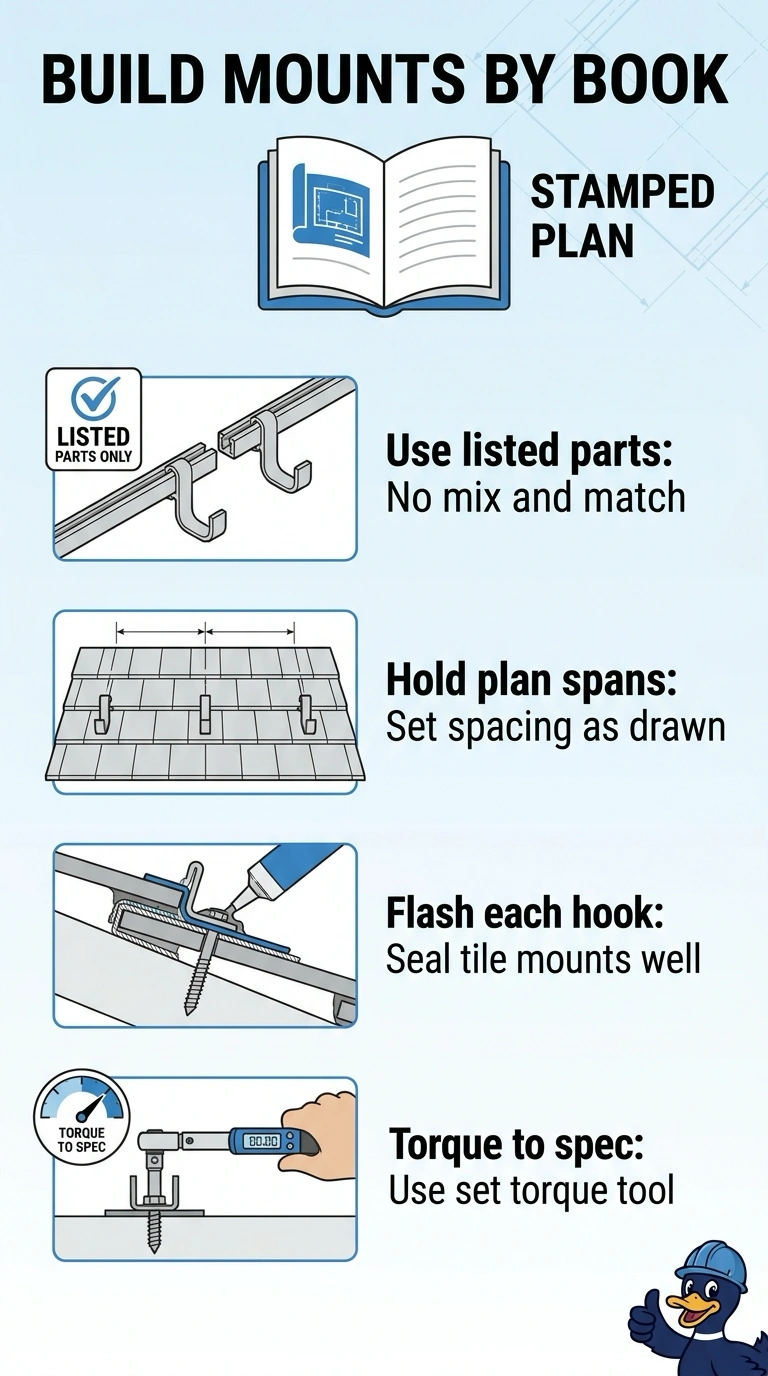
You keep the roof and mounting system safer by following the specified details rather than guessing. Stamped plans and the manual work together to set spans, flashing, lag size, and torque.
Full Explanation
The required practice follows both the manufacturer’s manual and the site-specific stamped plan: use the stated spans, flashing, lag size, and torque without changing them for convenience. These coordinated details govern the mounting system and this particular installation. Using the rail maker’s span table while retaining the stamped lag size and torque and manual-specified flashing may be appropriate where no more specific engineered span applies, but it substitutes a generic span for the site-stamped one. Choosing lag size for the substrate can be a valid design consideration, but the plan already specifies the lag size, so substituting another bypasses the engineered requirement. Using the manual’s standard flashing detail with the plan’s spans, lag size, and torque does not follow the stated requirements if the manual specifies different flashing for these hooks and tile assembly. Exam caveat: if the stamped plan and manufacturer manual conflict, do not assume which governs; pause and seek clarification from the responsible designer or manufacturer. Practical check: before installation, compare the current stamped details with the manual, confirm the specified hardware and flashing are on hand, and verify torque with a calibrated torque wrench.