
A 6-person crew starts a two-week commercial rooftop job with new hires, dusty panel cutting, and solvent cleaners on site, and the site lead must prove weekly safety compliance to the GC. Which safety-meeting and on-site document practice should the lead follow to satisfy the injury and illness program?
Select an answer to reveal the explanation.
Short Explanation
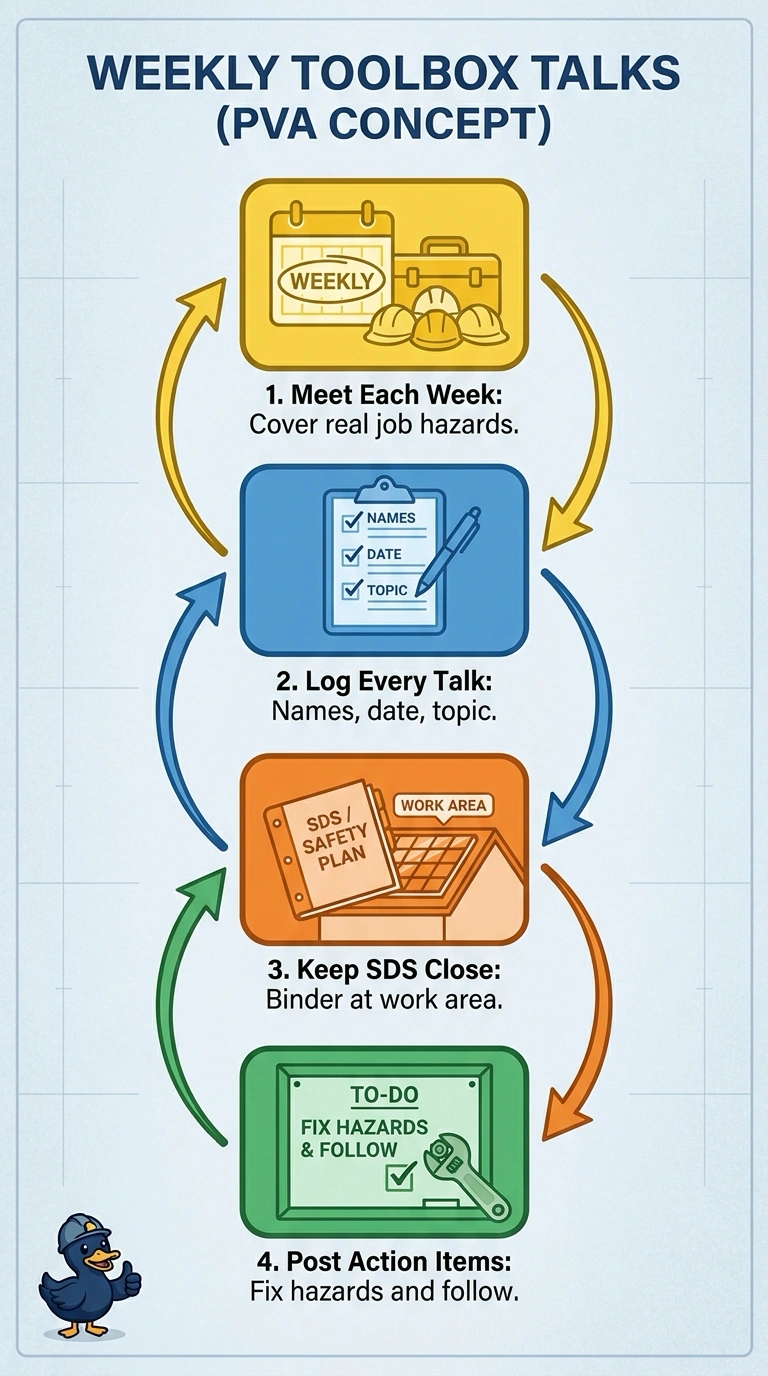
You build safety through steady habits right where the work happens. Hold weekly toolbox talks, record attendance and topics, and keep the SDSs and safety plan on site so you can show the program is active.
Full Explanation
The required practice meets three distinct needs: weekly safety communication, records showing who attended and what was covered, and on-site access to both the SDSs and the safety plan. That matters here because new hires, dusty panel cutting, and solvent use create hazards workers need to understand during the job, and the lead must demonstrate compliance to the GC. Keeping the safety plan at the office while SDSs remain on site leaves workers without ready access to the plan at the jobsite. Keeping the safety plan on site but relying on a supplier portal for SDSs does not provide the required on-site access to those documents. Keeping both document sets on site and recording attendee names, but not the topics discussed, fails to document the content of the safety communication. Exam caveat: applicable rules and employer programs may require additional documentation or retention details, so do not assume this checklist replaces them. Practical check: before work begins, verify that the current safety plan and relevant SDSs are accessible at the jobsite, then review the weekly log for dates, topics, and attendee names.