
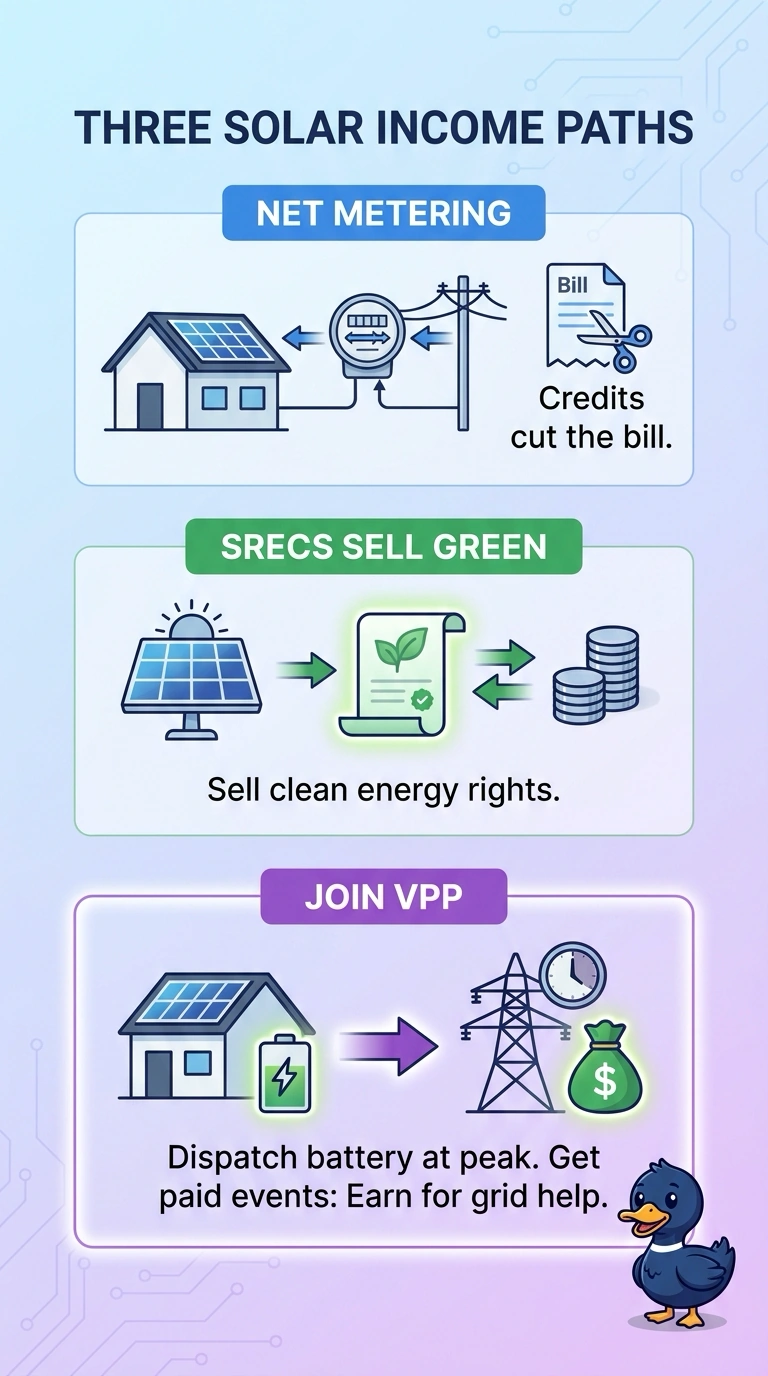
A suburban client with a 9-kW system, 1:1 export credits, state SREC sales, and a utility battery dispatch offer asks where extra income beyond lowering the bill can come from. Daytime exports are steady and evening peaks pay bonuses. Which revenue opportunity should the advisor explain for dispatchable export income?
Select an answer to reveal the explanation.
Short Explanation
You sorted bill credits from real cash streams with ease. Think of the battery as a team player on call, and dispatch payments reward you for sharing power at peak time.
Full Explanation
A virtual power plant (VPP) aggregates customer batteries and dispatches them when the grid needs power; the utility or program operator can pay participating customers for the battery’s evening peak exports. That directly matches the request for additional income from dispatchable exports, and the stated evening peak bonuses make the opportunity especially relevant. A time-varying export tariff is a legitimate way to monetize solar generation in some markets, but this client has 1:1 export credits, so the premise that daytime exports receive a separate, higher cash rate is not established. A demand-response program can pay for reducing evening grid imports, but compensation for load reduction is not the requested revenue from exporting battery power; the particular service and settlement rules matter. Off-peak charging followed by peak-hour discharge is a common battery-arbitrage strategy, but where its value is lower grid purchases or time-of-use bill savings, it does not create the separate export income the client asked about. Exam caveat: VPP participation does not guarantee a fixed payment; compensation, dispatch frequency, and export eligibility vary by program and tariff. Practical check: review the utility’s battery-program terms to confirm that the 9-kW system qualifies, exports are allowed, and payments are made for evening dispatch rather than only for availability or reduced imports.