
An installer is labeling a rooftop DC disconnect, an outdoor inverter, and an AC panel fed by a new 6 kW system in a sunny, rainy climate. The labels must remain legible for the life of the system. Which labeling practice meets marking durability requirements?
Select an answer to reveal the explanation.
Short Explanation
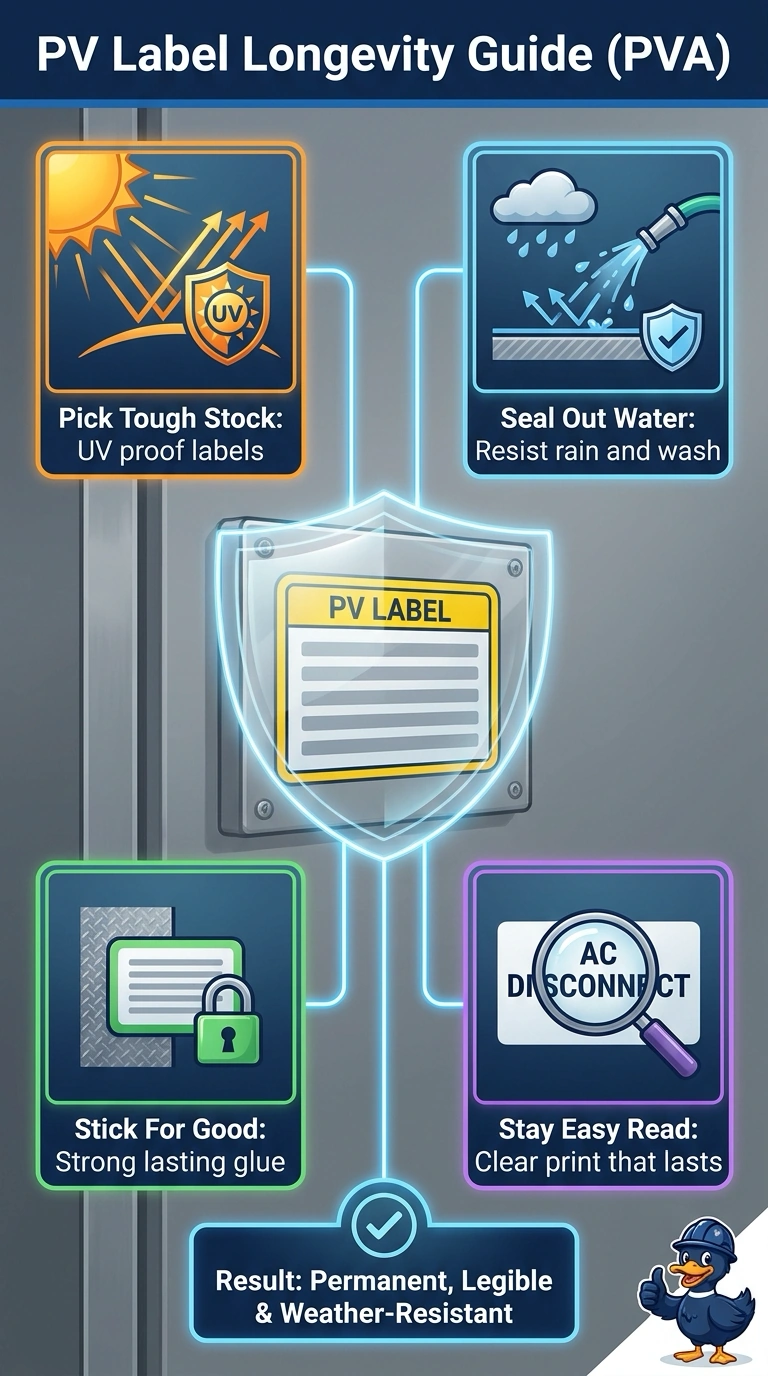
Outdoor sun and rain erase weak marks fast, so you need tough labels that stay put. Choosing durable weatherproof labels keeps warnings readable for years.
Full Explanation
The correct practice uses permanent labels whose face material and adhesive can withstand the rooftop and outdoor environment, preserving legibility through sun and rain for the system’s service life. Marking every listed item matters: the rooftop DC disconnect, outdoor inverter, and AC panel each need the required identification. Labeling only the disconnect and inverter leaves the AC panel unmarked, so that otherwise durable approach fails the requirement to label all three pieces of equipment. UV-resistant ink alone does not make a label weather-resistant; face stock that can degrade or admit moisture may fade, peel, or become unreadable in repeated rain exposure, even when the ink and adhesive are suitable. Labels rated for five years may be permanent and weather-resistant, but their stated service period does not support the requirement that they remain legible for the life of the system. Exam caveat: applicable codes and authority requirements may specify additional label wording, placement, color, or formatting; those details do not replace the durability requirement in this question. Practical check: verify the manufacturer’s documented outdoor, UV, moisture, and service-life ratings for both the label material and adhesive, then confirm all three labels are securely applied and readable after installation.