
A homeowner asks why rooftop solar helps household bills and the local grid when a large distant plant could make cheaper power. She has high afternoon peak rates and frequent summer congestion. Which economic benefit best describes distributed generation for this customer?
Select an answer to reveal the explanation.
Short Explanation
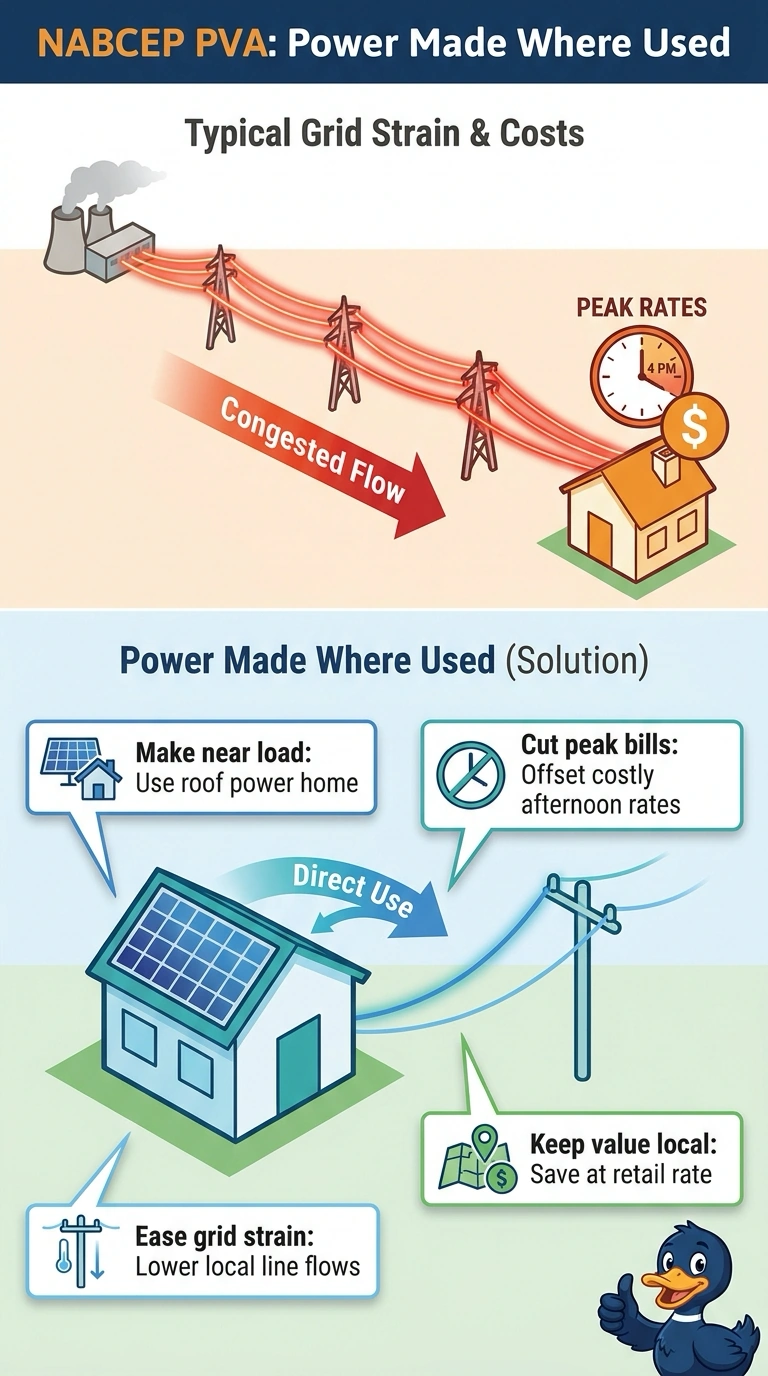
You connected rooftop power to real bill savings. Making power where you use it is like growing veggies out back, and on-site generation trims costly peak power and grid strain.
Full Explanation
Generating electricity at the home can reduce the amount bought from the utility during expensive afternoon periods, lowering peak energy charges. Because that power is produced near the customer, it can also reduce the electricity that must travel through a constrained local feeder during summer congestion. Community solar is a legitimate way to receive bill credits, but its panels are typically located elsewhere, so it does not provide generation on the homeowner’s congested feeder. Peak-time demand response can lower charges and relieve congestion by shifting or reducing consumption, but it is a load-management strategy, not distributed generation. A contract for distant utility-scale solar can reduce energy costs through low-cost generation, yet the power still travels through the wider grid and does not target the local congestion described. Exam caveat: rooftop solar’s value depends on when its output coincides with the customer’s load and the utility’s rate structure; export credits may differ from the retail price. Practical check: compare the proposed system’s hourly production with the home’s afternoon usage, peak-rate periods, and the utility’s export-compensation rules.