
A suburban homeowner with high daytime air-conditioning use and frequent evening outages asks how a 7-kW rooftop system without storage helps bills and the grid on sunny afternoons. Which description should the associate give to explain economic benefits and distributed generation?
Select an answer to reveal the explanation.
Short Explanation
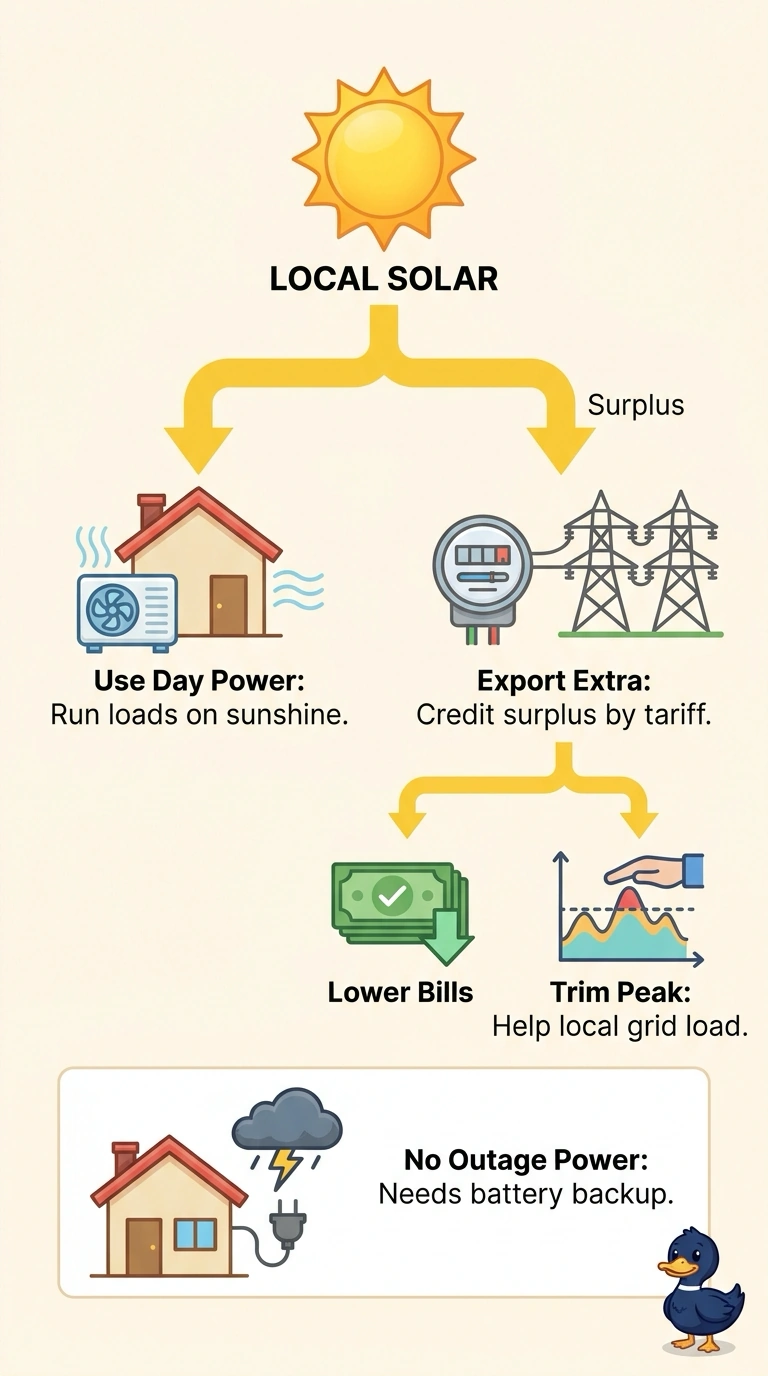
You are selling sunshine used right where it lands, and that timing is gold. Local noon power trims both your meter and the grid peak. Remember self-use first, then valued exports, for the win.
Full Explanation
The correct description is accurate because high daytime air-conditioning coincides with strong solar output, so direct self-consumption immediately reduces imported kilowatt-hours and demand exposure while surplus exported to the feeder provides distributed generation exactly during sunny afternoon suburban peak when transformers are stressed and costly peaking supply is needed, thereby lowering bills and supporting local grid balance. One incorrect description fails on the resilience concept because a grid-tied 7-kW system without storage or islanding capability provides no physical backup after sunset due to anti-islanding shutdown and zero irradiance, confusing net-metering dollar credits that offset later consumption with continuity of power through frequent evening outages. Another incorrect description fails on the coincident-load concept because exporting all midday solar while serving cooling from the grid forgoes the highest-value self-use, simultaneously increases imports and exports, raises feeder losses and transaction exposure, and contradicts efficient distributed self-supply under most current net-billing structures. A further incorrect description fails on the timing concept because the stated grid benefit is shaving sunny-afternoon peak demand, not relieving overnight demand when photovoltaics contribute nothing and load and price conditions are fundamentally different. For exams, carefully separate economic bill offset from outage protection and always match solar production coincidence to daytime peak rather than assuming any export helps at any hour. In practice, check interval meter data, time-of-use rates, and interconnection credit rules to confirm daytime cooling overlaps production and that exported afternoon energy is compensated and visible as reduced local feeder demand.