
A 30-kW rooftop system for a hardware store passed the AHJ inspection on Tuesday, and the owner wants it running for a Friday event. The utility's interconnection review is still open, the revenue meter swap is booked for next week, and the monitoring portal account still needs registering. Which action satisfies the permission-to-operate requirement today?
Select an answer to reveal the explanation.
Short Explanation
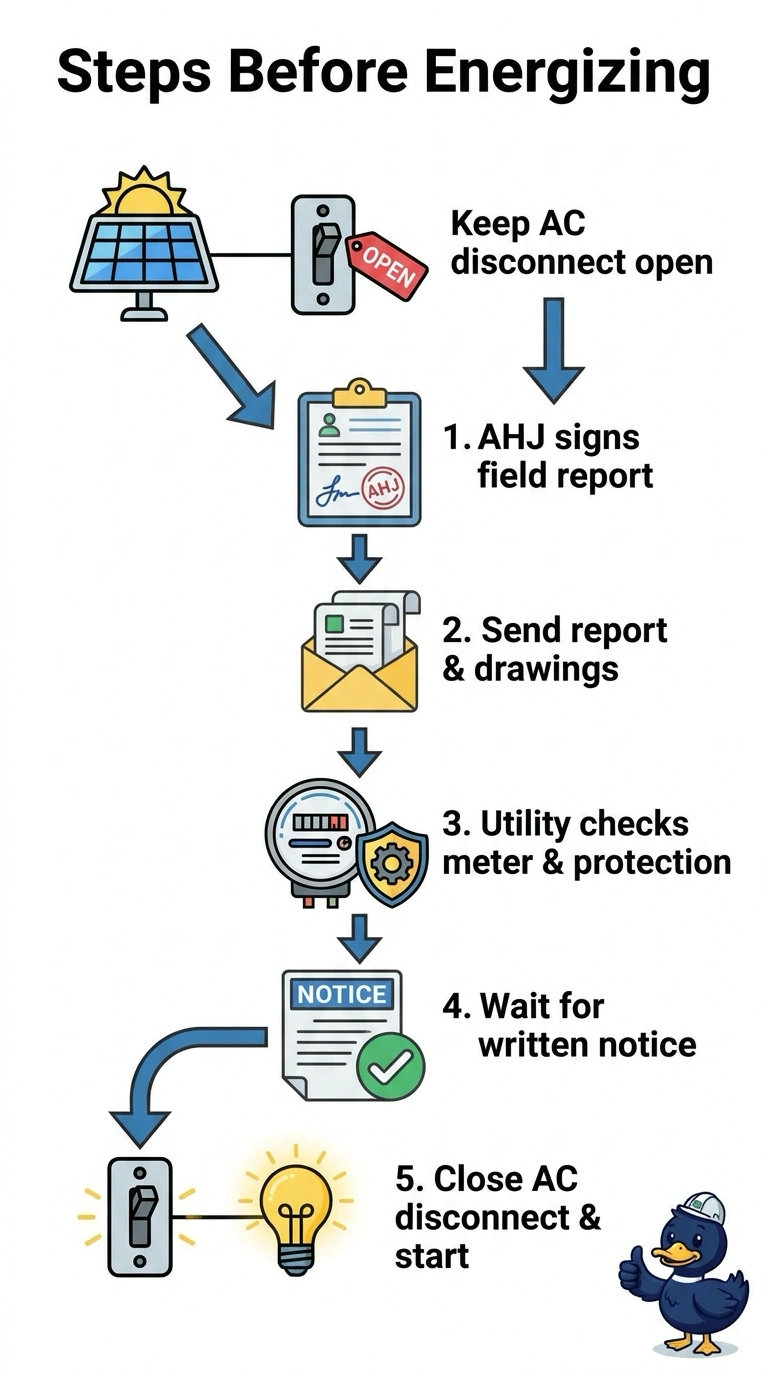
You can treat the inspection and meter appointment like green lights along the way, but neither is the utility’s written permission to operate. Keep your AC disconnect open until that authorization arrives; even zero-export mode doesn’t replace it.
Full Explanation
Permission to operate comes from the utility, not the inspector, because an interconnected system can energize the grid the moment its breaker closes. The utility issues that authorization in writing only after reviewing the interconnection paperwork, the meter arrangements, and the inverter's protective functions, so the AC disconnect stays open until the notice arrives. Running in zero-export mode fails on capability rather than behavior: the utility authorizes the system's ability to export, not a promise about how much flows on a given afternoon. Treating the signed inspection card as authorization fails on jurisdiction, because the AHJ approves electrical workmanship while the utility owns the interconnection. Accelerating the meter swap fails on sequence, since an installed revenue meter is a step in the process and not the approval itself. Exam caveat: utilities label this step differently and timelines vary, so look for the written notice rather than a particular name. Practical check: file the authorization, confirm meter status, and only then close the disconnect and finish the portal registration.