
Your crew will hand-dig an 18-in. deep AC trench across a side yard and auger four ground-mount piers near a driveway for a 6-kW array, and the homeowner mentions old fuel oil lines and soft fill soil. Which hazard control should the lead apply first to address digging hazards for trenching and footings?
Select an answer to reveal the explanation.
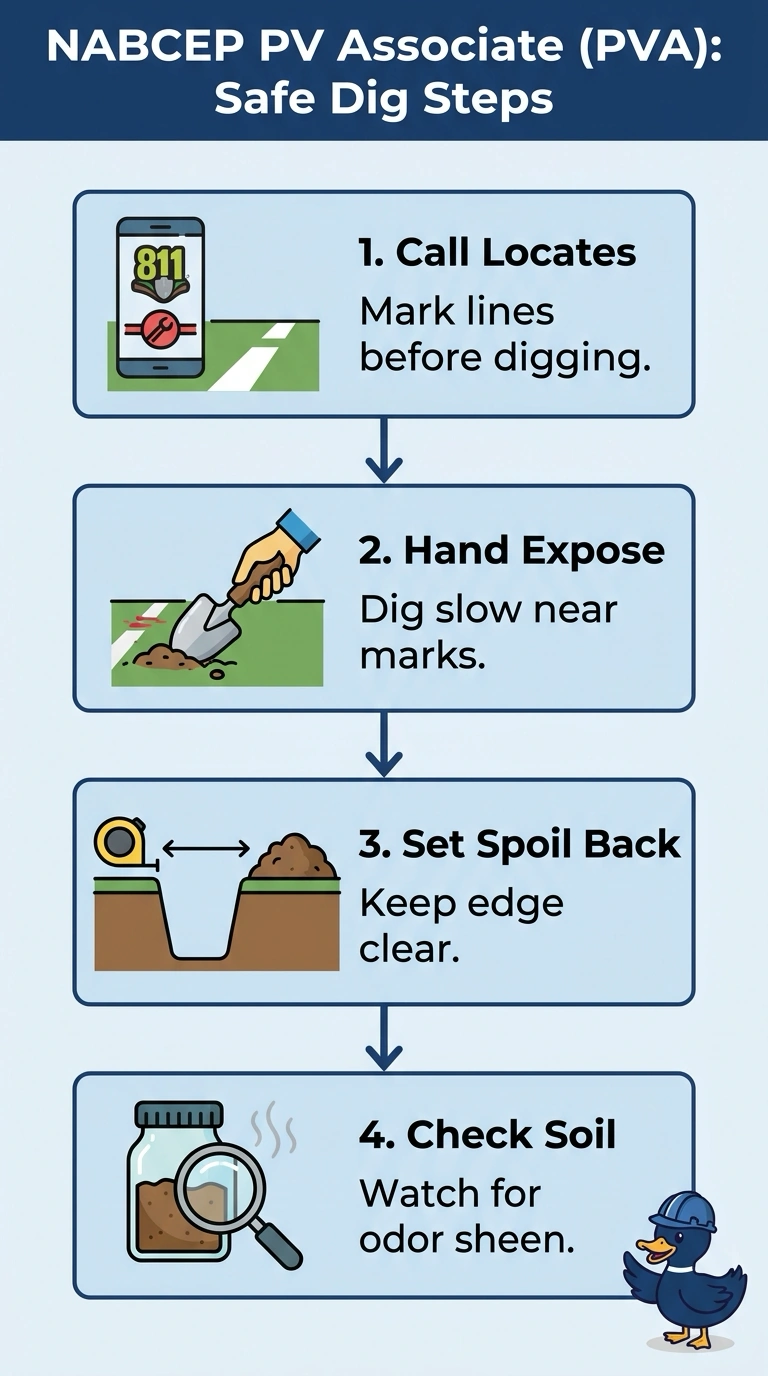
Short Explanation
You cannot out-dig what you cannot see, so pause and clear the ground first. Calling before you dig is your radar for hidden pipes and wires. Use locates plus soil and edge checks to keep the dig safe.
Full Explanation
The lead must apply the complete pre-excavation control first because hand digging an AC trench combined with augering piers where old fuel oil lines and soft fill are reported creates strike, collapse, and bearing risks that must be resolved before soil is disturbed. The correct control verifies buried utilities for both the trench alignment and the four pier locations near the driveway, enforces spoil setback to prevent surcharge failure, and requires competent soil review to assess stability and footing support. The 811-plus-spoil-plus-potholing choice fails on soil mechanics because it handles public locates and surcharge correctly but omits classification and bearing assessment of the soft fill, leaving augered piers vulnerable to settlement and collapse. The soil-plus-spoil-plus-sloping choice fails on contact energy because it manages collapse mechanics correctly but omits verification of private fuel oil lines that 811 will not mark, leaving hand digging and augering exposed to strike, fire, and environmental release. The fuel-map-plus-probing-plus-exposure choice fails on surcharge control because it addresses private utilities and bearing correctly but omits spoil setback, allowing excavated soil and auger cuttings to overload the trench wall. The exam caveat is that private homeowner lines require separate verification beyond a standard 811 ticket and shallow depth does not waive utility and soil checks for either trenching or footings. The practical check is to walk both alignments, confirm marks and potholes, measure the two-foot spoil setback, log soil conditions, and brief crews to stop work if odor, sheen, or caving appears.