
Your crew arrives for a two-story shingle install with an uncovered skylight opening near the ridge and an unguarded eave leading edge where staging is planned. Morning huddle covers harnesses, covers, and rails. Which fall hazard control should the team identify first for leading edges and roof openings?
Select an answer to reveal the explanation.
Short Explanation
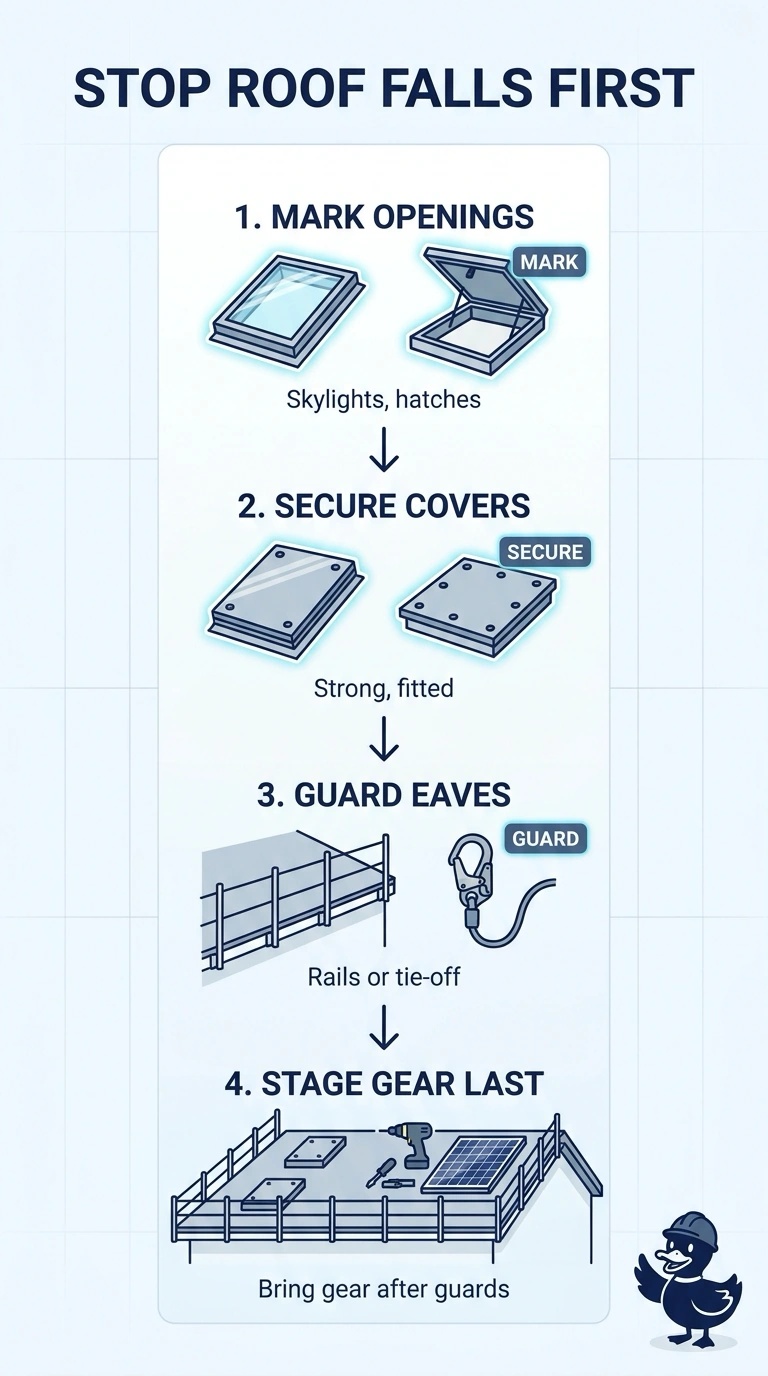
You’re identifying both hazards before the work begins, which helps keep your crew safe during setup. Put covers and guards in place before staging materials, not just before shingle installation.
Full Explanation
The correct approach controls both hazards before staging begins: a secured cover protects workers from falling through the skylight opening, while edge protection prevents a fall over the unguarded eave. Completing these controls before staging avoids exposing workers during material handling and setup, not just during shingle installation. The approach that waits until after staging to install a rated skylight cover and eave guardrails uses recognized controls but leaves workers exposed during setup. Installing eave guardrails before staging but delaying the skylight cover until afterward leaves the opening unprotected while materials are staged; fitting the cover before roof installation does not correct that earlier exposure. Covering the skylight before staging but delaying eave guardrails until before shingle installation protects the opening in time, but leaves workers exposed at the leading edge during staging. Exam caveat: fall-protection rules and permitted methods can depend on the work, roof conditions, and applicable jurisdiction; a warning line or personal fall-arrest system is not automatically interchangeable with guardrails. Practical check: before staging, verify that the cover is secured against displacement and marked, and that eave protection is installed, stable, and continuous where workers could fall.