
A designer is laying out a 8-kW home array where a tall chimney shades the lower west roof from 3-5 pm and a neighbor tree shades the east roof until 9 am. Year-round production matters most to the owner. Which shading analysis result should guide final module placement?
Select an answer to reveal the explanation.
Short Explanation
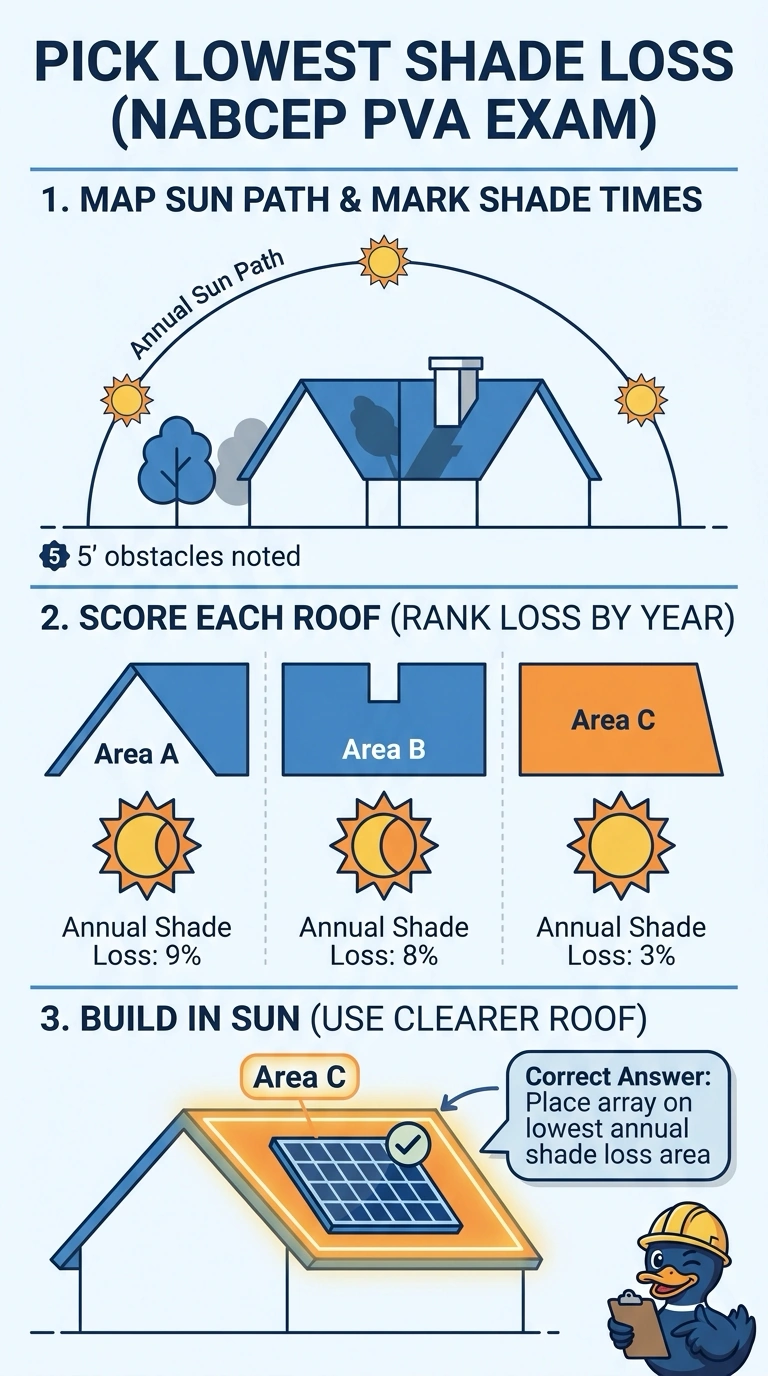
You win by chasing yearly sun, not just mornings or evenings. A full sun-path study reveals your annual shade loss, much like checking a whole season of weather before picking a picnic spot.
Full Explanation
The sun-path study’s annual shade-loss result is the best guide because it compares the combined effects of the chimney and tree across the year, matching the owner’s priority of year-round production. Choosing a zone based on summer shading can favor long, high-output days while overlooking losses during other seasons; it therefore substitutes a seasonal snapshot for annual performance. Ranking zones by winter-solstice access is also a legitimate screening method when winter output is the focus, but one day cannot represent annual shading or production. Annual unshaded irradiance is useful for comparing the roofs’ solar resource, yet omitting the mapped obstruction losses fails to account for the very shading that distinguishes these locations. An exam caveat is that the lowest shade loss alone may not guarantee the greatest total energy if roof orientation, tilt, or usable area differs substantially. In practice, confirm that the study uses the actual chimney and tree geometry and evaluates the full year, then compare annual energy estimates for feasible layouts on both roofs.