
You are landing aluminum feeders in a 200-A rooftop AC disconnect that lists a torque value, a wire range, and a NEMA 3R enclosure mark. The site sees wind-driven rain and the inspector will check lugs and cover seating. Which termination and enclosure practice meets manufacturer and rating needs?
Select an answer to reveal the explanation.
Short Explanation
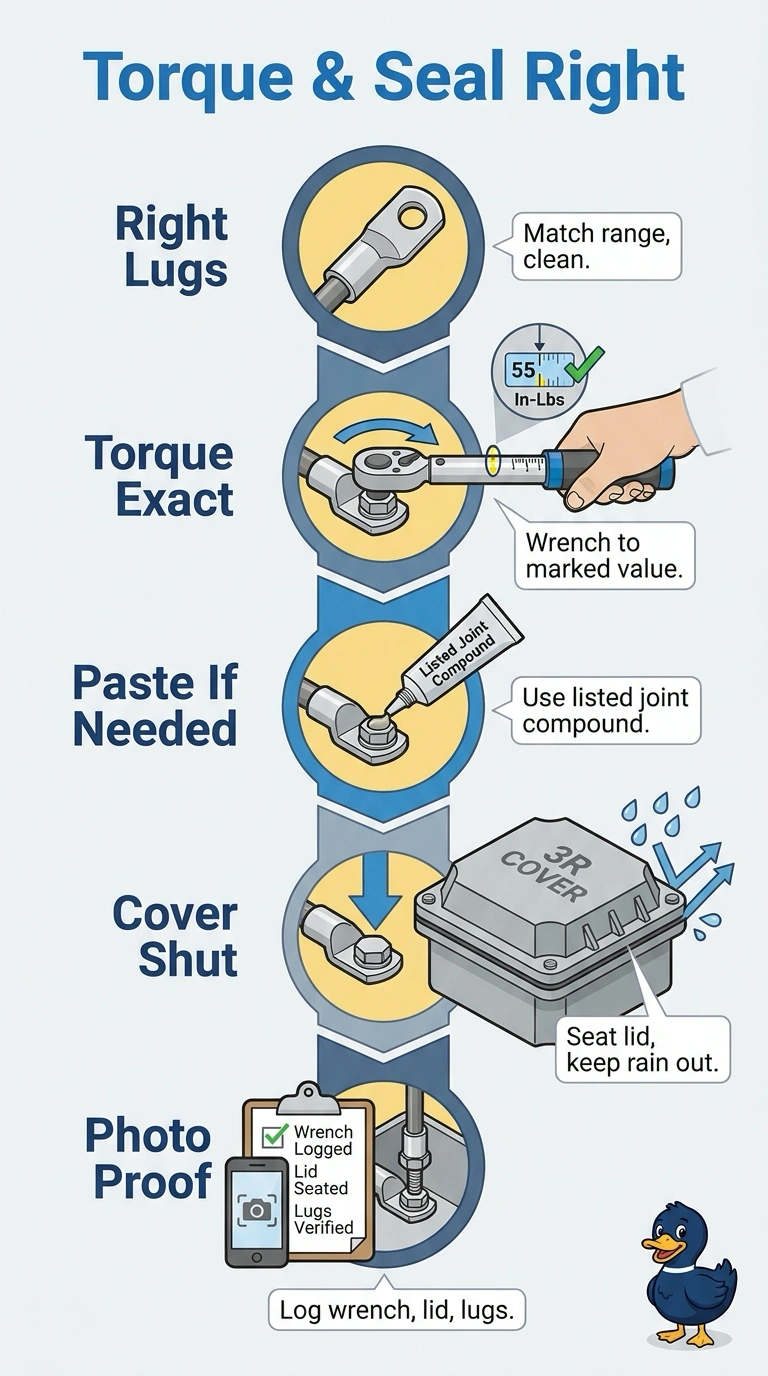
You’re giving the aluminum conductors and the weather-rated enclosure the care they need. Listed torque and a fully seated cover help protect the connection and keep wind-driven rain out.
Full Explanation
The compliant practice follows the disconnect’s marked termination requirements and preserves its weather-resistant construction: tighten with a torque wrench to the listed value, apply anti-oxidant to the aluminum conductors as required here, and fully seat the NEMA 3R cover. Matching the lug’s wire range and using anti-oxidant does not make standard conductor-size torque acceptable; the marked torque is specific to the equipment and governs. Using the listed torque and wire range and applying anti-oxidant still leaves the enclosure incomplete if you do not verify full cover seating, which matters for its weather resistance. Using the listed torque and wire range and seating the cover addresses those needs but omits the specified anti-oxidant practice for the aluminum conductors. Exam caveat: anti-oxidant use depends on the conductor and terminal manufacturer’s instructions; it is not a universal substitute for proper preparation or a reason to disregard product labeling. Practical check: before energizing, compare conductor material and size with the lug markings, verify torque with a suitable calibrated tool, confirm compound use against the instructions, and inspect that the cover is fully seated with its intended hardware and gasket in place.