
At final checkout of a 15-kW residential hybrid system with battery, the homeowner reports the app shows no data and the system stayed on during a required rapid-shutdown test. Which verification of inverter operation, communications, and disconnects should the associate perform?
Select an answer to reveal the explanation.
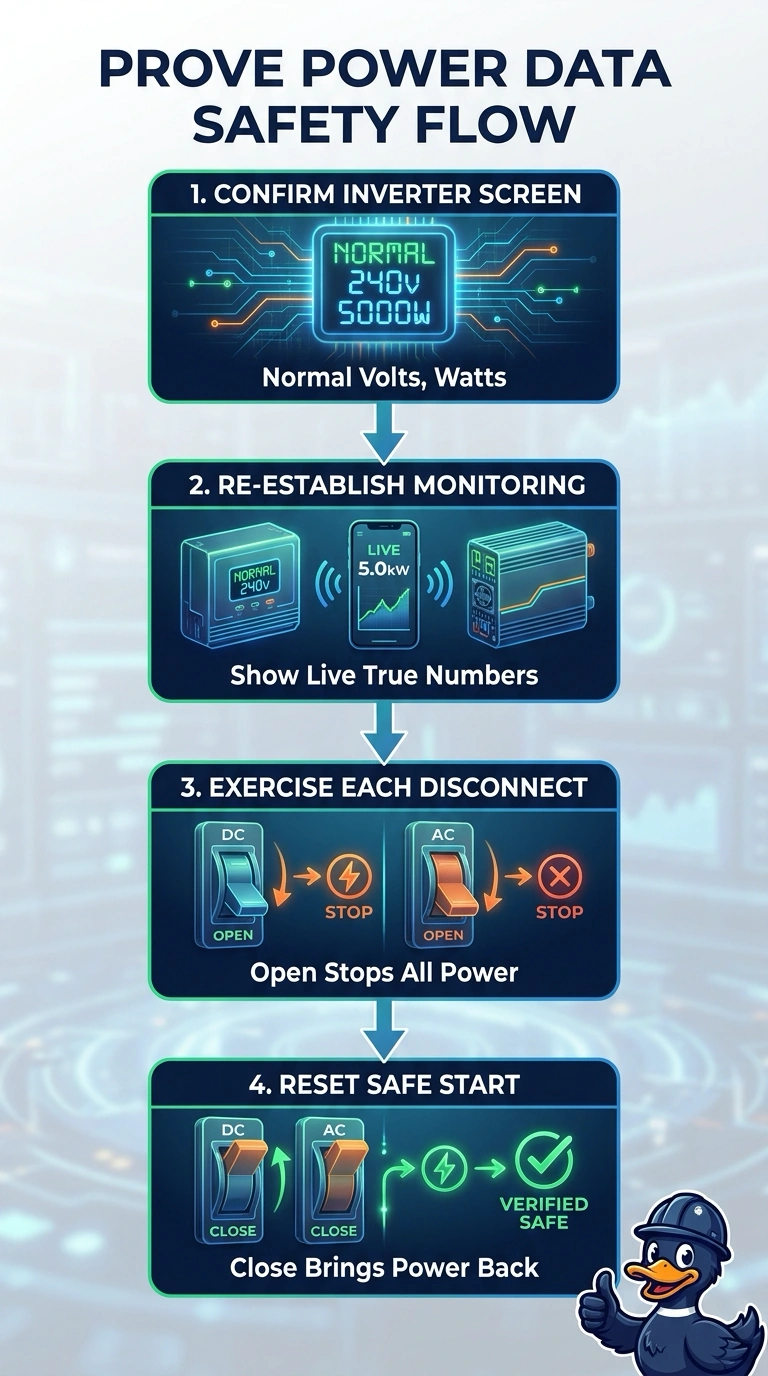
Short Explanation
You’re checking that the system produces power, monitoring data returns, and each disconnect causes the required shutdown. Together, these checks give you proof like testing the brakes, lights, and horn before driving.
Full Explanation
The correct approach verifies all three required outcomes: the inverter is operating and producing output, monitoring communications are re-established so the app receives data again, and each disconnect is operated to confirm it causes the required shutdown. Confirming inverter status and output, restoring app data, and checking a disconnect’s indicator is not enough because an indicator change does not establish that shutdown actually occurs; the inverter could remain energized. Confirming inverter status and output, exercising every disconnect, and checking only the network link also falls short: a working communications path does not prove that monitoring data has resumed in the app. Restoring app monitoring and exercising each disconnect, while using the inverter status screen as the sole confirmation of output, fails to independently verify actual output; a displayed operating state may not confirm that power is being produced. Exam caveat: follow the specified rapid-shutdown test procedure and distinguish a command or status indication from verified electrical behavior. Practical check: use the approved method and appropriate instruments to confirm output before testing, verify the required shutdown response at each disconnect, and then check that current monitoring data is visible in the app.