
An installer is running EMT along a hot attic into a rooftop junction box and must transition to a short flexible whip to the inverter while keeping conductors protected where they enter enclosures. Which fitting choice best completes this electrical equipment installation?
Select an answer to reveal the explanation.
Short Explanation
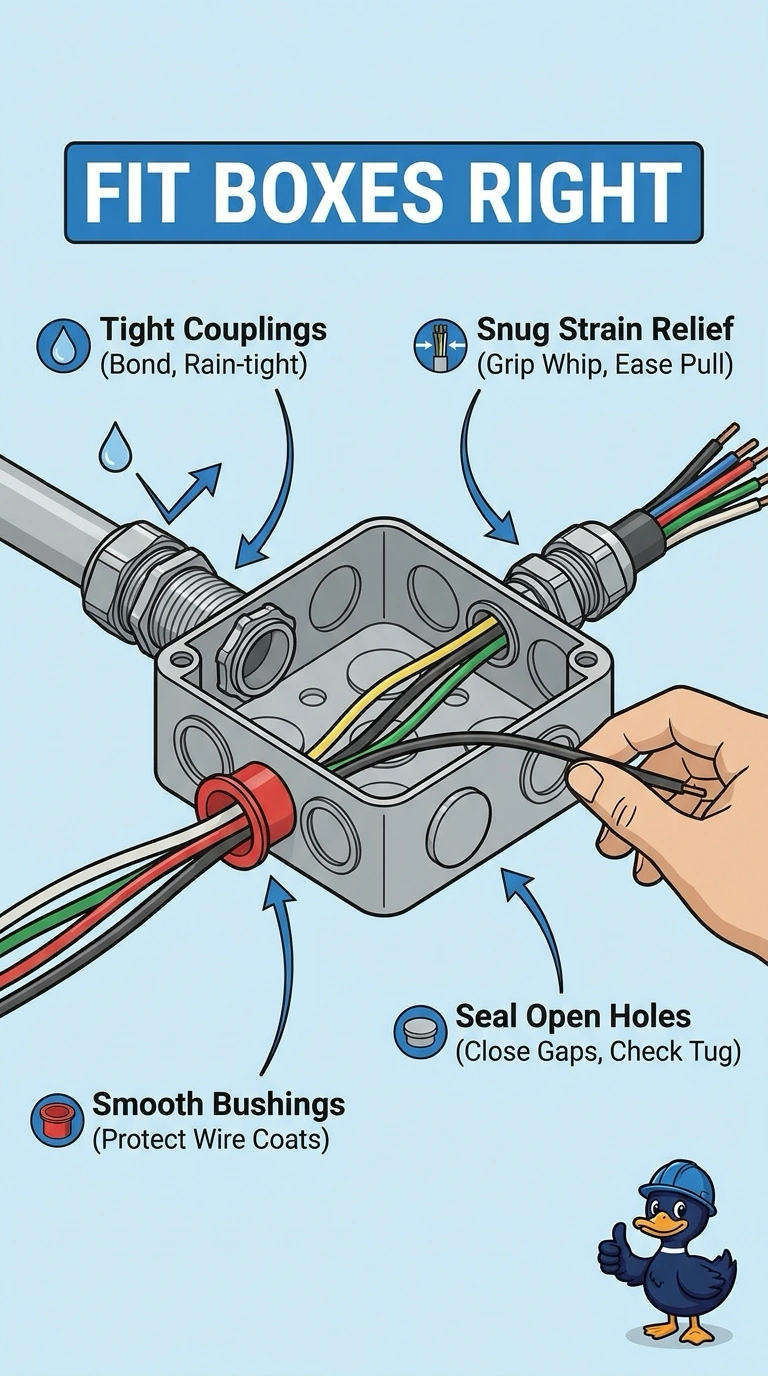
You’ll want listed fittings matched to the box knockouts and cable size, including couplings, insulating bushings, and strain-reliefs. They’re like smooth, well-fitted doorways that secure the conductors and protect them from chafing as they enter each enclosure.
Full Explanation
The correct choice addresses the full fitting system: listed couplings join the EMT, insulating bushings protect conductors at enclosure entries, and strain-reliefs secure the whip where it enters the boxes. Matching fittings to both the knockout and cable size helps ensure proper attachment and protection. Running EMT directly to the inverter can be a sound method where a flexible connection is not required, but it fails the stated requirement for a short flexible whip at this transition. Using plain locknuts with otherwise suitable connectors and a correctly sized whip is a familiar installation approach, yet a sharp or unprotected entry can abrade conductor insulation; it therefore misses the required insulating protection. Selecting listed fittings and bushings for ordinary indoor temperatures is reasonable in a typical location, but does not account for the hot attic, where component ratings must suit the actual ambient conditions. Exam caveat: an integral insulated throat may provide protection in some listed assemblies, but do not assume it substitutes for a specified bushing without checking the product instructions and applicable rules. Practical check: verify each fitting’s listing, knockout range, conductor or cable size, temperature suitability, and secure engagement with the enclosure and whip.