
A designer is assessing the existing service equipment at a small bakery converted from a 1965 farmhouse before a 10.4 kW array is permitted. The meter-main is a listed 150 A, 120/240 V unit with a legible nameplate and an undamaged exterior. Inside the load center fed from it, the wire insulation at two breaker lugs is melted and the bus behind them is heat-discolored, while four breaker spaces remain free. Which service equipment finding must be corrected before the PV interconnection equipment is added?
Select an answer to reveal the explanation.
Short Explanation
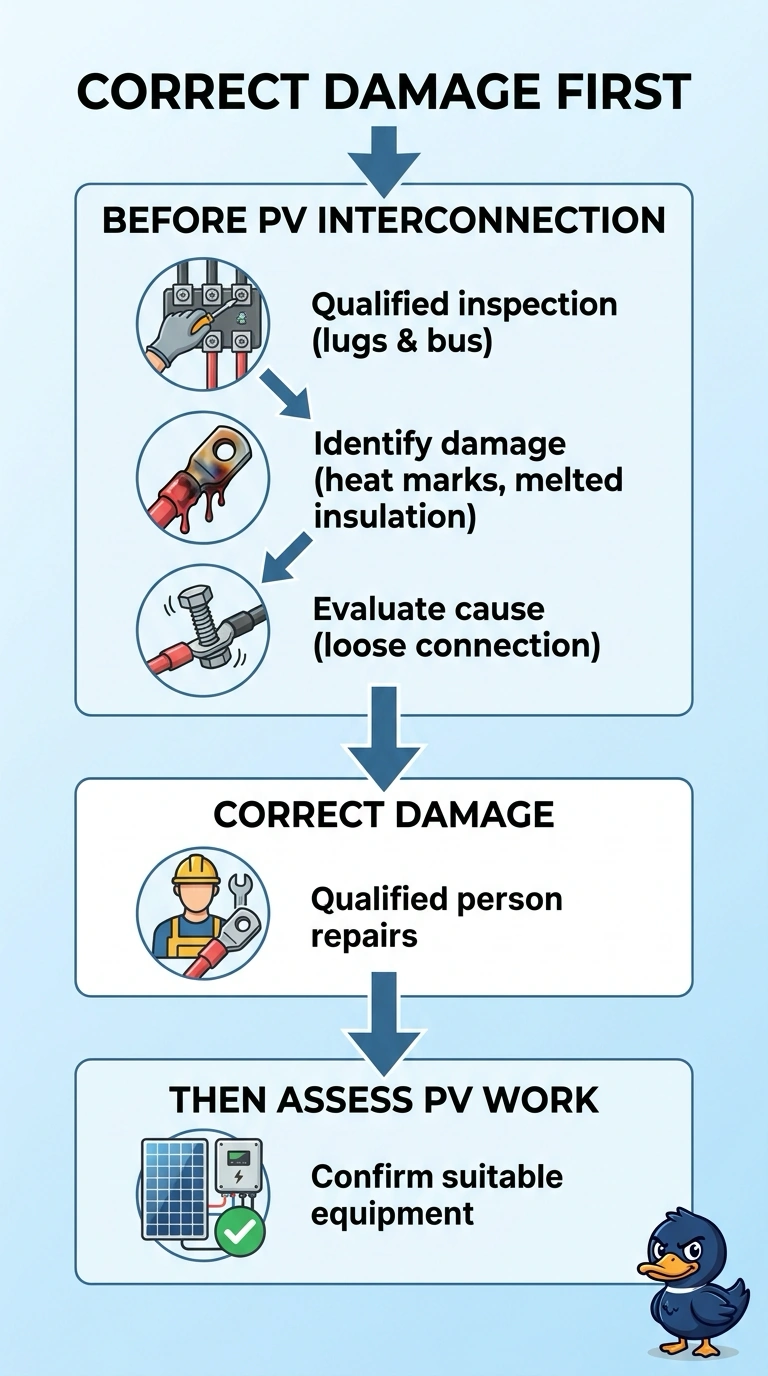
You need to correct the melted insulation and heat-discolored bus before adding the PV equipment; that damage can signal a failing connection, like a worn link in a chain. The meter-main’s rating, open spaces, and clean exterior don’t make the damaged parts safe.
Full Explanation
The melted insulation and heat-discolored bus are evidence of overheating at the breaker connections, so the affected equipment cannot simply be treated as serviceable for a new interconnection. The damaged parts and the cause of the overheating must be evaluated and corrected, which may require replacing the affected equipment, before PV equipment is added. A legible nameplate establishes the meter-main’s marked rating, not the condition of internal terminals or buswork. Checking the service rating and fault-current data is a valid design step, but those checks do not address the observed thermal damage. Verifying breaker ratings and permitted bus positions is also appropriate when choosing an interconnection point; available spaces or a compliant breaker location do not make a heat-damaged bus acceptable. Calculating service and feeder loading can establish whether the proposed source fits the applicable interconnection method, but adequate capacity likewise does not establish that damaged equipment is safe. Exam caveat: a code-compliant rating or load calculation does not waive the need to correct identified equipment damage; the applicable code edition and equipment instructions still govern the final design. Practical check: have a qualified electrician de-energize and inspect the affected lugs and bus, identify the cause of overheating, and document the required repair or replacement before proceeding.