
A school board hesitates on a 200-kW rooftop PV bid because utility rates rose 4% yearly and parents ask about air quality near a gas plant. The system has 25-year performance coverage. Which benefit of predictable electricity cost and environmental gain should the associate explain first?
Select an answer to reveal the explanation.
Short Explanation
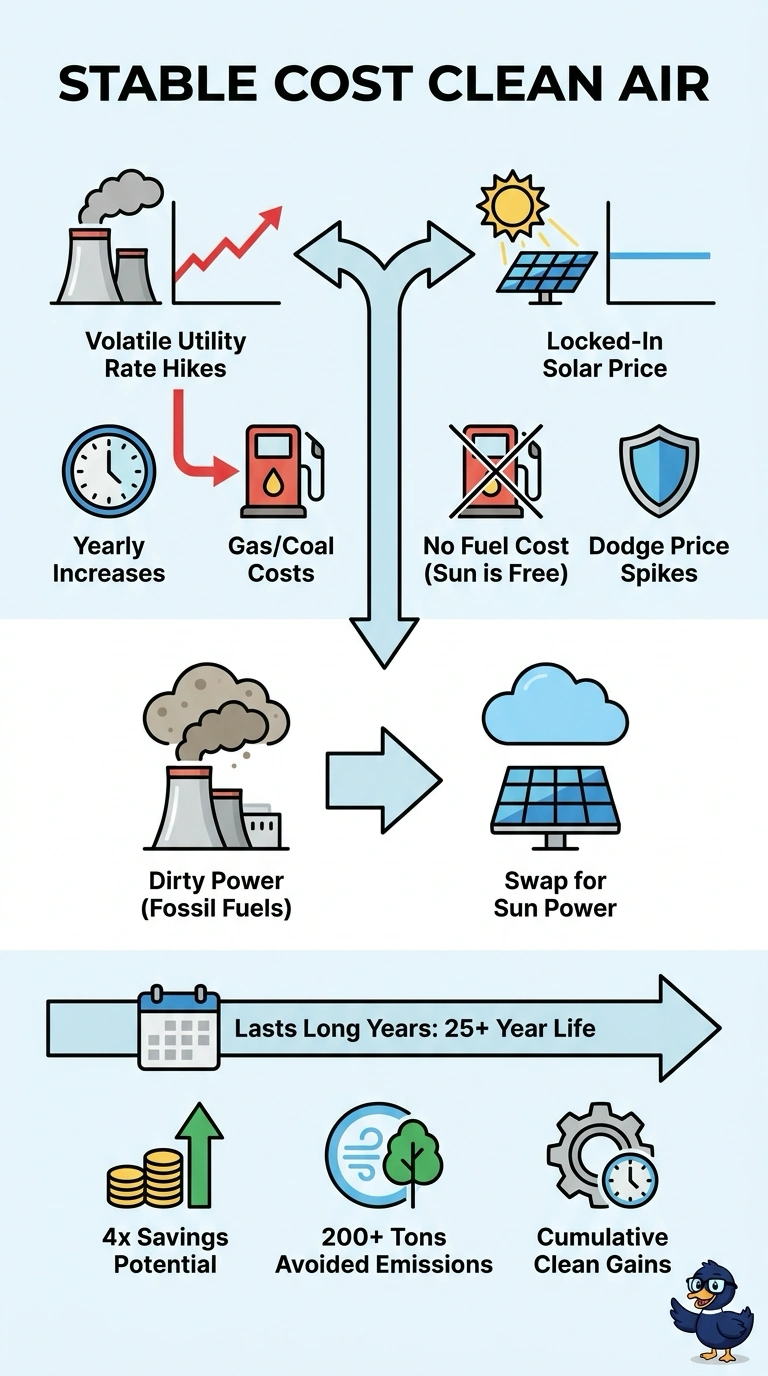
You connected money and air in one clear win. Fixed sun power tames bills and pollution through offset like growing your own food instead of pricey imports.
Full Explanation
The strongest first explanation links both benefits the board is weighing: a 200-kW PV system can supply part of the school’s electricity at a more predictable cost, reducing exposure to a utility rate that has risen 4% annually, while the solar generation displaces some fossil-fueled grid electricity and its associated emissions over the system’s life. The 25-year performance coverage supports a long-term discussion, but it is not a promise of fixed total bills or a guarantee of a particular emissions reduction. Net metering is a legitimate way to credit exported generation and reduce bills and emissions; however, credit rules and utility rates can change, so it does not by itself lock in the school’s energy cost. Efficiency upgrades can also lower consumption and power-plant pollution, but they do not establish a predictable price for the PV energy in this bid. Likewise, variable PV output is a real operating consideration, yet variability alone does not rule out cost predictability: system production can be estimated, and financing or contract terms may stabilize the solar portion of costs. Exam caveat: distinguish predictable solar energy costs from a fixed whole-building bill, which may still vary with weather, usage, tariffs, and charges. Practical check: compare the proposal’s production estimate and contract escalators with the school’s interval usage and applicable export-credit and demand-charge rules.