
An O&M tech inherits a 60-kW rooftop system with nuisance trips, faded wire labels, and no history after the original installer closed, and the owner wants reliable troubleshooting going forward. Which record-keeping practice best supports safe maintenance of this PV system?
Select an answer to reveal the explanation.
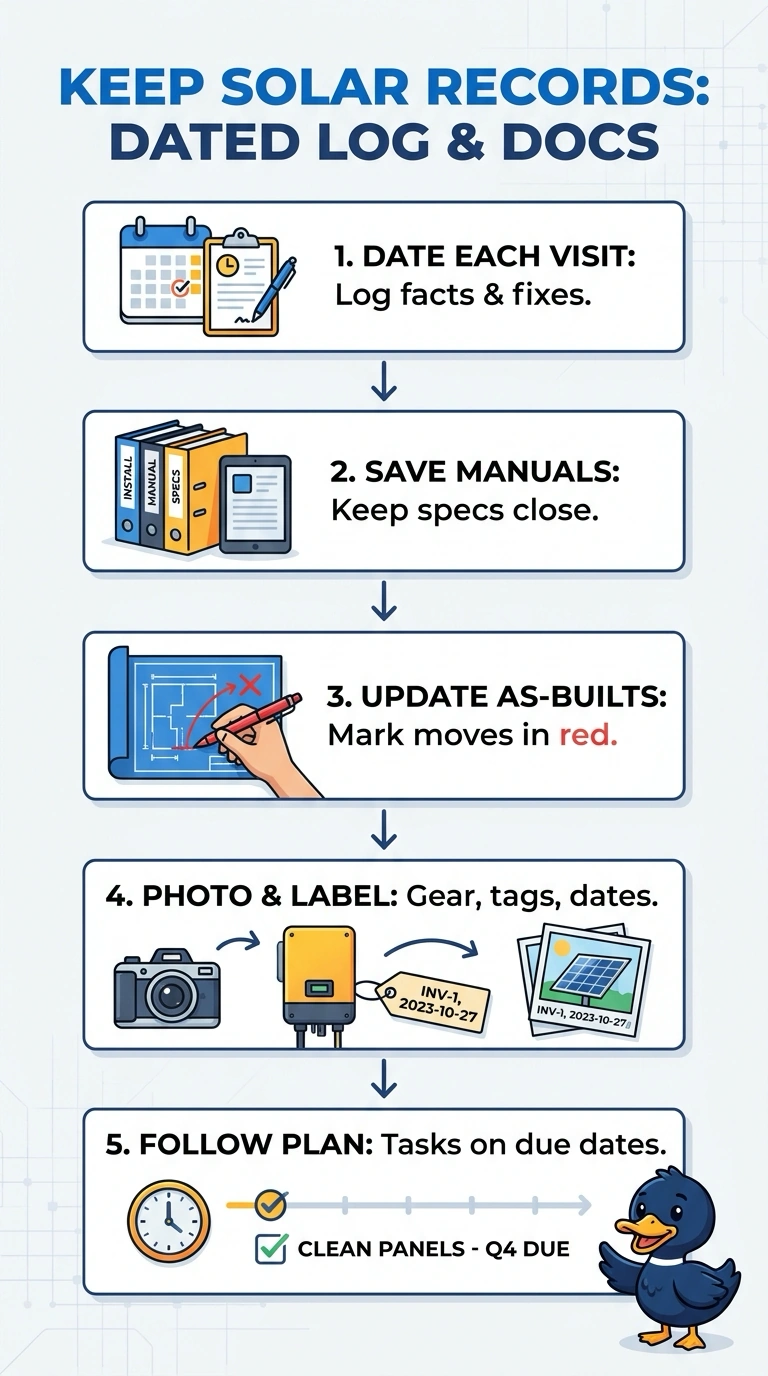
Short Explanation
You’re saving future-you hours of head-scratching here. A dated logbook works like a patient chart, helping the next tech use the system’s real history instead of guesses.
Full Explanation
A dated, organized record set gives future technicians a reliable basis for safe troubleshooting: manuals support equipment-specific procedures, as-builts show the installed circuit layout, a maintenance plan guides recurring work, and labeled photos help identify equipment and connections. Dated entries also establish what was inspected, tested, or changed over time. Keeping service logs, manuals, as-builts, and a maintenance plan but storing unlabeled photos limits their value: a photo may not show which inverter, disconnect, or wiring location it depicts. Keeping dated logs, manuals, a maintenance plan, and labeled photos but omitting current as-built drawings leaves technicians without a reliable record of actual field wiring after modifications. Keeping dated logs, as-builts, manuals, and labeled photos but having no written maintenance plan documents past work without defining recurring inspections and preventive tasks. Exam caveat: documentation supports safe work but does not replace site verification, required electrical precautions, or qualified testing; drawings and labels may be inaccurate or outdated. Practical check: compare the as-builts and labeled photos with equipment nameplates and installed wiring, then record discrepancies and subsequent changes with dates.