
A tech supports a 48 V lead-acid battery bank at a remote irrigation site. The controller has used one fixed absorb voltage since commissioning, the cabinet swings from near freezing at dawn to hot by afternoon, and the pump runs all night while the array starts before anyone arrives. The operator wants to know how much pumping time is left. Which two monitoring inputs should he fit?
Select an answer to reveal the explanation.
Short Explanation
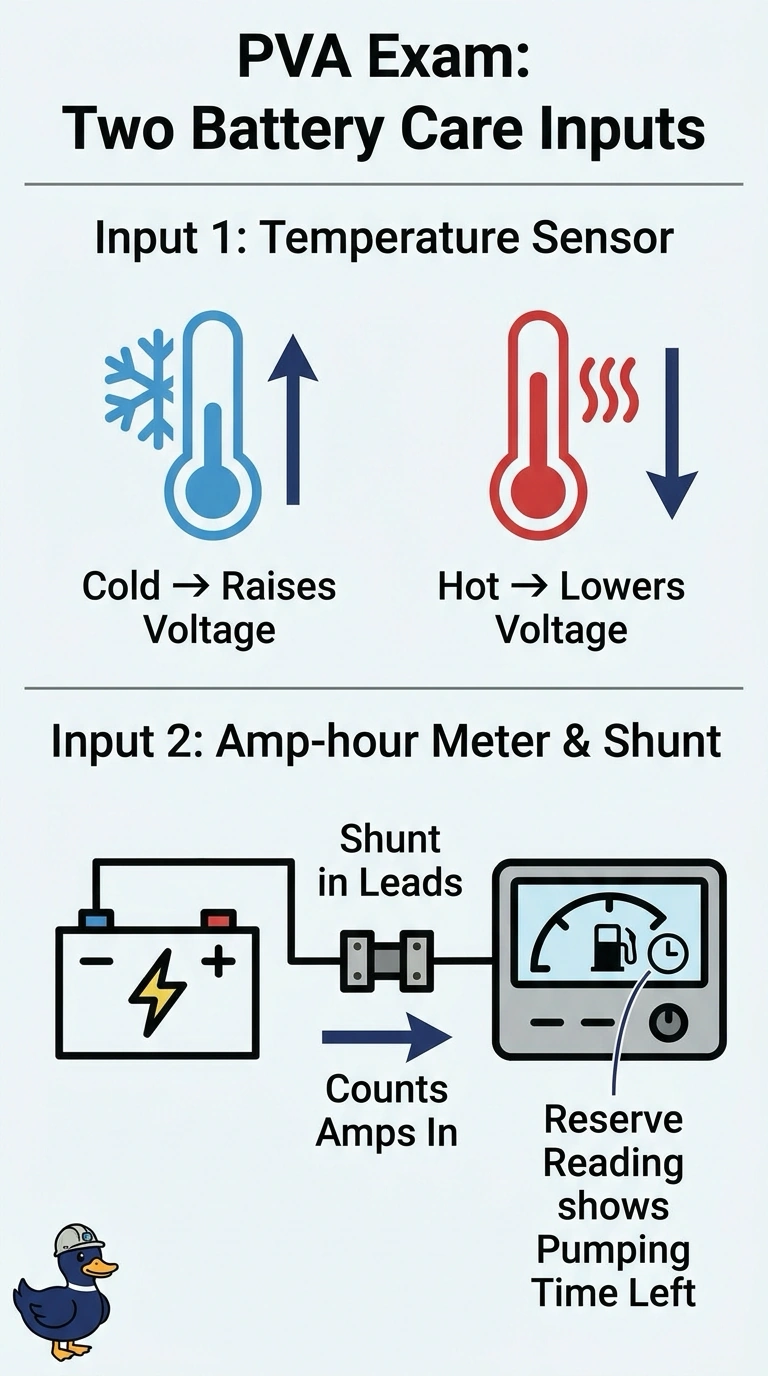
You need one input that keeps the charge voltage right as the cabinet heats up, and one that tracks energy instead of a snapshot voltage. The temperature sensor lets the controller lift the set point when it's cold and pull it back when it's hot. An amp-hour meter works like a fuel gauge for the bank, while voltage is just the needle twitching under load.
Full Explanation
A battery temperature sensor does real work for a lead-acid bank: it makes the controller raise the absorb voltage when the cells are cold, lower it when they are hot, and back off charge current as the cabinet climbs in the afternoon. An amp-hour meter supplies the missing piece by integrating current in and out through a shunt in the battery leads, so you get a capacity figure that matches the pump schedule even while the motor is running. The dawn-voltage approach fails the no-rest requirement, because a bank that discharges all night and starts charging before anyone arrives never presents a clean resting reading, and surface voltage under current is not capacity. The fixed-voltage approach fails the temperature requirement, since one year-round setting overcharges a hot cabinet and undercharges a cold one. The array-lead shunt fails the measurement requirement, because a shunt outside the battery path never sees discharge current, so the meter only counts what the array puts in. Exam caveat: an amp-hour meter needs a confirmed full charge to reset its baseline, or the reading drifts over time. Practical check: place the shunt in the main battery negative lead and confirm the meter reads zero with everything idle.