
A first-time buyer in a suburb asks a salesperson why neighbors added rooftop PV when grid rates keep rising and wildfire smoke fills skies each August. The home has good sun and net metering. Which explanation best links predictable cost and environmental benefit?
Select an answer to reveal the explanation.
Short Explanation
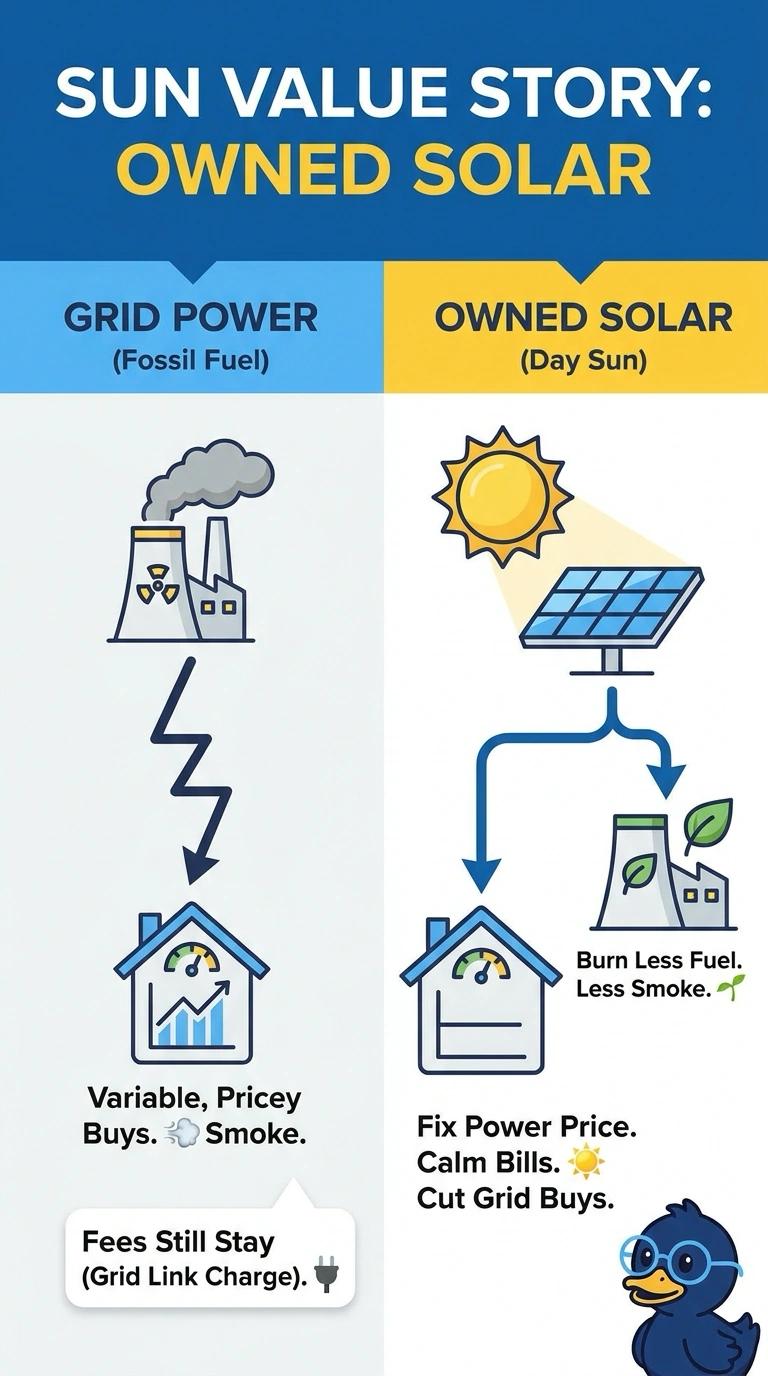
You're connecting wallet calm with cleaner air. Owned sun steadies your rate the way a fixed loan steadies rent while trimming smoky grid power. No magic zero bills, just fewer swings.
Full Explanation
The correct statement succeeds because with good sun and net metering, an owned rooftop system addresses both stated drivers at once: ownership fixes most lifetime per-kWh cost after payback to hedge rising grid rates, while daytime generation displaces marginal grid fossil generation relevant to August smoke. The battery backup statement fails by concept because reliability and ride-through during shutoffs is distinct from cost predictability and emission displacement, and smoke alone does not establish outage frequency or critical-load need. The leased solar statement fails by concept because third-party ownership can lower upfront cost and reduce midday grid draw, yet escalators, fees, and foregone credits mean it does not lock per-kWh cost to the same degree as ownership. The cooling-gas statement fails by concept because rooftop PV supplies electricity that can offset electric cooling, but it does not directly cut natural gas burned for winter heat absent electrification, confusing electric and thermal end uses and mismatching the August timeframe. Exam caveat: when a stem pairs rising rates with environmental concern and specifies good sun, ownership, and net metering, favor levelized-cost stability plus displaced fossil kilowatt-hours over resilience, financing ease, or thermal savings. Practical check: review twelve months of interval usage, shading-adjusted production, export credit rules, and rate escalation to compare owned levelized cost against projected grid cost and estimate avoided fossil generation.