
Your crew is setting aluminum rails on a shingle roof for a 9-kW home, driving lags into rafters, and torquing rail bolts to spec. The kit lists an impact driver, socket set, torque wrench, and chalk line, plus a grinder with a cutoff wheel. Which tool selection fits this mounting-structure task correctly?
Select an answer to reveal the explanation.
Short Explanation
You are picking workhorses, not show ponies, for rails. Right drive tools make solid racks, like using a drill beats whittling with a knife.
Full Explanation
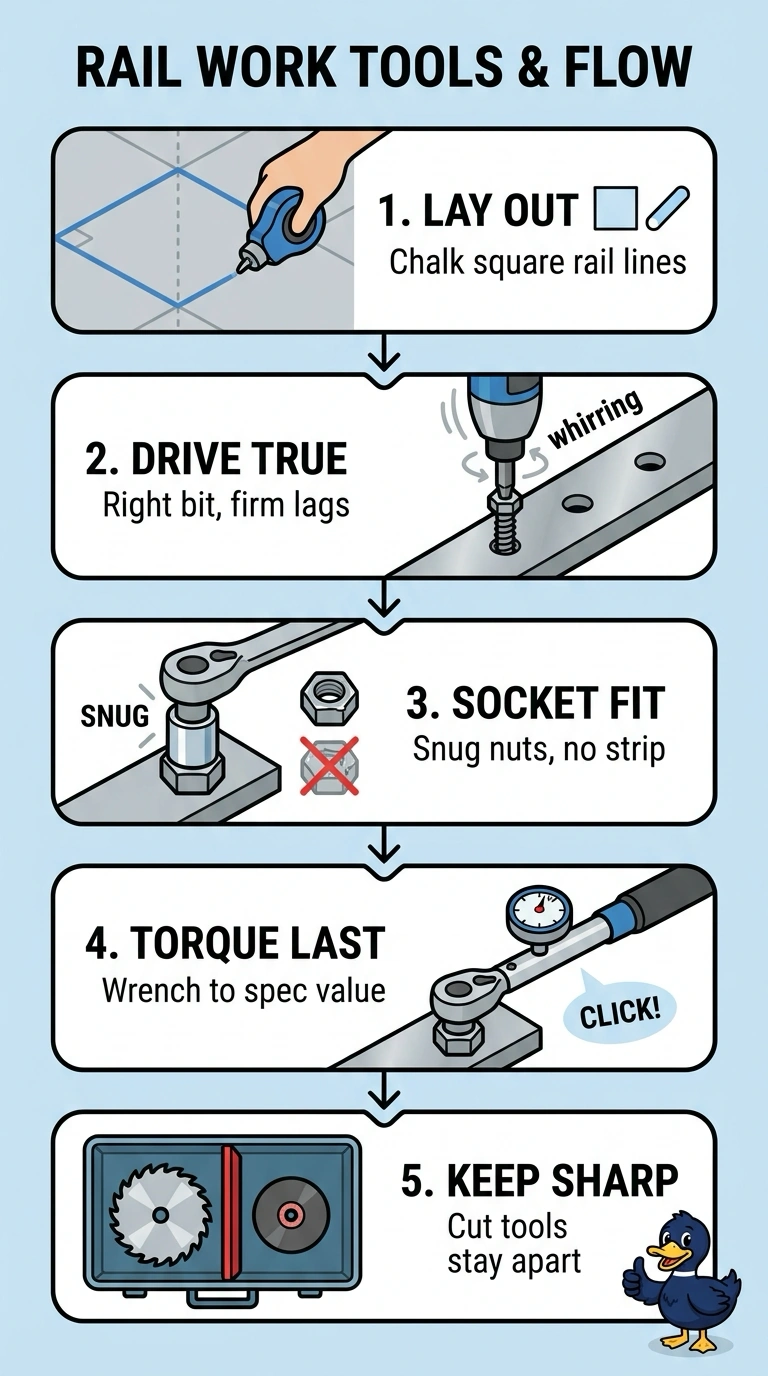
The correct selection pairs an impact driver and socket set for driving lag bolts into the rafters with a torque wrench for tightening rail bolts to the specified value; the chalk line supports accurate layout and squaring. The impact wrench approach can drive fasteners and the chalk line can lay out rails, but judging final torque by feel does not meet the stated calibrated-torque requirement. The structural-screw approach has suitable driving, torque, and layout tools, yet it substitutes a different fastener for the specified lag bolts; a different fastener is appropriate only when the mounting design and its approval permit that change. The shingle-seam approach has the right assembly and layout tools, but shingle seams do not reliably establish rafter locations, so lags placed from those marks alone may miss the required framing. Exam caveat: distinguish tools used to drive a fastener from tools used to verify final torque; an impact tool is not a calibrated torque-measuring device. Practical check: confirm rafter centers from a reliable locating method before drilling, then tighten each specified bolt with a suitable, calibrated torque wrench to the kit manufacturer's value.