
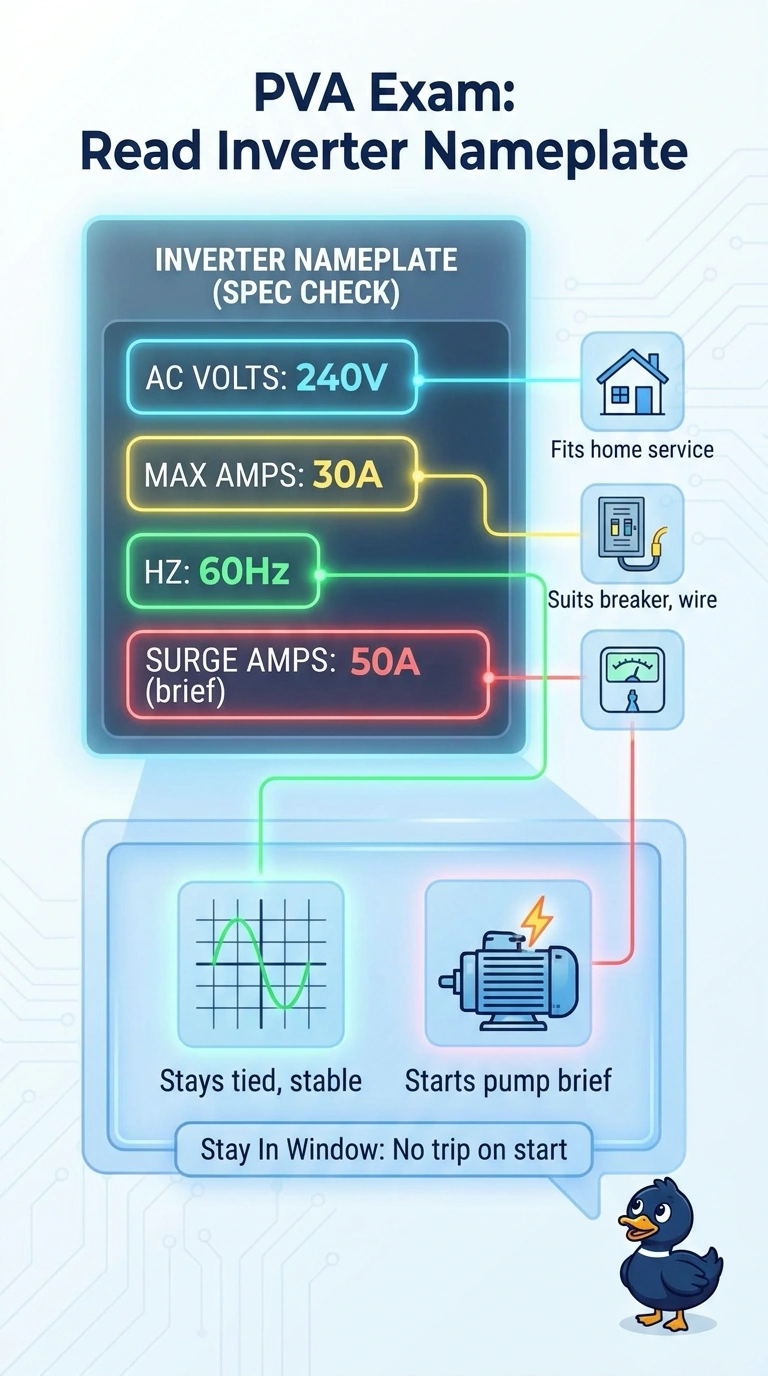
A designer must pair a single-phase residential string inverter with a 120/240V home service where the utility holds 60 Hz and the owner runs a well pump that draws a brief high inrush on startup. Which inverter specification check best confirms voltage, current, frequency, and surge compatibility?
Select an answer to reveal the explanation.
Short Explanation
You’re reading like a designer now: match the whole handshake. Nameplate ratings are like shoe size, width, and sprint strength all together for that well-pump startup gulp.
Full Explanation
The complete specification check confirms all four compatibility needs: rated AC voltage must suit the home’s 120/240-V service and the inverter’s connection arrangement; maximum continuous output current must support the expected operating load; the permitted frequency range must include the utility’s 60 Hz; and the short-term surge rating must accommodate the well pump’s brief startup inrush. Checking voltage, continuous current, and motor-start surge without checking the 60-Hz operating range leaves frequency compatibility unconfirmed. Checking voltage, frequency, and startup surge but omitting maximum continuous output current could leave the inverter undersized for sustained load, even if it handles the brief inrush. Checking voltage, maximum AC current, and frequency but omitting short-term surge capability fails to address startup, when a motor can demand substantially more current than during normal operation. Exam caveat: a surge rating is meaningful only if its duration and output conditions match the load’s startup demand; a peak figure alone may mislead. Practical check: compare the inverter’s AC output ratings and allowable frequency with the service and the pump’s nameplate or measured starting characteristics, and confirm the proposed connection is suitable for the home’s panel.