
A homeowner compares a 7-kW cash purchase versus a high-interest loan while the utility projects steady annual rate hikes. They ask why payback shifts with money cost and bill growth. Which explanation best shows how financing cost and utility rate inflation affect payback?
Select an answer to reveal the explanation.
Short Explanation
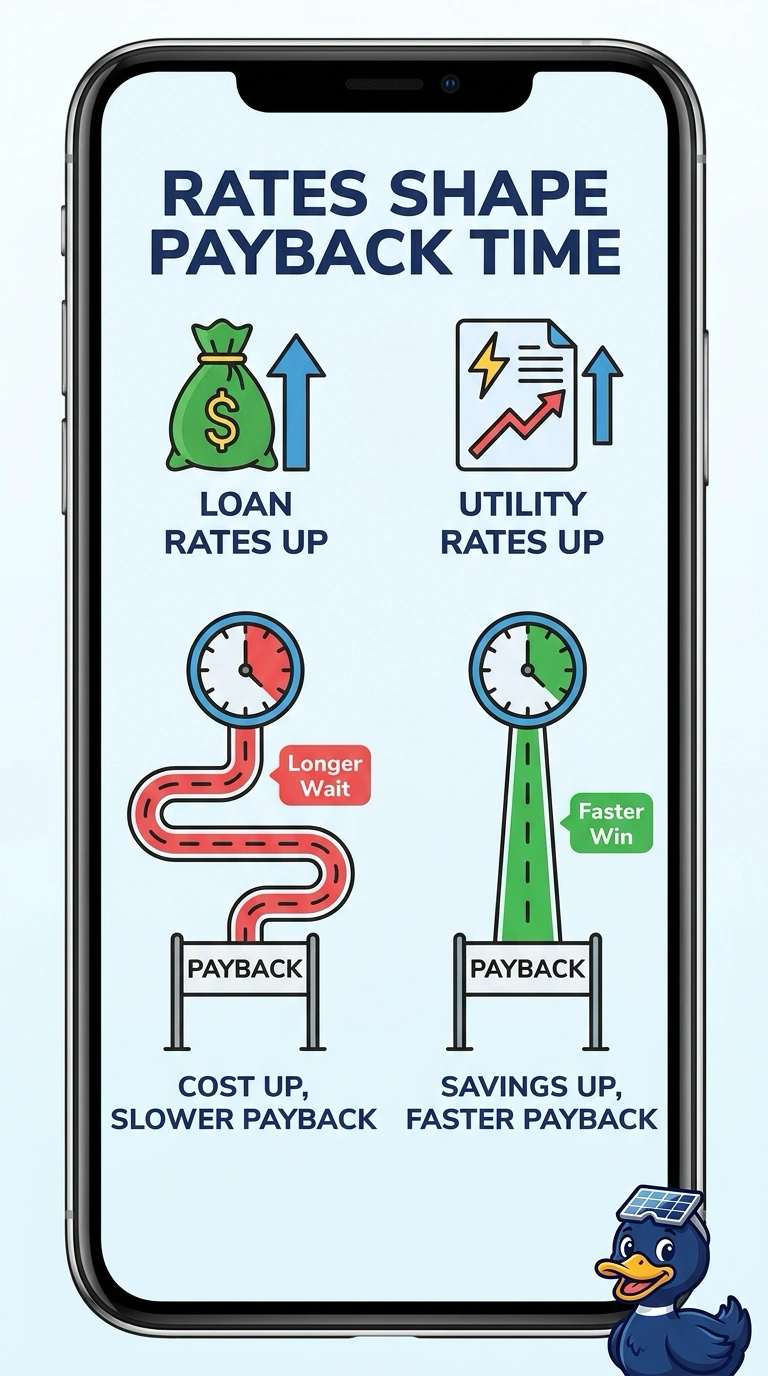
You’re weighing the cost of borrowing against the savings from bills that keep growing. Understanding payback helps you see how loan interest can slow recovery while rising utility rates make your solar savings grow faster.
Full Explanation
Loan interest increases the amount you must recover from solar savings, lengthening payback compared with a cash purchase; rising utility rates increase the value of the electricity your system replaces, shortening payback. Evaluating unlevered project payback while escalating avoided bills is a valid way to assess a project apart from its financing, but it does not show how the loan’s cost affects payback. Including loan interest in the financed cost while valuing avoided purchases at today’s tariff captures borrowing cost but ignores the stated rate hikes and their effect on future savings. Modeling rising rates and loan payments, then discounting those payments at the loan APR while also adding interest to the financed cost, can count borrowing cost twice by mixing financing costs with discounting. Exam caveat: payback depends on whether you use simple, discounted, or cash-flow payback and whether loan payments are included. Practical check: compare cash and loan cases using the same production, tariff-escalation, degradation, and export-credit assumptions, and show interest and any discount rate separately.