
A rural clinic with frequent evening outages considers a 25-kW PV array with battery storage to keep vaccines cold and lights on. Leaders ask how solar helps security beyond lower bills. Which explanation best describes reliability and resiliency for this clinic?
Select an answer to reveal the explanation.
Short Explanation
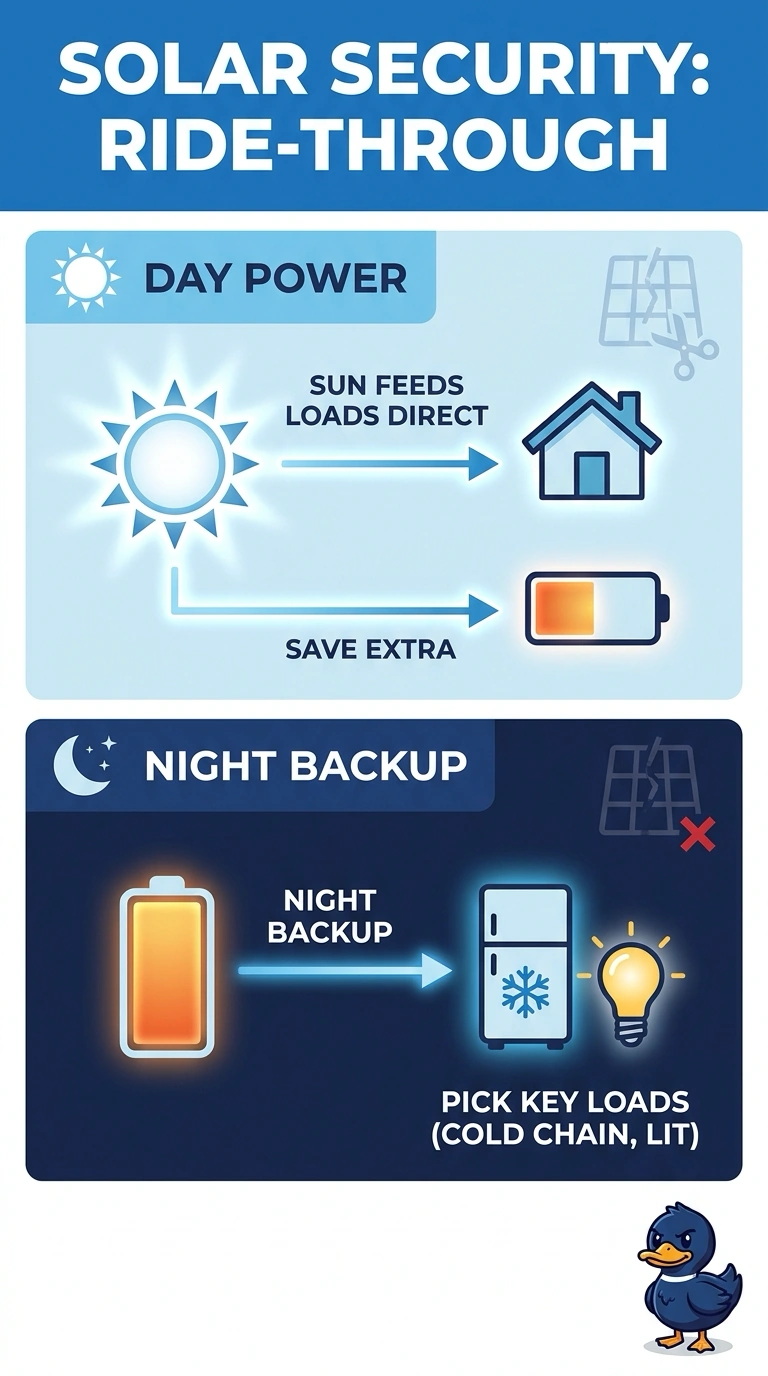
You're promising steady care, not magic power. True resiliency pairs daytime harvest with night backup, like storing lunch sunlight to run a nightlight when storms hit.
Full Explanation
The correct explanation links both parts of the clinic’s resilience strategy: daytime PV reduces reliance on the utility, and stored energy can serve designated critical loads when the grid fails. That distinction matters for vaccines and lighting, which need power during evening outages, not merely lower bills over a billing period. Net metering is a sound way to credit surplus generation against later grid purchases, but credits are financial; they do not provide electricity during an outage, when a grid-tied system generally disconnects for worker safety. A standard grid-tied inverter can deliver solar power while the utility is available, but without islanding capability and an energy source for the outage it cannot keep critical loads operating after the grid goes down. A standby generator and transfer switch are a valid resilience measure, but that explanation attributes outage continuity to the generator rather than describing how solar with storage contributes. Exam caveat: battery backup is finite, and actual ride-through depends on usable capacity, inverter power, outage duration, and which loads are included; a 25-kW PV rating alone does not establish backup duration. Practical check: have the designer compare measured critical-load demand with battery usable kWh and inverter kW, and confirm the system can island safely and recharge as intended.