
An installer is mounting a wall inverter with an adjacent AC disconnect in a commercial electrical room where boxes and mops are stored against the gear and the door swings toward the worker. Which working-clearance practice best preserves safe access to this electrical equipment?
Select an answer to reveal the explanation.
Short Explanation
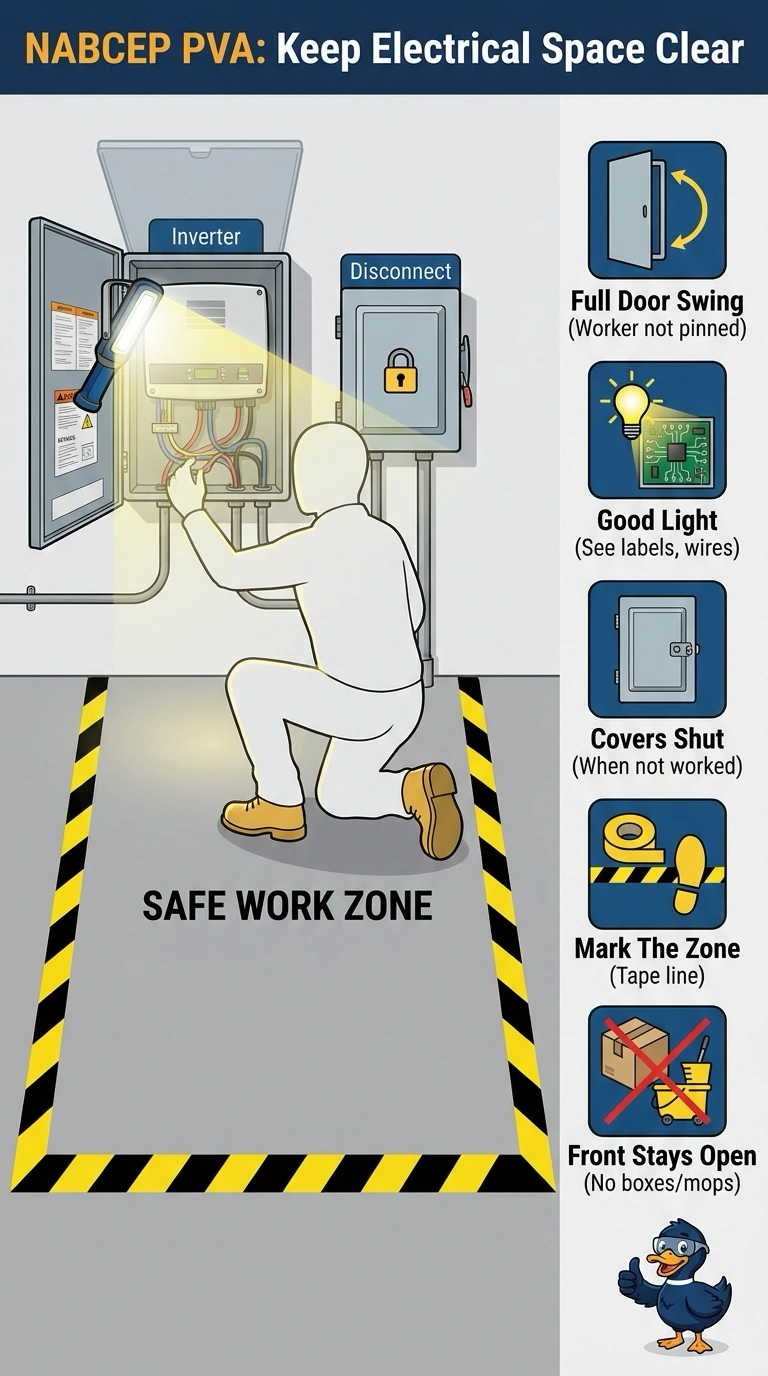
You’re thinking about the right safety priority: keep the space in front of the inverter and disconnect clear, lit, and usable. Working clearance gives you room to approach and work safely, even if you need to step back.
Full Explanation
Keeping the floor space in front of both the inverter and the adjacent disconnect clear, lit, and usable supports safe approach, operation, inspection, and servicing. Boxes, mops, and other stored items must not occupy that working area. Keeping equipment fronts unobstructed and lit but allowing the open door to cross the access route can interfere with access or usable working space, especially when the door swings toward the worker. Maintaining clear access and adequate lighting while sizing the space from the inverter face alone overlooks the adjacent disconnect; its location or projecting parts may affect the required clearance, so both units must be considered. Keeping the full working area clear and correctly sized but relying on ambient light without checking illumination leaves lighting unverified, since general room light may not adequately illuminate the equipment. Exam caveat: applicable electrical codes specify minimum working-space dimensions and conditions, which can vary with voltage, equipment, and installation details; a clear floor alone does not establish compliance. Practical check: measure clearance at both equipment fronts, confirm the open door does not compromise access, and assess illumination with the room in its normal operating condition.