
A technician must climb from a level concrete yard through a roof hatch onto a flat roof 3.2 m above to reset a string combiner. An exposed 208 V meter base sits 300 mm beside the hatch opening. On site are a 4.5 m fibreglass ladder, a 3.5 m fibreglass ladder and a 4.5 m aluminium ladder. Which ladder setup gives him safe access through the hatch?
Select an answer to reveal the explanation.
Short Explanation
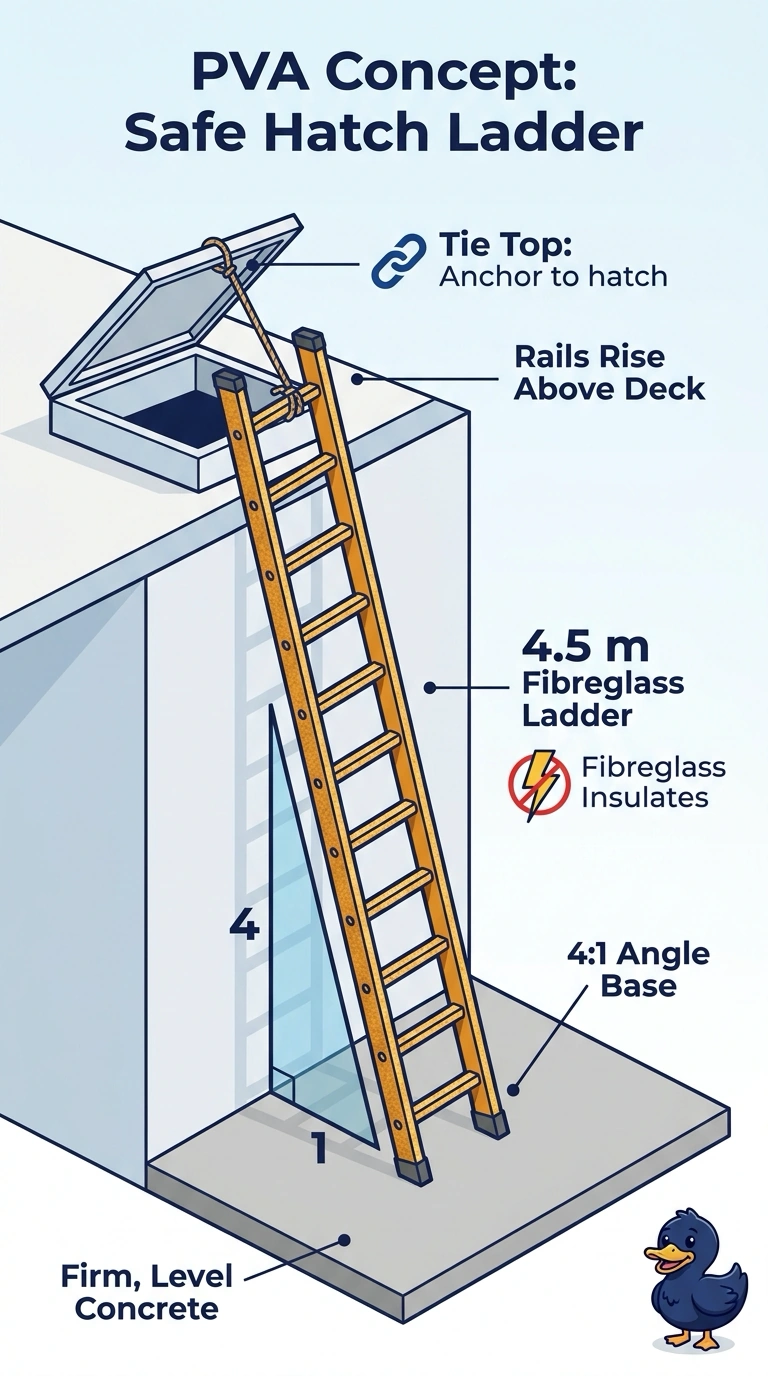
Safe ladder access comes down to three checks: enough rail above the deck, non-conductive rails near that meter, and the 4:1 angle. Short or steep setups feel steady until you're transferring weight through the hatch. Get those right and three points of contact will carry you up safely.
Full Explanation
Climbing through a roof hatch is an upper-landing transfer, so the ladder has to reach past the deck: the side rails should project about 0.9 m (3 ft) above the landing, giving you a handhold while you step through. The 4.5 m ladder set at the standard 4:1 slope covers 3.2 m of wall plus that projection, and fibreglass rails stay non-conductive beside the exposed meter base. Choosing the short fibreglass ladder fails the projection requirement, because a ladder whose top rail stops level with the roof leaves you hauling yourself over the edge with nothing solid to grip. Choosing the aluminium ladder fails the electrical requirement, since conductive rails beside an energised meter base throw away the insulation a fibreglass ladder provides. Setting the ladder nearly upright fails the setup-angle requirement, because a too-vertical ladder tips backward as you climb instead of driving its feet into the ground. Exam caveat: the 3 ft projection rule applies when you are stepping onto an upper landing, not when you are simply working from the side of a ladder. Practical check: measure the base offset before every climb and confirm how far the rails rise above the deck.