
A two-person crew must move a 1,200-lb pallet of modules and an inverter across a sloped gravel lot to a commercial roof staging area using a rented forklift and a box truck with a liftgate. Which transport and heavy-equipment practice best protects people and gear during this move?
Select an answer to reveal the explanation.
Short Explanation
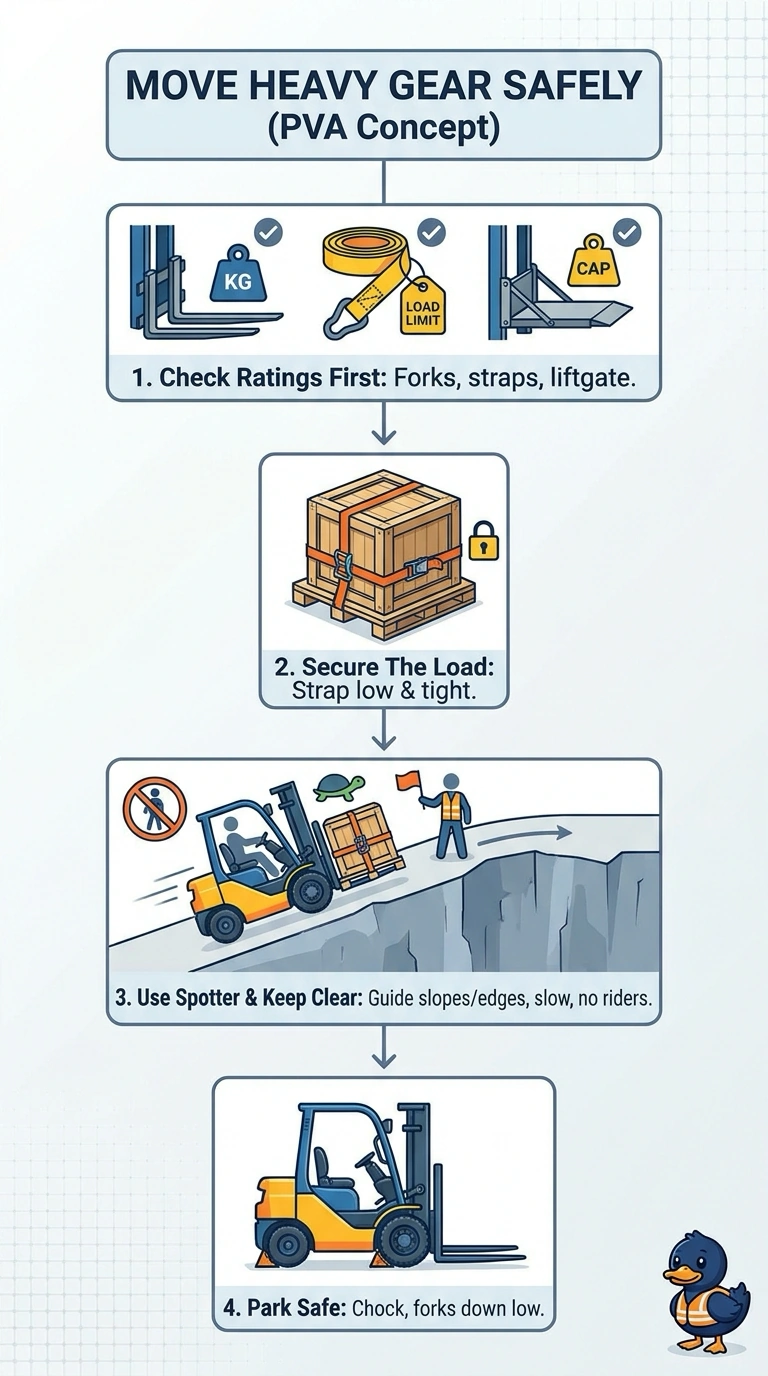
You’re thinking like a lead here—slow and secured beats fast and sorry. Rated rigging and a spotter on both slopes and near roof edges help protect people and gear throughout the move.
Full Explanation
The correct practice combines the essential controls for this move: inspect the rigging and verify that the forklift is rated for the load, secure the pallet against shifting, and use a spotter on slopes and near roof edges, where a tip, collision, or fall could occur. Inspecting rigging, securing the load, and using a spotter without checking forklift ratings leaves you unable to confirm that the forklift can safely handle the pallet, attachment, and load center. Inspecting rigging and forklift ratings, securing the load, and using a spotter on slopes but not near roof edges leaves the approach or staging area unobserved at a critical hazard. Inspecting rigging and forklift ratings, securing the load, and using a spotter near roof edges but not on slopes leaves uneven, loose ground without an extra set of eyes as it affects stability and travel. Each of these practices includes useful controls, but omits one needed for the hazards in the scenario. Exam caveat: a forklift’s headline capacity is not necessarily its usable capacity; attachments, load center, terrain, and operating configuration can reduce it. Practical check: confirm the pallet’s actual weight and dimensions, compare them with the forklift capacity data for the planned setup, inspect and secure the rigging and load, and agree on a clear spotter signal and route before moving.