
A two-person crew will clean terminals and torque connections on a vented lead-acid battery bank in a small energy closet with a sink nearby. Acid residue and arc risk are present. Which battery safety practice should the lead enforce first to follow insulated tools, face and eye protection, eyewash, and gloves?
Select an answer to reveal the explanation.
Short Explanation
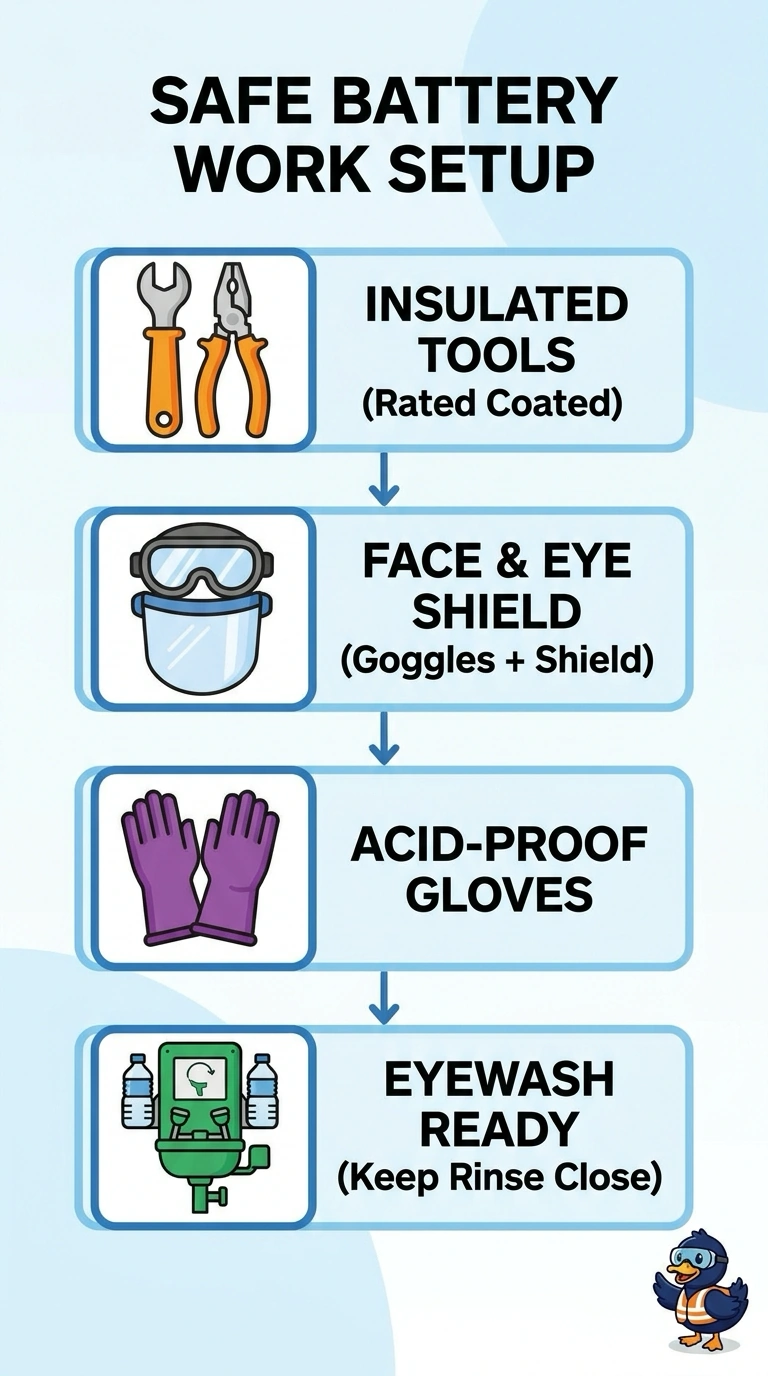
You’re right to plan for both acid splashes and electrical hazards before starting. Insulated tools, goggles, a face shield, gloves, and ready eyewash give you coverage for the stated risks.
Full Explanation
The practice combining insulated tools with goggles, a face shield, gloves, and eyewash ready for use is correct because each measure addresses a distinct hazard: insulated tools reduce arc and short-circuit risk, goggles and a face shield protect the eyes and face from acid splashes, gloves protect your hands, and ready eyewash enables prompt flushing. Using insulated tools with goggles and acid-resistant gloves while keeping eyewash nearby provides useful protection, but goggles alone do not provide the specified face protection. Using insulated tools with goggles, a face shield, and acid-resistant gloves while relying on the sink provides the stated PPE, but an ordinary sink is not a dependable substitute for immediately available eyewash; access, flow, or positioning may delay effective flushing. Using a conventional torque wrench with goggles, a face shield, gloves, and eyewash ready addresses splash exposure, but the non-insulated tool fails the insulated-tool requirement and can leave an electrical hazard. Exam caveat: follow the applicable electrical-safety procedure and battery-manufacturer instructions, since isolation and PPE requirements can vary with the equipment and task. Before work, check that eyewash is accessible and operational, and confirm that the tools and gloves are suitable for the task.