
A rural health clinic loses grid power twice each winter for 6-10 hours and needs vaccines refrigerated and lights on. It has rooftop PV but no storage and shuts down during outages. Which system feature should the associate describe first to explain energy security through reliability and resiliency?
Select an answer to reveal the explanation.
Short Explanation
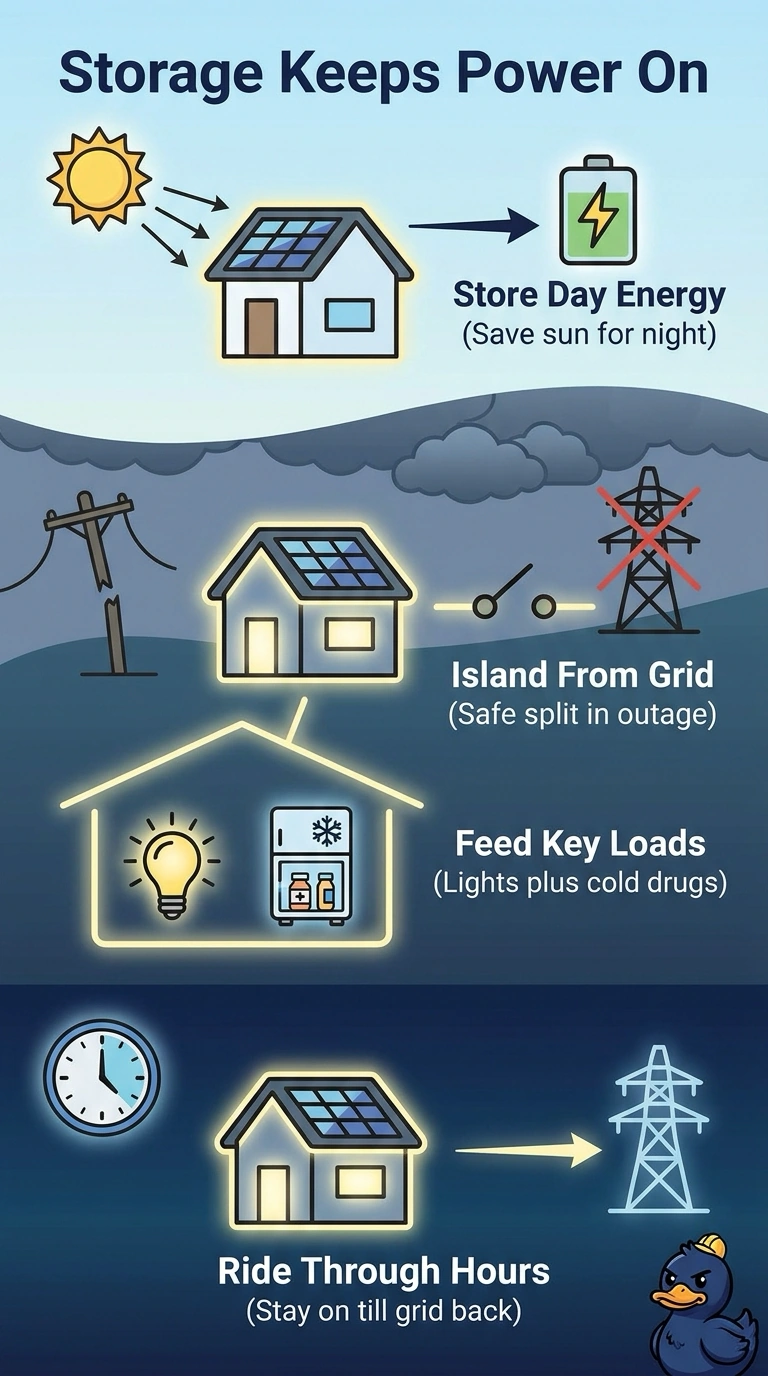
You’ve got the core idea: outages call for stored energy that can power the clinic, not just more panels. Battery storage with islanding gives you resiliency, keeping critical loads running when the grid is down.
Full Explanation
Battery storage with islanding is the key feature because it can form a local powered system when the grid fails, rather than letting the clinic’s grid-following PV inverter shut down. With suitable controls and capacity, it can support designated critical loads—vaccine refrigeration and lighting—through the stated outages and help ride through shorter disturbances. A grid-connected battery used for daily energy shifting may reduce bills or respond to daily sags, but without backup controls and islanding it cannot energize the clinic during a grid outage. An automatic-transfer standby generator can provide sustained outage power, but with the rooftop PV still grid-following, the PV disconnects during the outage; this does not provide the resilience benefit of operating the existing solar system with the clinic. Validated refrigerator cold-holdover can protect vaccines during an interruption, but it does not keep essential lighting on and addresses only part of the clinic’s need. Exam caveat: battery storage alone does not guarantee outage operation; islanding, transfer, and compatible inverter controls matter. Practical check: verify the critical-load schedule, usable battery capacity for the expected 6–10-hour outage, and that the system can safely island and restart with the clinic’s PV.