
A ground-mount crew has stamped site plans calling for 8-foot post spacing, shared rails, and a torque table, but the foreman suggests wider spacing to save piles on rocky soil. The permit set is already approved. Which action follows manuals and site-engineered plans correctly?
Select an answer to reveal the explanation.
Short Explanation
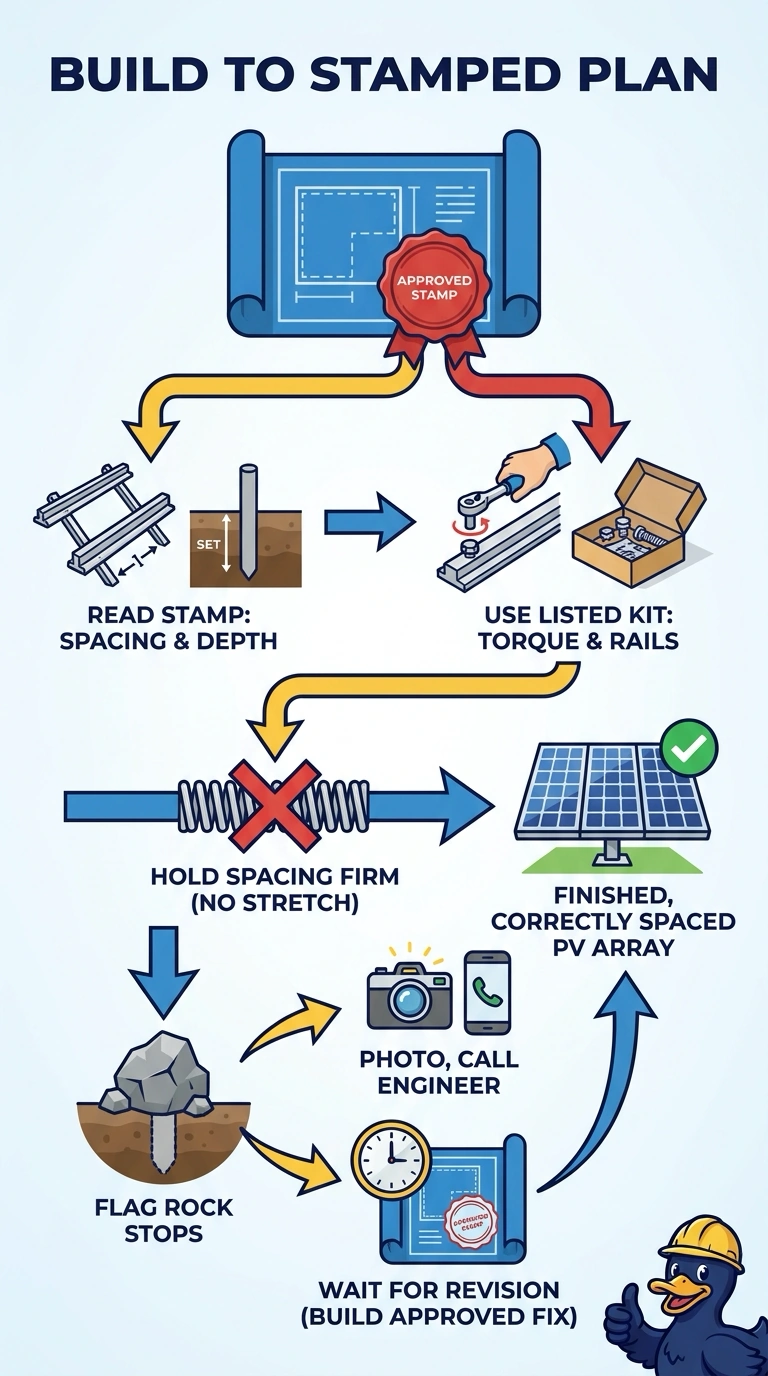
You may be tempted to adjust the layout around rocks, but the approved plans are your guide. Stamped plans rule the field, like a signed playbook rules game day.
Full Explanation
Build to the stamped 8-foot spacing, use the specified shared rails, and follow the project’s listed torque values. These details form the approved, site-engineered design; if rock prevents installation as planned, document the condition and route it to the engineer of record rather than redesigning in the field. Widening post spacing while retaining the specified rails and torque changes the support layout and can affect rail spans, loads, and system performance; rocky soil does not authorize that adjustment. Keeping the spacing and shared rails but using the installer’s standard torque target substitutes a general value for the project’s torque table. Torque requirements can depend on the pile, soil conditions, and design assumptions, so the standard target is not a replacement for the specified value. Keeping the spacing and listed torque but switching to separate rails abandons the shared-rail configuration; that can affect connections, load paths, and material requirements even if separate rails are used elsewhere. Exam caveat: a field condition alone does not permit deviation from an approved plan; the proper design or permitting authority must authorize a revision. Practical check: compare the stamped plan, installation manual, and project torque table at the work area, and record any obstruction for engineer review before proceeding.