
An installer on a duplex roof finds two rail splice kits, unclear torque marks, and a wrinkled quick-start sheet that conflicts with memory. The inspector arrives in one hour with strict labeling checks. Which use of datasheets and manuals resolves the conflict correctly?
Select an answer to reveal the explanation.
Short Explanation
You’re right to pause when memory and paperwork conflict, especially with the inspector due soon. Model-specific instructions help you verify the right torque, splice, and labeling steps before you continue.
Full Explanation
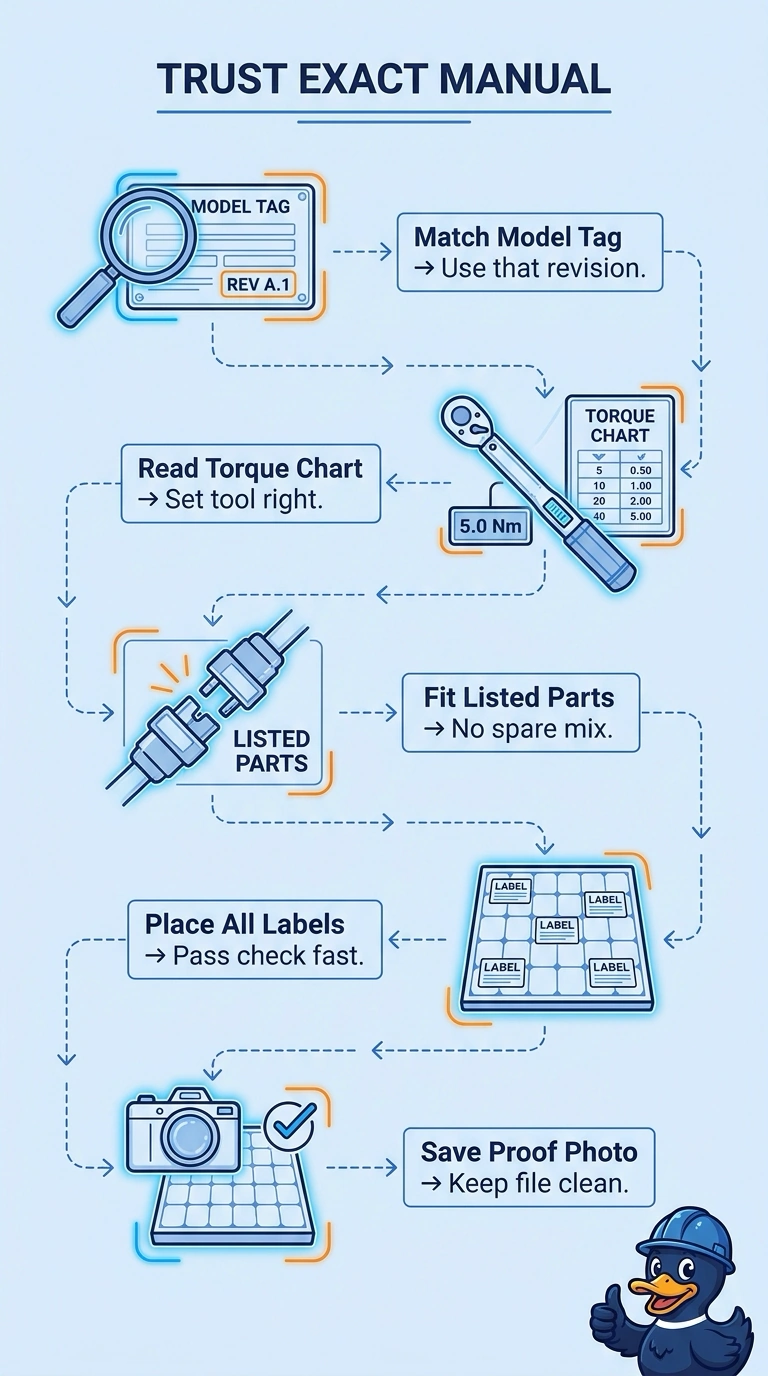
Pause and use the current manual for the exact model number, including its torque, splice, and labeling instructions. That resolves the conflict among unclear torque marks, a wrinkled quick-start sheet, and remembered procedures by relying on instructions for the equipment actually installed. The manual covers all three tasks rather than assuming a familiar procedure or a visual match is enough. Selecting splice kits by rail profile while using the model manual for torque and labeling does not confirm that the kit or splice procedure applies to this model; similar-looking profiles alone are insufficient. Following a product-family manual may provide useful background, but it may not include the torque, splice, or labeling requirements for the exact model. Using the exact-model manual for splice and labeling while substituting an approved project torque schedule still leaves torque governed by a different source, rather than resolving the conflict through the manual’s instructions. Exam caveat: a quick-start sheet, field mark, or remembered procedure does not replace current model-specific instructions when information conflicts or is unclear. Practical check: confirm the model number on the installed rail and hardware, verify the manual revision, and check the required torque, splice-kit identification, and label locations before resuming work.