
A 12-kW system passed local inspection yesterday and the monitoring portal shows steady production, but the owner asks to flip the main solar breaker on today. Interconnection approval is still pending with the utility. Which commissioning document and permission-to-operate step allows legal energizing?
Select an answer to reveal the explanation.
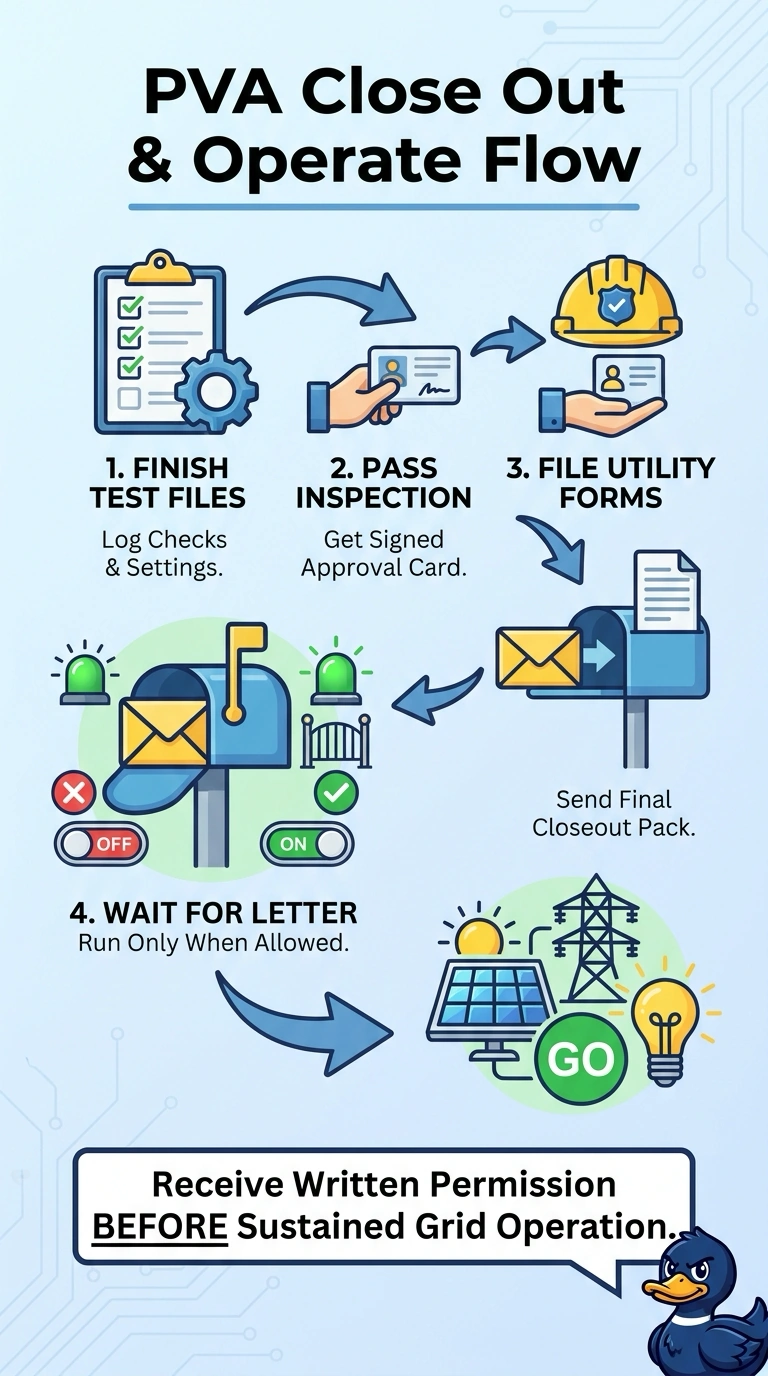
Short Explanation
You're waiting for the green light, not just a fast car. Permission to operate is like a starter flag that only the utility can wave.
Full Explanation
The correct approach is to obtain the utility’s final interconnection paperwork and written permission to operate before beginning sustained grid operation. A local inspection confirms compliance with applicable local requirements, but it does not grant the separate utility authorization needed to operate in parallel with the grid. The passed-inspection certificate and commissioning report document readiness and installation quality; they cannot replace the missing utility PTO. An approved interconnection study and an installed production meter are meaningful steps in the utility process, but neither alone confirms that the utility has issued final authorization to operate. Likewise, a signed commissioning checklist and successful monitoring data show that the system starts and produces as expected, not that grid operation is permitted. The exam caveat is to distinguish permission to energize or test equipment under an approved procedure from permission for sustained, grid-connected operation; inspection, metering, and production do not automatically grant PTO. As a practical check, verify the utility’s written PTO or equivalent final approval and confirm any specified operating conditions before closing the solar breaker for normal operation.