
A salesperson is preparing a preliminary 8-kW home estimate where the customer wants full offset and fast install. The utility caps system size to annual use, needs an interconnection application, and requires an accessible lockable AC disconnect. Which utility interconnection requirement must the estimate recognize to stay valid?
Select an answer to reveal the explanation.
Short Explanation
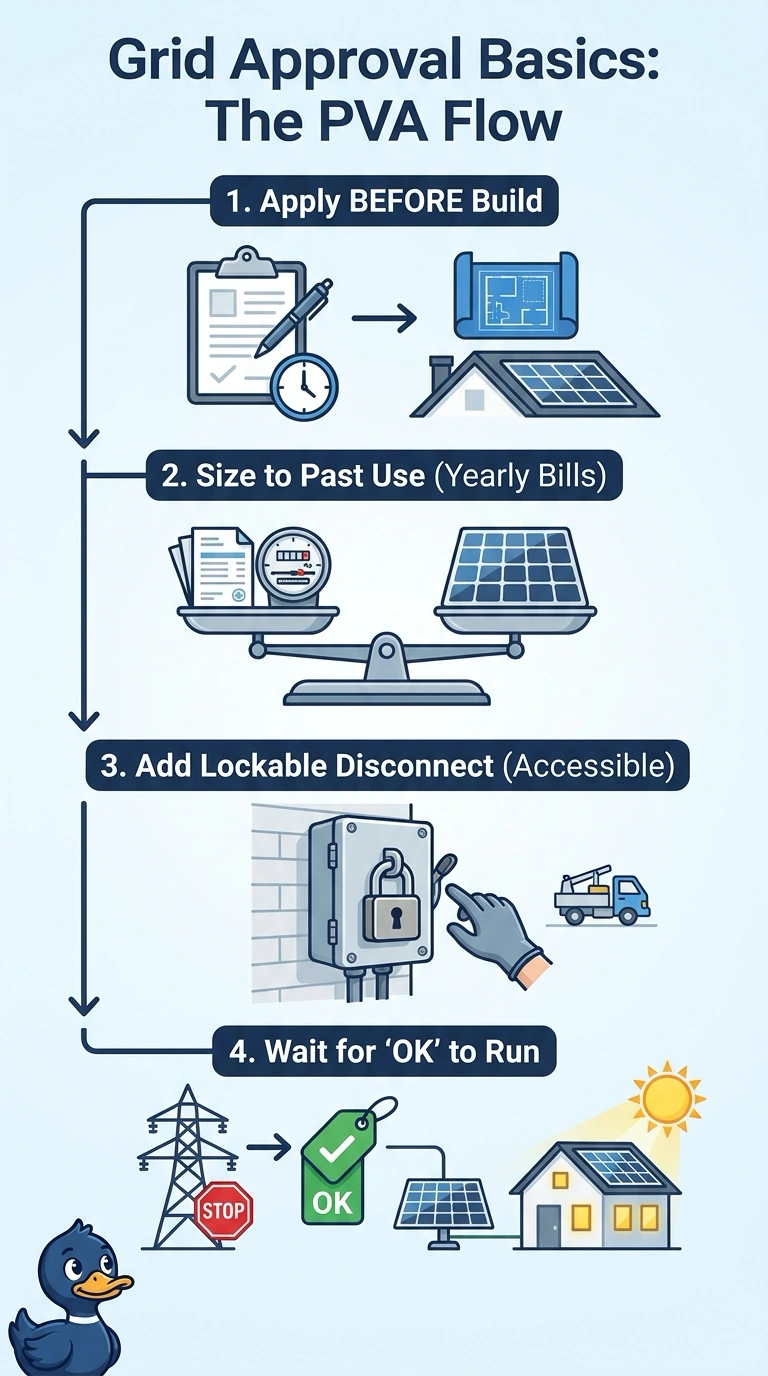
You keep the sale honest by checking grid rules before you promise dates. A clear approval path ties the annual-use size cap, utility filing, and accessible disconnect together.
Full Explanation
The estimate must recognize the utility’s annual-use size cap, interconnection application, and requirement for a lockable AC disconnect accessible to utility crews. Including these constraints helps keep the preliminary estimate valid because utility approval, equipment placement, or a size adjustment can affect the design and installation schedule. Sizing from the customer’s latest month of use does not establish annual consumption and could result in a system that exceeds the cap. Treating a building permit as the utility filing also fails: the utility’s interconnection application is a separate requirement, even when the estimate uses annual-use sizing and provides an accessible disconnect. A lockable AC disconnect inside a locked garage is not accessible to the utility crew, so its location does not meet the access requirement. The estimate that includes utility approval, caps system size based on past use, and places the lockable disconnect where the crew can reach it reflects the required constraints. Exam caveat: “full offset” is a customer goal, not permission to exceed the utility’s size limit or bypass its approval process. Practical check: verify annual use against utility bills, confirm the current interconnection checklist, and identify an accessible disconnect location before presenting the estimate as valid.