
A rural clinic needs vaccine refrigeration through frequent multi-day grid outages, has space for batteries, and can fund storage for critical loads only. Fuel delivery is unreliable. Which system type match best fits the customer scenario for backup and daily solar use?
Select an answer to reveal the explanation.
Short Explanation
You need sun plus a full pantry for storm days. Backup with grid plus store covers both, like a fridge plus cooler for trips.
Full Explanation
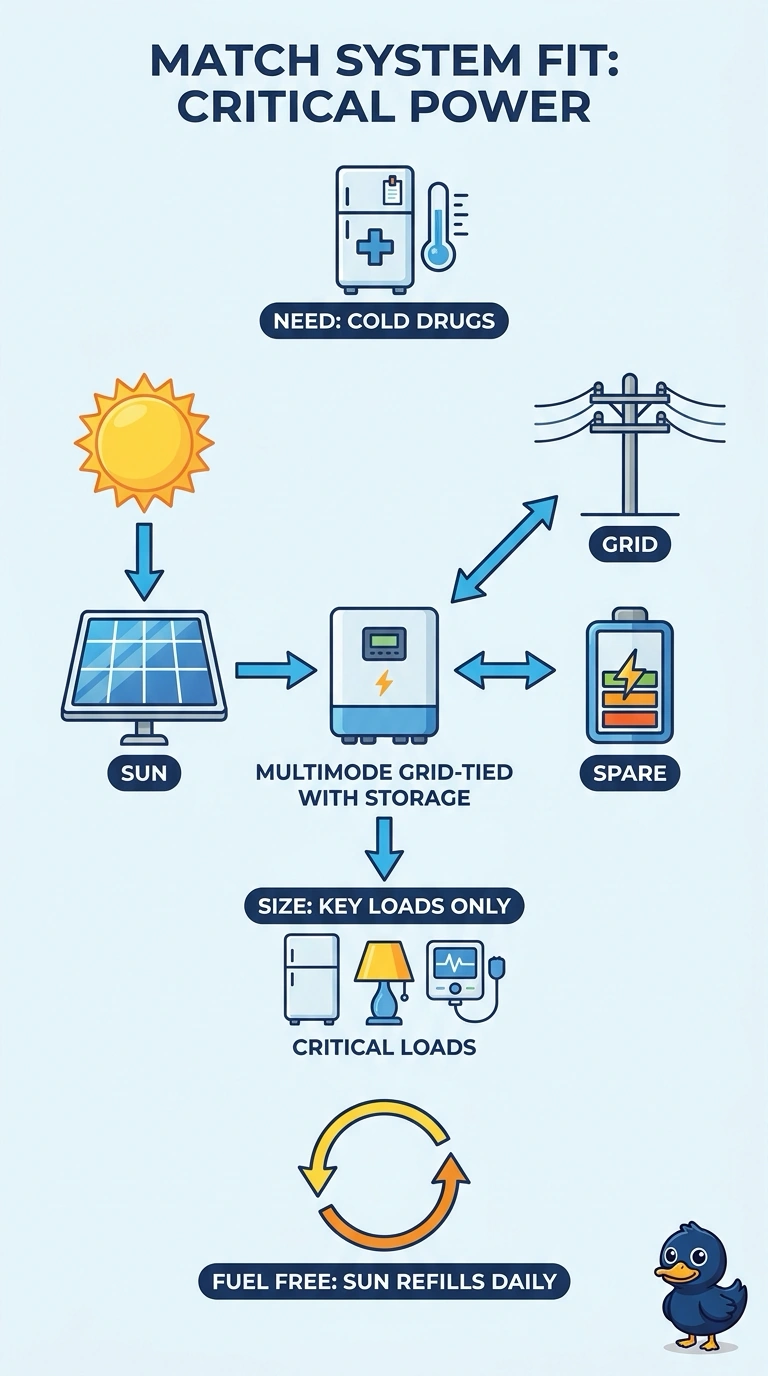
The multimode grid-tied system with storage for critical loads best fits the clinic’s needs: it can use solar during ordinary operation, charge batteries, and provide backup when the grid fails. Sizing storage for critical loads aligns with the available budget, while adequate battery capacity can keep vaccine refrigeration operating during multi-day outages without depending on fuel deliveries. The overnight-sized hybrid system is a common approach for brief interruptions and daily solar shifting, but it fails the stated duration requirement: a battery intended only for overnight use may run down before a multi-day outage ends. The whole-clinic storage design can provide the requested outage coverage and daily solar use, but it fails the funding constraint by allocating storage to noncritical loads as well as critical ones. The solar-battery-generator design is also a familiar resilience configuration, but it fails the fuel-supply fact: relying on a generator to sustain refrigeration during extended outages is not dependable when deliveries are unreliable. Exam caveat: “multimode” describes the ability to coordinate grid, solar, and storage, not a guarantee of a particular outage runtime; capacity and controls must be specified. Practical check: estimate the refrigeration and other critical-load energy use over the expected outage duration, then verify battery usable capacity, inverter output, and expected solar recharge under local conditions.