
A coastal installer is labeling a rooftop DC disconnect and inverter area exposed to sun, rain, and salt spray, and the AHJ will re-inspect in five years. The crew wants labels that stay legible for the system life. Which labeling approach best meets durability for PV markings?
Select an answer to reveal the explanation.
Short Explanation
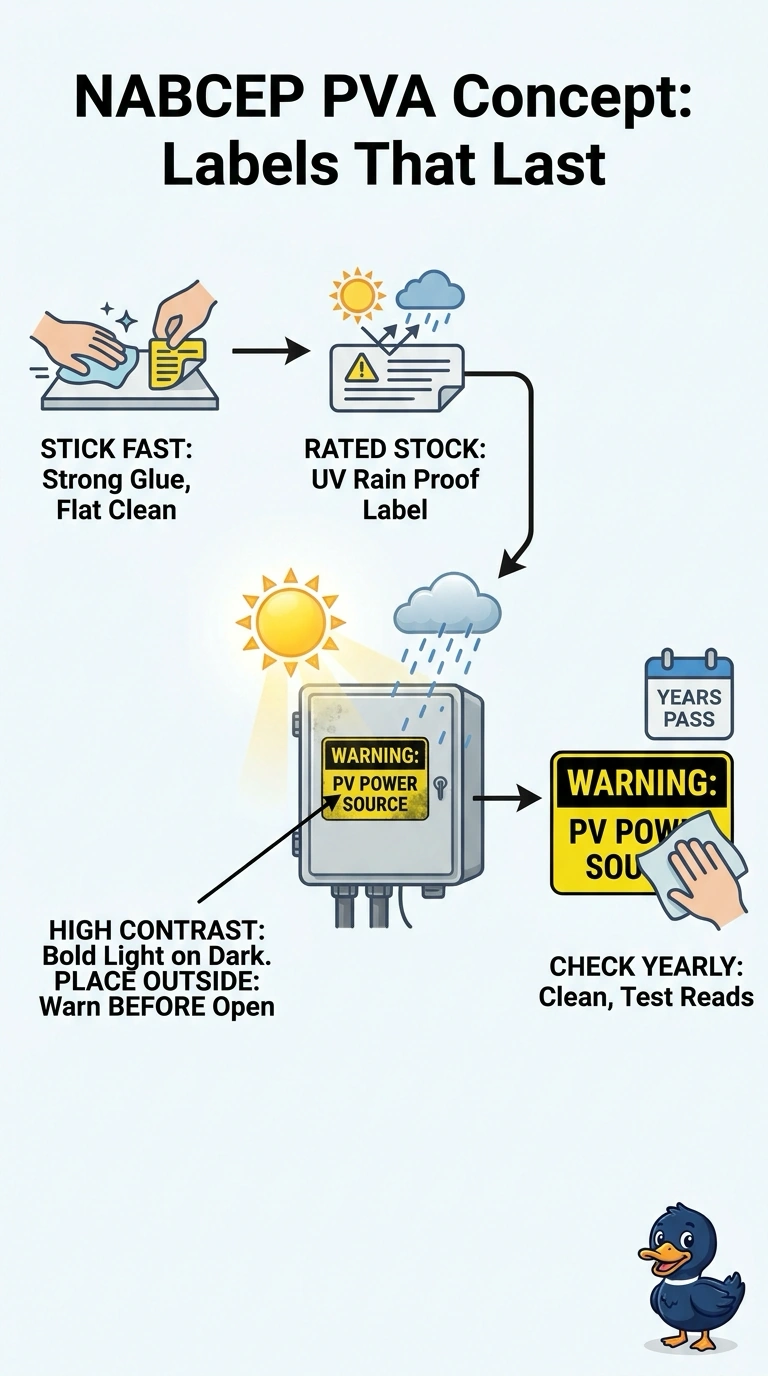
You need labels that stay legible through years of sun, rain, and coastal weather. Choose permanent, weatherproof markings that are securely attached outside where inspectors can read them.
Full Explanation
Permanent, UV-rated, weatherproof labels attached to the exterior address the need to keep PV markings legible through years of sun and weather and available for inspection. At a coastal site, verify that the label system is also suitable for salt spray, so it can remain legible through the five-year re-inspection interval and beyond. Exterior-rated vinyl labels that resist UV and rain but lack a salt-spray rating leave a key exposure unaddressed: salt can degrade the label or printed surface. Engraved marine-grade stainless-steel tags provide durable marking, but ordinary zinc-plated screws can corrode in salt spray and compromise secure attachment; durable tag material alone does not ensure the whole assembly lasts. UV- and salt-resistant laminated labels use suitable stock, but an indoor-rated adhesive may lose adhesion outdoors during weather and temperature cycling, allowing the label to detach. Exam caveat: durability claims apply to the complete marking system, including face stock, ink or engraving, adhesive, and fasteners—not just its most weather-resistant component. Practical check: verify manufacturer ratings for the rooftop exposure and enclosure substrate, then confirm the installed labels are legible, firmly attached, and unobstructed at inspection.