
A three-person crew starts a 25-module retrofit on a two-story shingle home with a skylight hole, ridge work near the eave edge, and morning dew on dark shingles. The lead holds a pre-job hazard talk. Which fall-hazard recognition guides the morning setup?
Select an answer to reveal the explanation.
Short Explanation
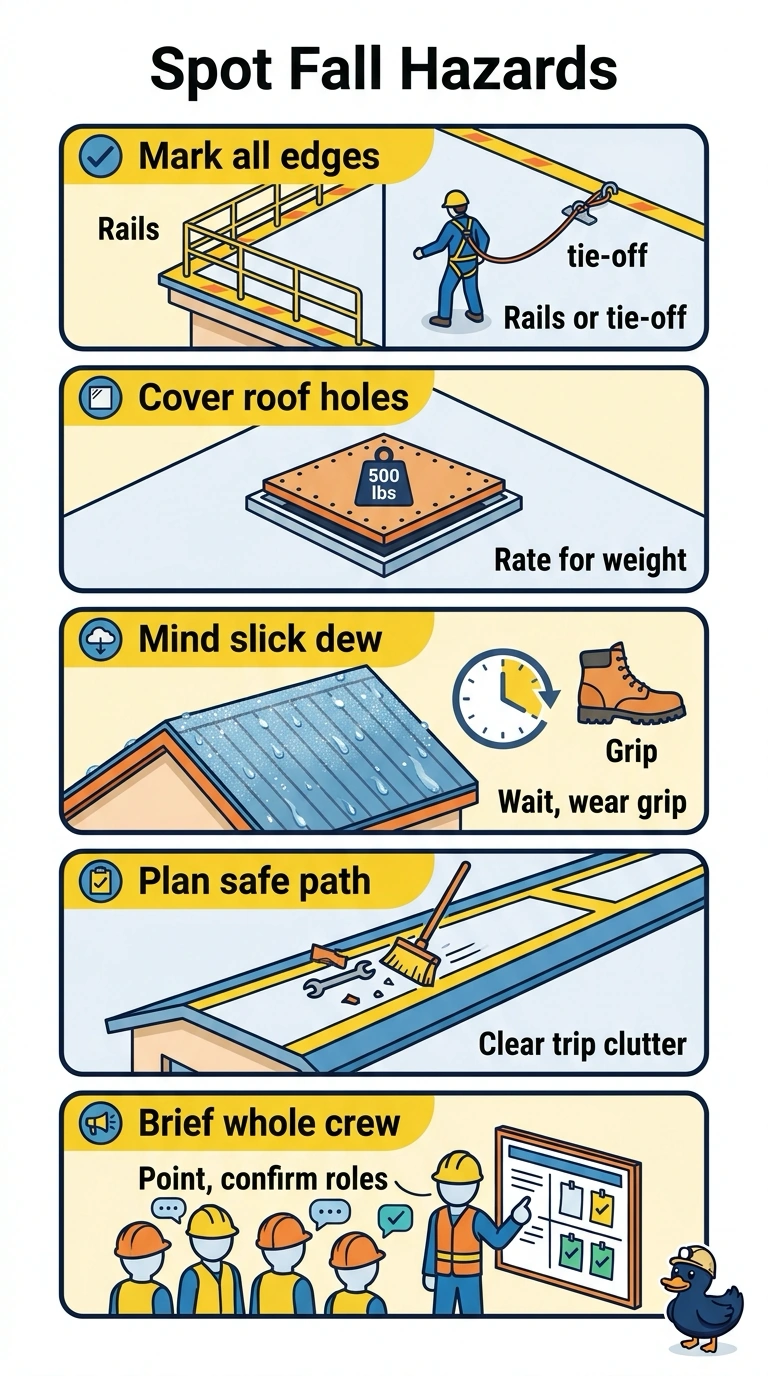
You’re checking the edges, opening, and slick slope before anyone steps onto the shingles. Openings can drop you just as fast as eaves, like a trapdoor in a stage floor.
Full Explanation
The correct setup recognizes all three distinct fall hazards: the leading edge at the eave, the skylight opening, and the slick, dew-covered roof slope. Each needs a suitable protective measure, such as guardrails or a properly planned personal fall-arrest system at the edge, a secured skylight cover or guardrail, and controlling access or using appropriate fall protection until the surface is safe. Covering the skylight and using an anchored lifeline on the wet slope still leaves the eave edge uncontrolled. Installing eave guardrails and using an anchored fall-arrest system on the wet slope protects those areas, but an uncovered skylight remains an unprotected fall-through hazard. Covering the skylight and guarding the eave protects the opening and edge, but standard roofing footwear does not eliminate the slip hazard from morning dew; work should wait for safe conditions or use an adequate, planned protection method. An exam caveat: naming a harness or lifeline alone is not enough—the system must be suitable, anchored, and used under a fall-protection plan. Before staging modules, inspect the roof and verify that each opening and exposed edge is protected and that the chosen controls address the actual surface conditions.