
A farm family wants daytime power for a remote pump with no utility lines, no need for night use, and the lowest cost and upkeep. A vendor proposed batteries and a backup generator. Which system type match fits this customer scenario with cost and maintenance limits?
Select an answer to reveal the explanation.
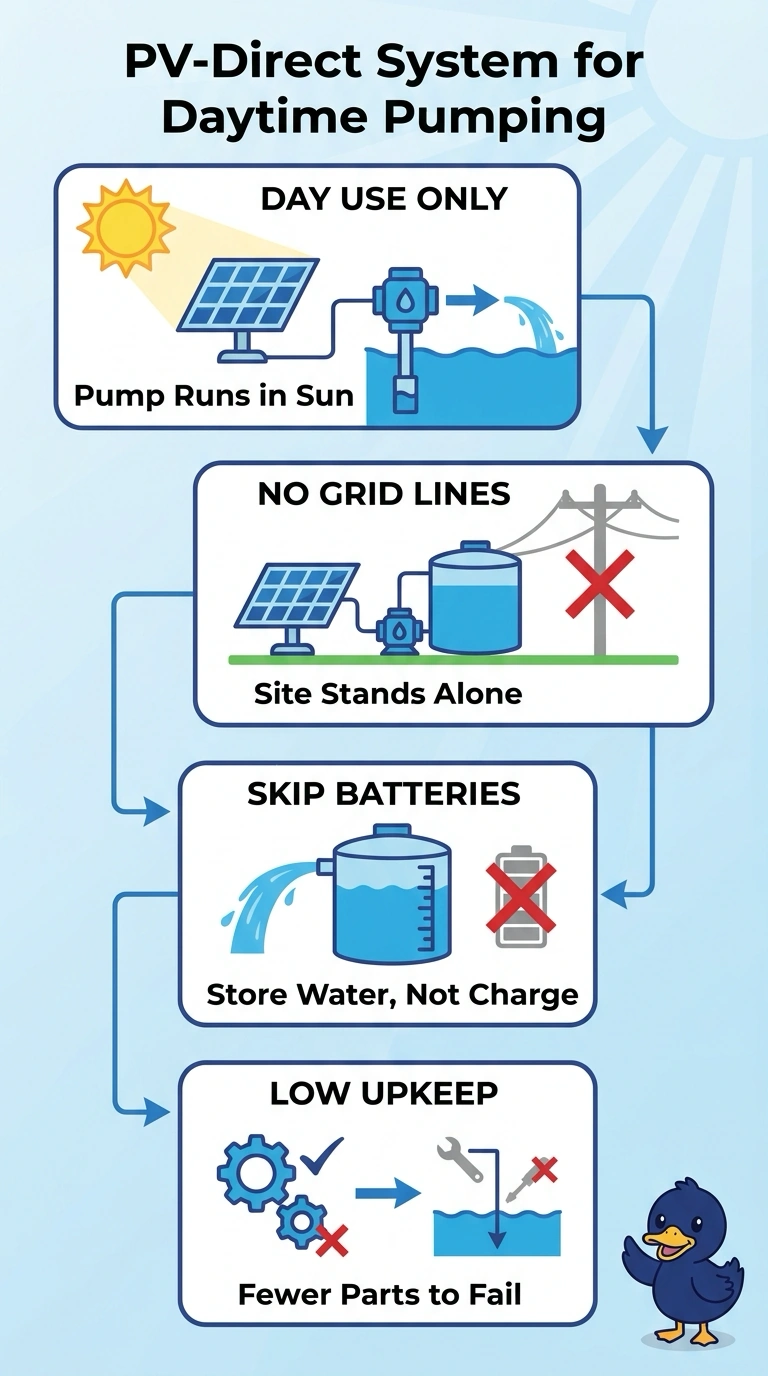
Short Explanation
You're fitting the tool to the chore, not overselling boxes. A PV-direct match is like a sun-powered hand pump that rests when clouds pass.
Full Explanation
A PV-direct system without batteries best matches the stated use: the pump operates when the array produces power, utility lines are unnecessary, and omitting batteries avoids a major purchase and recurring maintenance. Daytime-only pumping also means there is no need to store energy for evening use; water can be pumped when sunlight is available. A standalone battery-based system can serve an off-grid pump, but its battery bank adds initial expense, inspection and replacement needs, contrary to the lowest-cost, lowest-upkeep priority. A PV-generator hybrid is a familiar way to improve off-grid reliability, yet the generator adds equipment, fuel and service requirements that are unnecessary for the stated daytime-only load. An off-grid PV array with an inverter can run a conventional AC pump during daylight, but the inverter adds conversion equipment, cost and a potential maintenance point compared with a suitably matched direct-drive arrangement. Exam caveat: PV-direct output varies with irradiance, so the pump may deliver less water in cloud or early/late daylight; this is not the same as requiring batteries. Practical check: verify the pump’s voltage, starting characteristics, required flow and total daily water demand against the array’s expected output for the site and season, and confirm whether a water-storage tank can accommodate variable production.